Updated October 2026
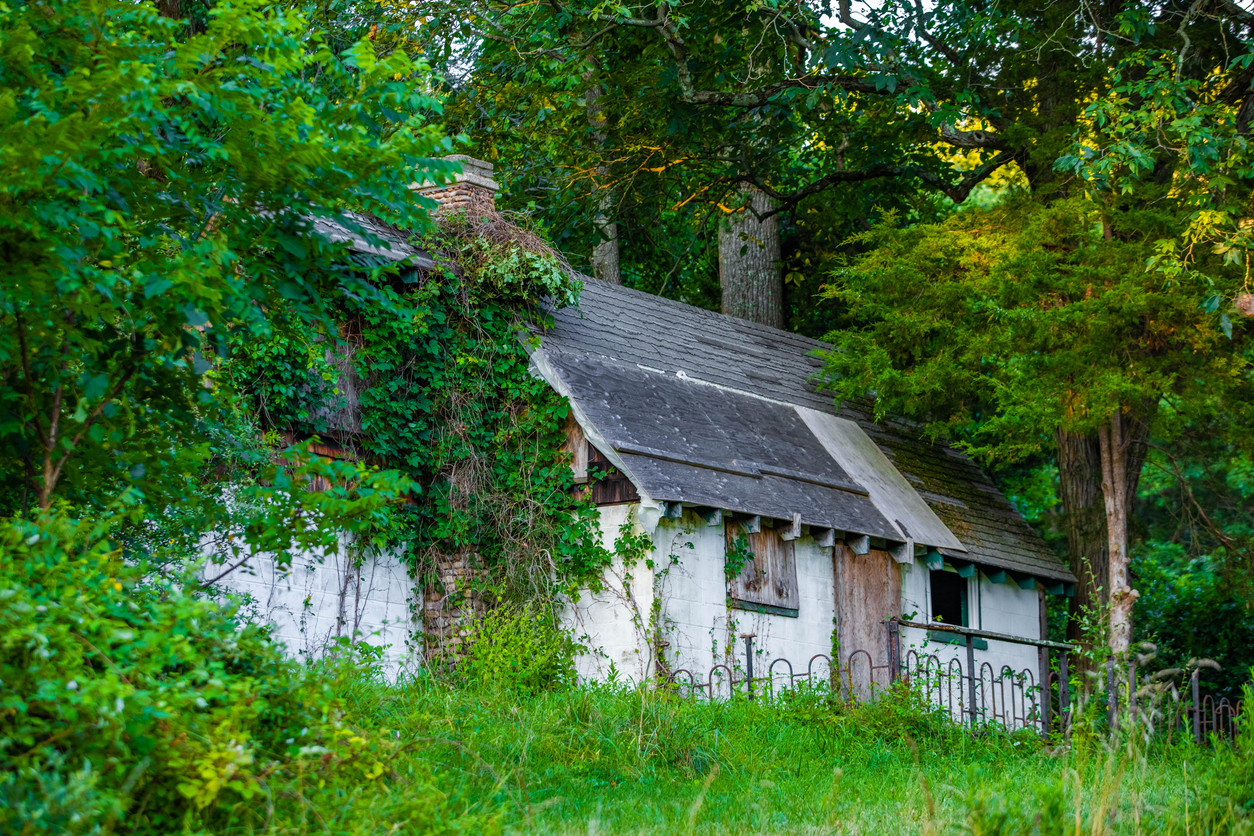
In short: abandoned houses in British woodland do exist, and some do come up for sale, but they rarely appear on the open market looking like a bargain. Most are found by tracing an owner, buying at auction, or acting quickly when an estate sells off land. Before you fall in love with one, you need to know who owns it, whether you'll be allowed to live in it, and what it will really cost to make habitable.
Why houses end up abandoned in the countryside
Rural homes become empty for ordinary reasons: probate disputes, owners moving into care, estates that no longer need a worker's cottage, or properties that became too expensive to repair. Woodland locations add their own complications, such as poor access, no mains services and tight planning rules, which is why some stay empty for decades.
Don't explore without permission
Empty doesn't mean ownerless. Entering a property or land without permission is trespass, and derelict buildings are dangerous, with rotten floors, unstable walls and asbestos. If you see a house you're interested in, start with records rather than a visit.
How to find the owner
- HM Land Registry: most land in England and Wales is registered. A title register search, done online for a small fee, shows the owner and their address for correspondence.
- Unregistered land: if the property isn't registered, ask neighbours, the parish council or local historians, and check old estate records.
- The council's empty homes officer: many councils track long-term empty homes and may help put you in touch with owners.
- Probate records: if the owner has died, the probate register shows who is handling the estate.
- Bona vacantia: if a company owner has been dissolved, the property may have passed to the Crown, and some is offered for sale.
Write a friendly letter explaining your interest. Owners of long-empty homes are often more open to an approach than you'd expect, especially since councils can now charge significant council tax premiums on homes left empty for more than a year.
Planning: can you live there?
This is the question that decides value. Points to check with the local planning authority:
- Is residential use still lawful? A house left empty for a very long time can, in some cases, be treated as having "abandoned" its residential use, so you'd need fresh planning permission to reoccupy it.
- Green Belt, National Landscapes and National Parks have strict rules on extensions and replacement dwellings.
- Listed buildings need listed building consent for most works.
- Protected species: bats, barn owls and other wildlife often move into empty buildings. You'll probably need an ecology survey, and possibly a licence, before works start.
- Trees: woodland may be covered by Tree Preservation Orders or felling licence rules.
Renovation and running costs
- Services: connecting electricity, water and drainage to a remote site can cost tens of thousands of pounds. Off-grid solutions such as private water supplies, septic tanks or treatment plants, and solar are common.
- Access: check you have a legal right of way for vehicles, not just a footpath.
- VAT relief: renovation work on homes that have been empty for two years or more can qualify for the reduced 5% VAT rate, which is a meaningful saving.
- Finance: most high-street lenders won't lend on an uninhabitable property. Buyers typically use cash, bridging finance or specialist renovation mortgages.
- Insurance: unoccupied and derelict buildings need specialist cover.
Where these properties come up
- Property auctions, often listed as "for improvement" or "derelict cottage with land"
- Estate and woodland sales from large landowners, National Trust disposals or Forestry England
- Rural agents and land specialists
- Off-market approaches to owners
How Fraser Bond helps
Fraser Bond helps buyers find and assess unusual rural property, including derelict cottages, woodland and land with buildings. We can search on- and off-market, trace owners, review planning history and constraints, and coordinate surveys and specialist finance.
Tell us what kind of property you're looking for →
Frequently asked questions
Can I claim an abandoned house by living in it?
Squatting in residential buildings is a criminal offence in England and Wales. Adverse possession of land is possible only in limited circumstances and isn't a practical way to acquire a house.
Are abandoned houses cheaper?
The purchase price can be lower, but renovation, services and planning costs often close the gap. Get a building survey and cost estimates before you offer.
Can I get a mortgage on a derelict house?
Usually not a standard one. Bridging loans and renovation mortgages are the common routes, with refinancing once the property is habitable.