Find Properties Suitable for Hotel Conversion in the UK (Commercial Buildings Guide)
How investors identify buildings that can realistically become hotels
Hotel conversion in the UK is one of the fastest-growing property strategies, especially due to the oversupply of older offices and underperforming retail assets. However, not every commercial building is suitable — viability depends on structure, planning flexibility, location demand, and conversion cost efficiency.
Across London and regional UK cities, the strongest opportunities are typically vacant or secondary commercial buildings in transport-linked or regeneration zones, where planning authorities are actively supporting change of use to boost local visitor economies.
Fraser Bond works with investors, developers, and operators to identify, assess, and acquire commercial buildings suitable for hotel conversion.
1. Vacant office buildings in regeneration zones (top opportunity category)
Why offices are the most common hotel conversion target
Older office stock is currently one of the biggest sources of hotel conversion opportunities in the UK.
Key advantages:
- Large internal floorplates suitable for room layouts
- Existing core infrastructure (lifts, stairwells, toilets)
- Often located near transport hubs
- High vacancy due to “flight to quality” in office demand
Recent UK planning activity shows increasing approval of office-to-hotel schemes, especially in London regeneration areas. For example, office buildings in Stratford have been approved for large-scale hotel conversion schemes, demonstrating strong planning acceptance in the right locations.
Best locations for office-to-hotel conversion:
- Stratford & East London regeneration zones
- King’s Cross fringe office clusters
- Birmingham city centre secondary offices
- Manchester city centre fringe offices
- Leeds central business district older stock
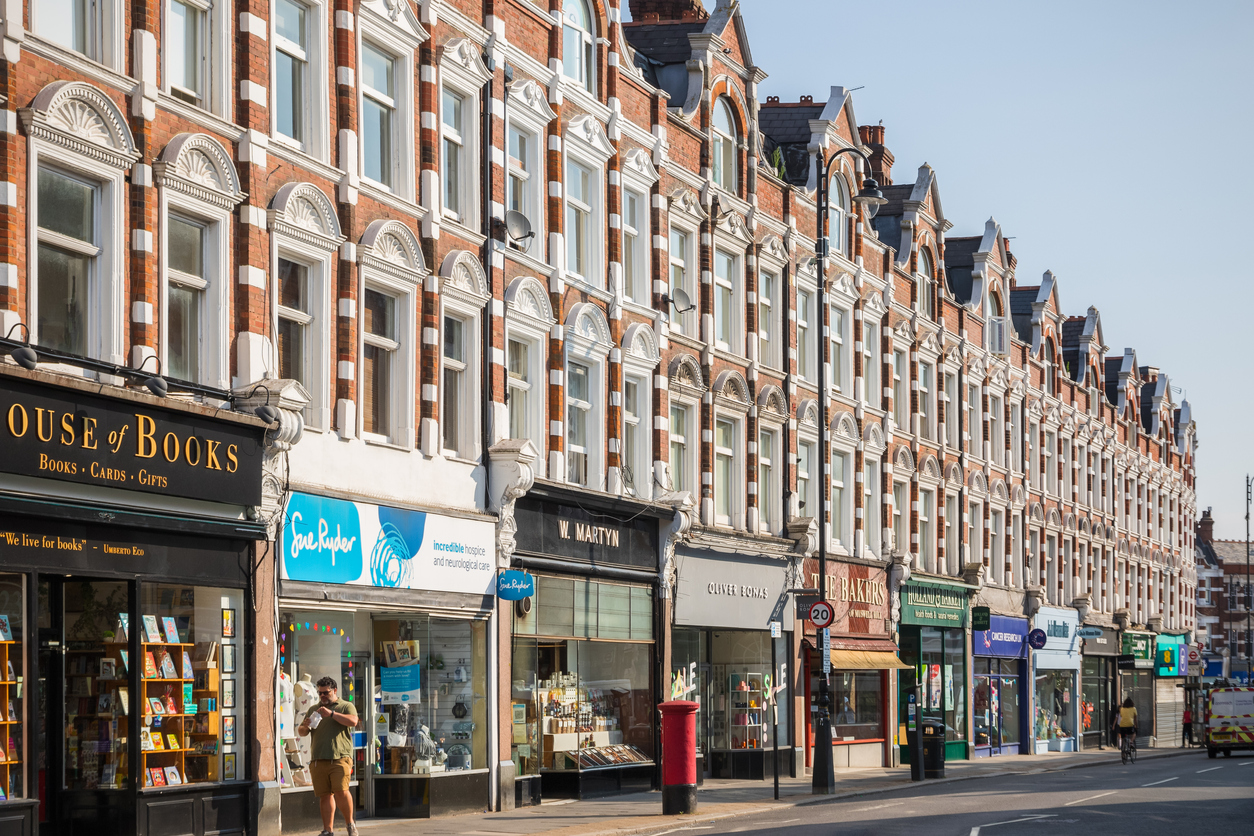
2. Retail and high street buildings with declining footfall
Secondary retail assets becoming hotel conversion candidates
Some high streets and retail units are now under pressure due to changing consumer behaviour, making them viable hotel assets.
Why they work:
- Large floorplates in prime or secondary high streets
- Strong visibility and pedestrian access
- Existing utilities and structural shells
- Located in established urban centres
Best UK locations:
- London secondary high streets (Croydon, Hammersmith, Wembley)
- Birmingham retail corridors
- Liverpool city centre retail streets
- Manchester city fringe retail zones
These buildings often suit boutique or budget hotel concepts depending on size and layout.
3. Industrial buildings and warehouses (high-value adaptive reuse)
Strong opportunity for lifestyle and design-led hotels
Warehouses and light industrial buildings are increasingly used for hotel conversions in regeneration districts.
Why they work:
- Large open-span structures
- High ceilings suitable for design flexibility
- Strong character appeal for boutique hotels
- Located in emerging urban districts
Best areas:
- East London (Hackney Wick, Stratford fringe)
- Manchester industrial regeneration zones
- Bristol dockside and warehouse districts
- Birmingham Digbeth regeneration area
These sites are ideal for boutique, lifestyle, or experiential hotels.
4. Former institutional buildings (high conversion success rate)
Includes care homes, schools, and clinics
These buildings are among the easiest to convert due to their original layout.
Why they work:
- Already subdivided into rooms
- Existing plumbing and service distribution
- Lower structural intervention required
- Often located in residential or mixed-use areas
Typical opportunities:
- Former care homes
- Closed private schools or colleges
- Vacant healthcare facilities
Strong locations:
- Suburban London boroughs (Barnet, Enfield, Croydon)
- Regional commuter towns
- Coastal tourism towns
5. Transport-linked commercial buildings (high occupancy potential)
Hotels perform best near movement hubs
Buildings near transport infrastructure are highly attractive for conversion.
Why they work:
- Constant inflow of business and leisure travellers
- High occupancy stability
- Strong demand for short-stay accommodation
Key UK hotspots:
- London Heathrow and surrounding office parks
- King’s Cross / St Pancras corridor
- Birmingham New Street station zone
- Manchester Piccadilly surroundings
- Leeds railway district
A strong transport-linked hotel conversion often achieves higher occupancy and ADR stability than standalone city-centre assets.
6. Mixed-use and underutilised commercial buildings
Flexible assets with planning upside
Some of the best hotel conversions come from mixed-use buildings with underutilised upper floors or secondary space.
Why they work:
- Partial vacancy reduces acquisition cost
- Flexible planning applications
- Opportunity for phased redevelopment
Common locations:
- London fringe town centres
- Regional city secondary streets
- Older 1980s–2000s commercial blocks
Planning considerations for hotel conversions
A hotel conversion in the UK typically requires change of use to C1 (hotel use class) and full planning permission in most cases.
Key planning factors include:
- Impact on surrounding residential areas
- Transport and traffic capacity
- Fire safety and building regulations compliance
- Hotel density in the area
- Local authority regeneration strategy
Recent legal analysis confirms that office-to-hotel conversions require full planning approval and are not generally covered under permitted development rights.
What makes a commercial building suitable for hotel conversion
A viable hotel conversion site usually has:
- Large, regular floorplates (efficient room layout potential)
- Strong natural light or potential for façade improvement
- Existing vertical circulation (lifts/stairs)
- Proximity to transport or tourist demand
- Structural flexibility for bathrooms and services
- Planning feasibility for change of use
Buildings with deep floorplates, poor light access, or restricted external alterations are often less viable unless repositioned as budget or aparthotel concepts.
Common mistakes investors make
Many hotel conversion projects fail because investors:
- Buy offices without assessing natural light constraints
- Ignore planning resistance in conservation areas
- Underestimate MEP (mechanical, electrical, plumbing) costs
- Choose low-footfall locations without tourism or business demand
- Overestimate achievable room counts per floorplate
How Fraser Bond supports hotel conversion projects
Fraser Bond works with investors and developers to:
- Identify commercial buildings suitable for hotel conversion
- Assess planning feasibility and local authority appetite
- Analyse demand drivers (tourism, business, transport)
- Source off-market office, retail, and industrial assets
- Support feasibility studies and conversion strategy
- Coordinate refurbishment, compliance, and contractor planning
Conclusion
The best commercial buildings for hotel conversion in the UK are typically vacant offices, underused retail units, industrial warehouses, and institutional buildings located in transport-linked or regeneration-driven areas.
Strong opportunity zones include:
- East London regeneration corridors
- Manchester and Birmingham city centres
- Leeds business districts
- Major UK transport hubs
- Secondary retail and mixed-use high streets
Fraser Bond helps investors identify where building structure, planning feasibility, and demand align to create successful hotel conversion projects.