Find Suitable Buildings for Conversion Into Schools in the UK (Planning Potential Guide)
How developers and education investors identify buildings that can realistically be converted into schools
Converting existing buildings into schools in the UK is often faster and more cost-effective than new-build development, but success depends heavily on planning permission, building typology, site size, safeguarding suitability, and local authority education demand.
Across London and major UK cities, demand for school places is rising faster than new school delivery in many areas, which has increased interest in office-to-school, warehouse-to-school, and large commercial-to-education conversions.
Fraser Bond supports education operators, investors, and developers in identifying viable buildings for school conversion, assessing planning potential, and coordinating acquisition and refurbishment strategy.
What makes a building suitable for school conversion
Not every commercial or residential building can be converted into a school. Viability depends on a combination of planning policy, physical layout, and safeguarding requirements.
Key suitability factors include:
- Large internal floor plates or open-plan layout
- Adequate outdoor space (playgrounds / sports areas)
- Safe access and drop-off zones
- Strong transport connectivity
- Distance from high-risk industrial or noisy uses
- Potential for compliant fire safety and safeguarding design
- Local authority support for education expansion
- Zoning compatibility for educational use (Use Class alignment)
Buildings without outdoor space can still work in dense urban areas, but typically require creative design solutions or rooftop/playdeck adaptation.
Best building types for school conversion in the UK
1. Office buildings (vacant or underused commercial stock)
Office-to-school conversion is one of the most common strategies in urban areas.
Why offices work well:
- Open-plan floors allow flexible classroom design
- Existing toilets, lifts, and services infrastructure
- Often located in well-connected urban areas
- Increasing vacancy in secondary office stock
Older office buildings in regeneration zones or decentralised business districts are particularly attractive for conversion.
2. Large retail units and shopping centres
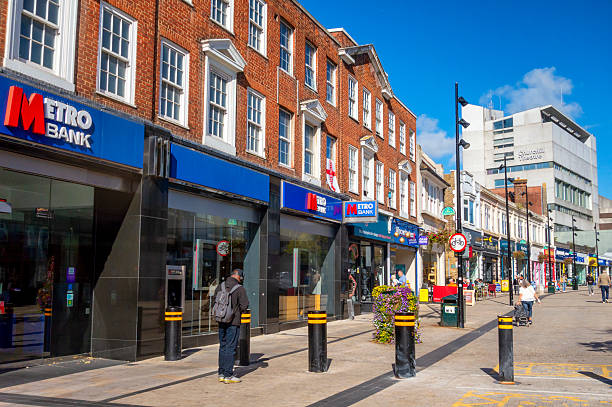
Retail decline in some high streets and retail parks has created opportunities.
Advantages:
- Large single-floor spaces
- Strong visibility and accessibility
- Existing public transport links
- Potential for phased redevelopment
Challenges include ensuring safe pupil segregation from public retail traffic and meeting safeguarding standards.
3. Warehouses and industrial buildings
Warehouse conversions are increasingly considered for school use in expansion areas.
Why they are attractive:
- Large, flexible internal volumes
- Easy structural adaptation
- Availability in outer urban and suburban zones
- Often located near growth corridors
However, they require significant investment in insulation, daylighting, and educational fit-out.
4. Vacant institutional buildings (former colleges, training centres, community buildings)
These are often the most straightforward conversions.
Advantages:
- Already designed for educational or public use
- Existing classrooms and facilities
- Planning history supports education use
- Lower conversion complexity
5. Mixed-use or regeneration developments
New developments often include underutilised commercial or community space.
These sites are ideal where:
- Housing growth is driving school demand
- Developers are required to include community infrastructure
- Planning authorities support integrated education provision
Where school conversion opportunities are strongest in the UK
London regeneration and growth corridors
High-demand conversion zones include:
- Outer East London (Newham, Barking & Dagenham)
- South East London expansion zones (Greenwich, Lewisham outskirts)
- North London family belts (Barnet, Enfield edges)
These areas combine:
- High population growth
- Limited new school land availability
- Strong demand for additional school capacity
Midlands urban expansion zones
Cities such as Birmingham and surrounding boroughs offer strong conversion potential due to:
- Large stock of vacant industrial and office buildings
- Strong population growth
- Oversubscribed school systems in suburban areas
Northern regeneration cities
Manchester and Leeds present strong conversion opportunities in:
- Former industrial zones
- Regeneration districts
- City fringe commercial stock
These areas often have suitable large buildings at lower acquisition cost.
Planning permission considerations for school conversion
Planning approval is the most critical part of feasibility.
Key planning factors include:
1. Use class change
Most conversions require change of use to educational use (Use Class F1 in England).
2. Local authority education need
Planning success improves significantly where:
- There is documented school place shortage
- Local authority supports new provision
- Housing growth is proven in catchment area
3. Transport and impact assessment
Authorities assess:
- Traffic impact at drop-off/pick-up times
- Public transport accessibility
- Parking and congestion risks
4. Safeguarding requirements
Schools must demonstrate:
- Secure perimeter control
- Controlled access points
- Separation from public or commercial users
Common reasons school conversions fail
Many projects do not progress due to:
- Insufficient outdoor space for pupils
- Poor safeguarding layout
- High traffic or unsafe surrounding environment
- Lack of local authority support for new school places
- Excessive refurbishment costs relative to viability
- Incompatible building structure
A building may look suitable commercially but fail education compliance standards.
What makes a conversion site commercially strong
A viable school conversion site usually combines:
- Strong or growing child population nearby
- Oversubscribed existing schools in catchment
- Vacant or underused large-scale building stock
- Transport accessibility for wider catchment reach
- Local authority pressure for additional school places
The strongest returns often come from regeneration zones where housing is being delivered faster than schools can be built.
How Fraser Bond supports school conversion projects
Fraser Bond works with education providers, investors, and developers to:
- Identify suitable buildings for school conversion
- Assess planning feasibility and local authority appetite
- Analyse demographic and pupil demand data
- Source off-market commercial buildings
- Advise on acquisition and lease strategy
- Coordinate refurbishment and educational fit-out planning
- Support compliance, design, and delivery coordination
This is especially valuable in London and high-growth UK regions where competition for suitable buildings is increasing.
Conclusion
The best buildings for school conversion in the UK are typically large, flexible commercial structures located in high-growth family areas with clear school place shortages.
Strong opportunity types include:
- Vacant office buildings in regeneration zones
- Large retail units in declining high streets
- Warehouses in suburban expansion corridors
- Former educational or institutional buildings
- Mixed-use development surplus space
Fraser Bond helps identify where planning feasibility, demand pressure, and building suitability align before acquisition decisions are made.