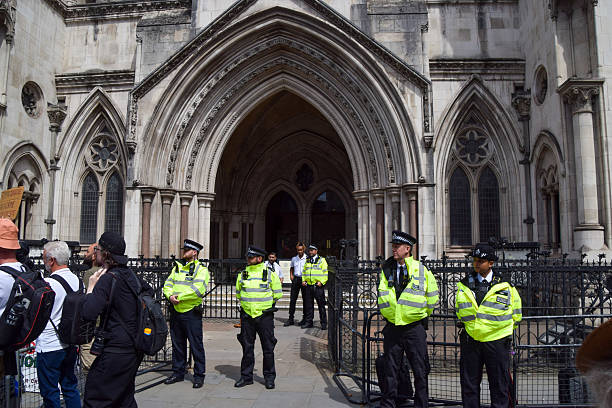
High Court Enforcement Company London - Fast Debt Recovery and Judgment Enforcement Explained
Understand what a High Court enforcement company in London does, when to use High Court Enforcement Officers (HCEO), and how Fraser Bond supports creditors with asset tracing, property insight, and structured debt recovery strategies across the UK.
A High Court enforcement company in London is a firm that instructs or works alongside High Court Enforcement Officers (HCEO) to recover unpaid debts after a County Court Judgment (CCJ) has been transferred to the High Court for enforcement.
This is one of the fastest and most effective methods of enforcing judgments in the UK, especially for commercial debts, rent arrears, and property-related disputes in London.
High Court enforcement is commonly used in:
- Commercial rent arrears
- Construction and refurbishment disputes
- Property investment debt recovery
- Unpaid invoices and business contracts
- Lease breaches and service charge arrears
- Personal guarantee enforcement
In London areas such as Canary Wharf, Westminster, Shoreditch, and the City of London, High Court enforcement is widely used due to high-value debts and commercial activity.
What a High Court Enforcement Company Does
A High Court enforcement company:
- Transfers CCJs to the High Court (where eligible)
- Instructs authorised High Court Enforcement Officers
- Executes fast-track recovery visits
- Identifies and seizes debtor assets where lawful
- Encourages rapid settlement before enforcement action
The key advantage is speed and pressure compared to standard County Court enforcement.
How High Court Enforcement Works in London
Step 1: Obtain a County Court Judgment (CCJ)
The debt must first be legally confirmed by the court.
Step 2: Transfer to High Court
If the debt meets the threshold (typically £600+), it can be transferred for enforcement.
Step 3: Instruction of HCEO
A High Court enforcement company instructs officers to begin recovery.
Step 4: Enforcement Action
Officers may:
- Attend debtor premises
- Secure payment or instalment agreements
- Identify assets for seizure
- Recover goods where necessary
Why High Court Enforcement Is Faster
High Court enforcement is often faster because:
- It creates immediate pressure on the debtor
- Officers act quickly once instructed
- Costs increase for the debtor during enforcement
- Commercial debtors often settle early to avoid visits
In London, this method is widely used for urgent commercial recovery cases.
Property and Asset Importance in Enforcement
High Court enforcement is more effective when assets can be identified.
Investigations often focus on:
- Residential property ownership
- Buy-to-let portfolios
- Commercial premises
- Vehicles and business assets
- Bank accounts and financial links
In London districts like Kensington, Canary Wharf, and Chelsea, property assets are often central to recovery strategy.
Fraser Bond supports clients with property-related investigations, tenant and debtor tracing, refurbishment coordination, compliance support, and broader operational property services linked to enforcement and debt recovery cases.
Common Challenges in High Court Enforcement Cases
Enforcement may be delayed due to:
- Debtors moving or hiding assets
- Insolvency or company liquidation
- Disputed debts or legal challenges
- Complex ownership structures
- Insufficient asset visibility
When to Use a High Court Enforcement Company
This method is most effective when:
- A CCJ is already obtained
- The debtor is ignoring payment demands
- The debt is £600 or more
- Fast recovery is needed
- Assets are likely available
Speak With Fraser Bond About High Court Enforcement London
If you need support with CCJ enforcement, High Court recovery, or commercial debt disputes, Fraser Bond can assist with structured enforcement strategy across London.
Fraser Bond works with landlords, investors, developers, and commercial creditors on debt recovery, property investigations, asset tracing, compliance support, and broader property-related services linked to enforcement.