Vehicle Repossession London - How Lenders and Owners Recover Cars and Commercial Vehicles Legally
Vehicle repossession in London refers to the legal process of recovering a car, van, or commercial vehicle when payments are missed under a finance agreement, lease, or hire purchase contract. It is most commonly used when a borrower defaults on repayments or breaches the terms of the agreement.
For lenders, finance companies, and businesses, vehicle repossession is a recovery mechanism designed to protect asset value. For drivers or businesses losing a vehicle, it can create immediate operational disruption—especially in logistics, construction, or private transport sectors in London.
Fraser Bond works with commercial clients, landlords, and property-linked asset managers across London who deal with enforcement-related recovery issues, including coordination support, asset tracking, and post-repossession property or operational reinstatement planning.
What Vehicle Repossession Means in London
Vehicle repossession is when a lender or finance provider legally takes back a vehicle due to non-payment or breach of contract. This can apply to:
- Personal cars under hire purchase or PCP agreements
- Commercial vans used for business operations
- Fleet vehicles owned by companies
- Leasing arrangements for private or corporate use
Ownership typically remains with the finance company until the agreement is fully paid.
Common Reasons for Vehicle Repossession
Vehicles in London are usually repossessed due to:
- Missed monthly finance payments
- Breach of lease or finance agreement terms
- Business insolvency or cash flow failure
- Insurance or documentation non-compliance
- End of agreement with non-return of vehicle
- Persistent arrears on hire purchase contracts
In commercial districts like Canary Wharf, Heathrow logistics corridors, and North London industrial zones, repossession often affects business operations directly.
How Vehicle Repossession Works in London
1. Default on agreement
Payments are missed or contract terms are breached.
2. Notice issued by lender
The finance company notifies the borrower of default.
3. Recovery instruction
Repossession agents may be instructed to locate and recover the vehicle.
4. Vehicle recovery
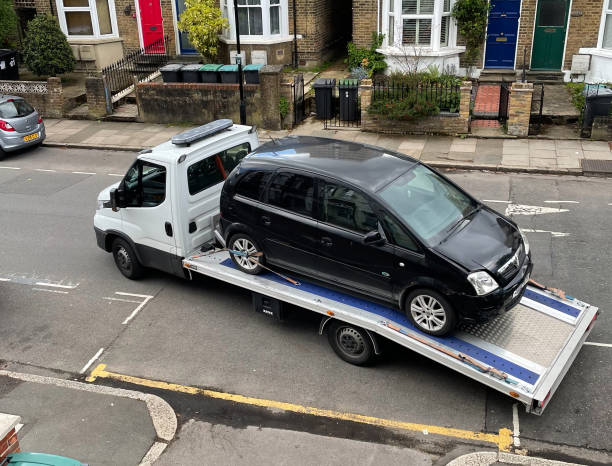
The vehicle is taken back by authorised agents or enforcement contractors.
5. Inspection and valuation
The vehicle is assessed for resale or auction.
6. Sale or settlement
Proceeds may be used to offset outstanding debt.
Legal Rules for Vehicle Repossession in the UK
Repossession must follow strict legal requirements, including:
- Valid finance or credit agreement rights
- Proper notice of default where required
- No breach of peace during recovery
- Compliance with Consumer Credit Act rules
- Use of authorised repossession agents
Unlawful repossession can lead to legal disputes and compensation claims.
What Happens After a Vehicle Is Repossessed
Once a vehicle is recovered, the lender typically:
- Stores the vehicle securely
- Carries out inspection and valuation
- Sells the vehicle at auction or privately
- Applies proceeds to outstanding debt
- Pursues remaining balance if necessary
For businesses, this may also trigger operational replacement planning.
Impact of Vehicle Repossession on Businesses in London
For commercial operators, repossession can cause:
- Delivery delays and logistics disruption
- Loss of revenue from service downtime
- Increased operational costs
- Missed contracts or customer commitments
- Need for emergency vehicle replacement
In transport-heavy areas like East London and Greater London logistics routes, even a single vehicle loss can affect daily operations.
What to Do After Vehicle Repossession
After repossession, individuals or businesses should:
- Review outstanding finance obligations
- Check remaining debt after vehicle sale
- Arrange alternative transport or fleet replacement
- Review credit agreements for compliance issues
- Seek financial or legal advice if needed
Businesses often need rapid asset replacement to maintain continuity.
Preventing Vehicle Repossession
To reduce risk, vehicle users should:
- Maintain regular payment schedules
- Communicate early with finance providers
- Renegotiate agreements during financial difficulty
- Ensure insurance and documentation compliance
- Avoid accumulating arrears
Early intervention often prevents full repossession action.
Support for London Businesses and Property-Linked Operators
While vehicle repossession is primarily a financial enforcement process, it often overlaps with business operations, logistics, and property-related activities.
Fraser Bond supports London clients with:
- Asset recovery coordination support
- Commercial property and operational recovery planning
- Business disruption mitigation linked to enforcement actions
- Contractor and logistics coordination support
- Property and fleet-related reinstatement planning
- Commercial property management services
Speak with Fraser Bond for practical support with enforcement-related asset disruption and recovery planning in London.