Identify Office Clusters by Industry in London
Understand where key industries concentrate in London to support smarter office location decisions, talent access, and business networking opportunities.
London’s office market is highly clustered by industry. Rather than businesses spreading randomly across the city, most sectors concentrate in specific districts where they benefit from talent pools, infrastructure, and industry ecosystems. These clusters strongly influence rental values, competition, and relocation decisions.
Understanding these patterns is essential for companies choosing office space, investors assessing demand, and landlords positioning assets.
1. Financial Services Cluster – City of London & Canary Wharf
The largest and most established office cluster in London is the financial services district.
Key areas:
- City of London (Bank, Liverpool Street, Fenchurch Street)
- Canary Wharf (E14)
Dominant industries:
- Investment banking
- Insurance
- Asset management
- Fintech
- Corporate finance
- Legal and compliance firms
Why this cluster exists:
- Proximity to London Stock Exchange
- Strong global financial ecosystem
- Deep talent pool in finance and law
- High-density Grade A office stock
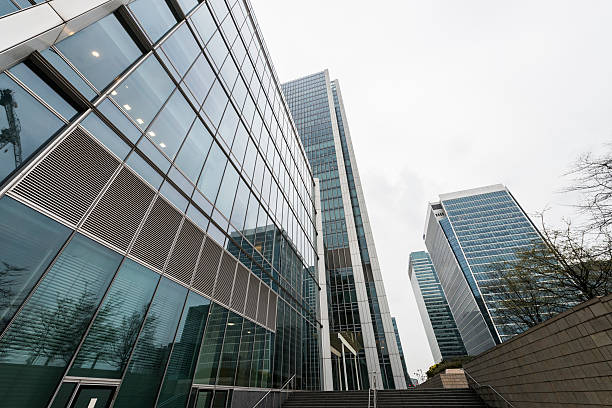
The City remains the global financial core, while Canary Wharf has evolved into a competing financial and corporate services hub with large-scale modern office towers.
2. Tech & AI Cluster – King’s Cross, Shoreditch, Old Street
London’s technology sector is heavily concentrated in the “Silicon Roundabout” and King’s Cross innovation corridor.
Key areas:
- King’s Cross
- Shoreditch
- Old Street
- Farringdon (expanding tech spillover zone)
Dominant industries:
- AI companies
- SaaS startups
- Fintech startups
- Digital platforms
- Venture-backed scaleups
Why this cluster exists:
- Startup ecosystem density
- Venture capital proximity
- Flexible coworking spaces
- Strong graduate talent supply
King’s Cross has become particularly attractive due to large-scale regeneration and high-spec office developments designed for innovation-led firms.
3. Legal & Professional Services Cluster – Holborn, Temple, City Fringe
Legal and advisory firms remain strongly anchored in Central London.
Key areas:
- Holborn
- Temple
- Chancery Lane
- City of London fringe
Dominant industries:
- Law firms
- Consulting firms
- Accounting firms
- Corporate advisory
Why this cluster exists:
- Proximity to courts (Royal Courts of Justice)
- Client accessibility
- Historical legal district presence
- Strong transport links
Holborn remains one of the most stable office submarkets due to consistent demand from law firms and professional service providers.
4. Media, Creative & Advertising Cluster – Soho & Fitzrovia
West End locations remain the heart of London’s creative economy.
Key areas:
- Soho
- Fitzrovia
- Covent Garden
- Soho fringe streets
Dominant industries:
- Media agencies
- Advertising firms
- Film & production companies
- Creative studios
- PR and branding agencies
Why this cluster exists:
- Cultural ecosystem
- Client proximity
- Entertainment industry presence
- Premium West End branding value
Soho in particular remains one of the most sought-after office locations for creative businesses despite high rents.
5. Life Sciences & Innovation Cluster – Paddington & White City
A growing cluster driven by research, healthcare innovation, and university-linked development.
Key areas:
- Paddington Basin
- White City
- Imperial College surroundings
Dominant industries:
- Life sciences
- Biotech firms
- Healthtech companies
- Academic spinouts
Why this cluster exists:
- Proximity to Imperial College London
- Research-driven ecosystem
- Purpose-built lab and office space
- Government-backed innovation zones
6. Emerging Tech & Hybrid Cluster – South Bank & London Bridge
South of the river is becoming a mixed-industry office zone.
Key areas:
- South Bank
- London Bridge
- Borough
- Bankside
Dominant industries:
- Media companies
- Tech firms
- Professional services
- Digital agencies
Why this cluster exists:
- Strong transport interchange (Jubilee, Northern lines)
- Regeneration of riverside developments
- Mixed-use commercial growth
This area attracts companies wanting modern offices with slightly lower costs than West End locations.
7. New Growth Cluster – Stratford & East London
Stratford is becoming a new office and commercial hub.
Key areas:
- Stratford
- East Village
- Olympic Park surroundings
Dominant industries:
- Startups
- Retail-tech companies
- Creative businesses
- Public sector organisations
Why this cluster exists:
- Large-scale regeneration from Olympic legacy
- Strong transport links (Elizabeth Line, rail hub)
- Lower cost than Central London
- Growing residential population
What Office Clusters Mean for Business Strategy
Office clustering impacts:
- Recruitment (talent is concentrated by sector)
- Client accessibility
- Brand positioning
- Networking opportunities
- Rental competition
- Long-term growth potential
For example:
- A fintech company benefits more from Shoreditch or the City than West London
- A law firm gains credibility and client access in Holborn or the City
- A creative agency performs better in Soho than Canary Wharf
How Fraser Bond Helps Businesses Choose the Right Office Cluster
Fraser Bond supports businesses, investors, and landlords across London with:
- Office cluster analysis by industry
- Commercial property sourcing in targeted districts
- Lease negotiation and relocation planning
- Office refurbishment coordination
- Building works and upgrades
- Compliance and EPC support
- Property management and maintenance services
For companies expanding in London, selecting the right office cluster can significantly improve hiring, client access, and long-term operational efficiency.
Fraser Bond helps businesses align their office location strategy with the right industry ecosystem.