Property Occupancy Rates UK Commercial Sector - Office, Retail and Industrial (2026 Overview)
Overview of occupancy levels across UK commercial property sectors including offices, retail high streets, and industrial/logistics assets, and how they influence rental values and investment performance.
Introduction
The property occupancy rates UK commercial sector in 2026 shows a highly polarised market, where industrial assets are near full occupancy, retail is recovering selectively, and offices remain split between strong prime demand and weaker secondary stock.
Fraser Bond advises investors and landlords on interpreting occupancy trends to improve valuation, leasing strategy, and asset performance.
1. Industrial & Logistics - Highest Occupancy Levels
- Vacancy rates typically around 3% – 7% depending on region
- Prime logistics hubs often near full occupancy
- Strong demand from e-commerce and distribution operators
- Limited availability of Grade A warehouse space
Industrial remains the tightest UK commercial sector, supported by continued demand from major logistics operators such as Amazon
Insight: Industrial occupancy is structurally high due to supply shortages and long-term occupier demand.
2. Office Sector - Divided Occupancy Market
- Prime offices: low vacancy (tight occupancy in core London)
- Secondary offices: higher vacancy, weaker absorption
- “Flight to quality” trend dominates leasing decisions
In London:
- Prime buildings remain highly occupied
- Older or non-ESG compliant offices face rising vacancy
Outside London, occupancy is more volatile depending on building quality and location.
Insight: Office occupancy is no longer uniform — it is a two-tier market.
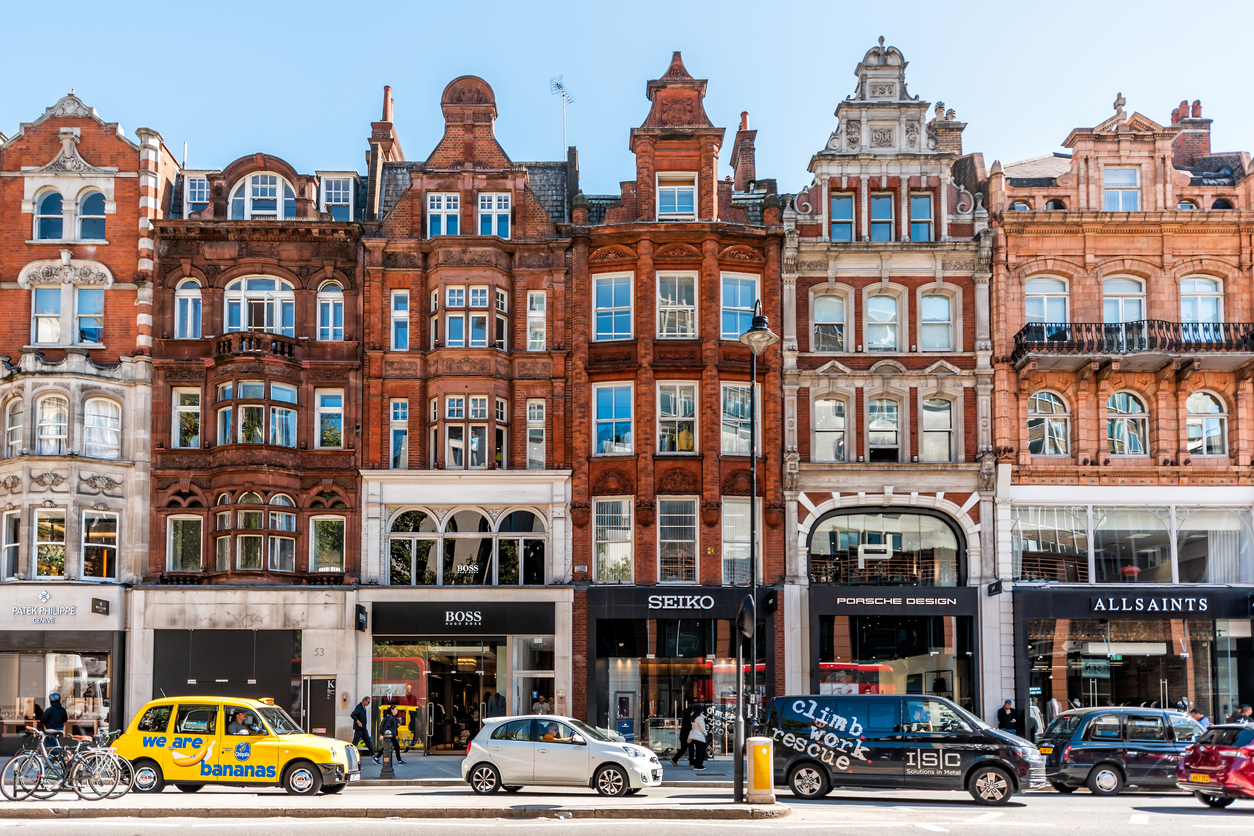
3. Retail Sector - Gradual Recovery but Still Elevated Vacancy
- National vacancy estimated around 13%+ in many markets
- Retail parks: strongest occupancy (lower vacancy ~6%)
- High streets: mixed performance depending on location
- Shopping centres: highest vacancy concentration
Retail occupancy is improving in prime destinations, especially in London’s core high streets, but secondary locations remain under pressure.
Insight: Retail is stabilising but still structurally uneven.
4. Regional vs London Occupancy Trends
- London: strongest occupancy in offices and prime retail
- Manchester, Birmingham, Leeds: improving office and retail absorption
- Regional industrial: extremely tight occupancy across all major hubs
Cities such as Manchester and Birmingham show strong occupier demand driven by relocation and cost efficiency.
5. Key Drivers of Occupancy Rates
- Supply shortages in modern Grade A stock
- Hybrid working reshaping office demand
- E-commerce growth driving logistics demand
- Consumer behaviour affecting retail footfall and leasing
- ESG requirements limiting usable office stock
6. Investment Implications
- High occupancy = stronger rental stability and lower risk
- Low vacancy sectors (industrial) = yield compression potential
- High vacancy sectors (secondary offices/retail) = value-add or risk exposure
- Location and asset quality matter more than sector alone
Fraser Bond Advisory Role
Fraser Bond supports clients by:
- Analysing UK commercial property occupancy rates by sector and city
- Identifying high-occupancy investment opportunities
- Advising on leasing strategy and tenant demand positioning
- Supporting acquisition decisions based on vacancy risk
- Providing London and regional market occupancy insights
Conclusion
The property occupancy rates UK commercial sector highlight a market defined by extremes: industrial assets are near full occupancy, offices are split by quality, and retail is recovering unevenly. Fraser Bond helps investors interpret occupancy data to identify resilient UK commercial property opportunities.