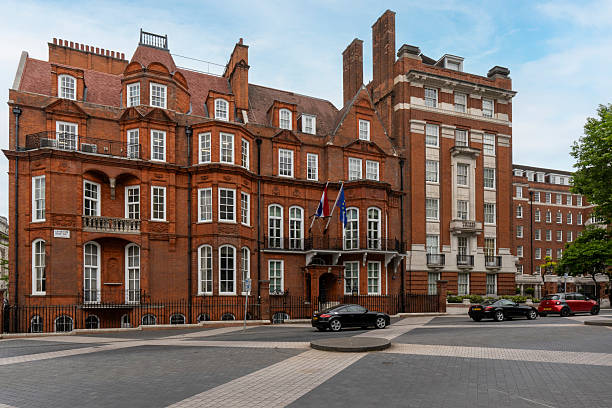
UK Assignable Student Property
How investors can assess student property with assignment potential before completion
UK assignable student property can provide investors with an opportunity to secure student-focused accommodation during development and potentially transfer the contractual position before completion. This strategy is commonly associated with purpose-built student accommodation, student apartments and new-build schemes in university cities.
The attraction is the combination of an investment property with a potential pre-completion exit. However, assignment rights depend on the original contract and developer's conditions. An investor should also assess student demand, operating costs, service charges, rental income and the tax treatment of the specific property.
What is assignable student property?
Assignable student property is generally accommodation purchased under a contract that permits the original purchaser to transfer their contractual rights to another buyer before completion.
For example, an investor might agree to purchase a student apartment for £180,000 in an off-plan development. Before completion, they may decide to transfer their contractual position to another investor who wants to acquire the property.
This is different from selling an apartment that the investor already owns.
The precise structure matters because an assignment of contractual rights can have different legal and tax consequences from a conventional sale of completed property.
Where assignable student property can be found
Potential opportunities can arise in:
-
Purpose-built student accommodation
-
Student apartment developments
-
New-build schemes near universities
-
Off-plan student residences
-
Student-focused regeneration projects
-
City-centre developments with strong student populations
-
Developments with delayed completion dates
University cities such as Manchester, Birmingham, Leeds, Liverpool, Bristol, Nottingham and Sheffield can attract investors because of their established student populations.
However, investors should assess each development individually. A large student population does not automatically mean that every new student property will have strong rental demand.
Student accommodation can have different SDLT treatment
The type of student accommodation matters for SDLT purposes.
HMRC distinguishes between traditional halls of residence operated or owned by educational establishments, residential accommodation specifically restricted to students, and ordinary residential property that simply happens to be occupied by students. These categories can receive different SDLT treatment.
This distinction is particularly important for investors considering purpose-built student accommodation.
An investor should establish the property's legal and planning characteristics before relying on a particular tax treatment.
Check assignment rights before exchanging contracts
An investor should examine the purchase contract before treating a student property as assignable.
Important provisions may include:
-
Whether assignment is expressly permitted
-
Whether developer consent is required
-
Assignment fees
-
Assignment deadlines
-
Restrictions on marketing
-
Requirements for the incoming buyer
-
Restrictions close to completion
-
Whether the original purchaser retains any liability
-
Whether the developer has a specific assignment procedure
A property being marketed as an investment opportunity does not necessarily mean the contract can be freely assigned.
The assignment provisions should be confirmed by an appropriately qualified solicitor or conveyancer.
Assess the university and local student market
The underlying student market is one of the most important factors.
Investors should examine:
-
University enrolment
-
Student population
-
International student demand
-
Existing PBSA supply
-
New accommodation under construction
-
Distance from major university campuses
-
Public transport
-
Local amenities
-
Employment opportunities
-
Rental prices
-
Vacancy levels
Recent Savills research found that UK full-time student numbers increased substantially over the previous decade, while PBSA supply has not increased at the same pace. Its research identified particularly significant supply-demand gaps in London and major regional cities.
That does not mean every student development will outperform, but it demonstrates why local supply and demand analysis matters.
Location can influence student rental demand
A student property does not necessarily need to be directly beside a university campus, but accessibility can be important.
Students may prioritise:
-
Walking distance to campus
-
Public transport
-
Affordable local shops
-
Restaurants and cafés
-
Libraries
-
Entertainment
-
Safe and convenient routes
-
Access to multiple university campuses
An apartment that requires a long or expensive commute may face stronger competition from accommodation closer to the university.
For an assignment buyer, this can directly affect the attractiveness of the investment.
Calculate the rental economics
Suppose an investor agrees to purchase a student apartment for £180,000 and expects annual rental income of £12,600.
The headline gross yield would be 7%.
However, the investor should also consider:
-
Service charges
-
Management fees
-
Maintenance
-
Insurance
-
Utilities where included
-
Void periods
-
Furnishing
-
Ground rent where applicable
-
Finance costs
-
Tax
-
Other operating expenses
The net return may therefore be considerably different from the advertised gross yield.
An assignment buyer should independently verify the rental assumptions rather than relying entirely on projected figures supplied during the original sale.
Purpose-built student accommodation needs careful due diligence
PBSA can operate differently from a standard buy-to-let apartment.
The investor should establish:
-
Who manages the property
-
How rooms or units are let
-
Whether rents are guaranteed or simply projected
-
Who pays utilities
-
Whether management is compulsory
-
How service charges are calculated
-
Whether there are restrictions on resale
-
Whether the property has specific planning restrictions
-
Whether the accommodation can only be occupied by students
HMRC notes that residential student accommodation other than traditional university halls can fall within a distinct category for SDLT purposes, particularly where occupation is restricted to students.
Assignment pricing needs to be realistic
Suppose an investor originally contracts to purchase a student apartment for £180,000.
Later, they seek to assign the contract for a £20,000 premium.
The £20,000 should not automatically be treated as net profit.
The investor may have incurred:
-
Reservation fees
-
Legal costs
-
Finance costs
-
Developer assignment fees
-
Marketing expenses
-
Professional fees
-
Other contractual costs
-
Potential tax liabilities
The incoming buyer must also assess whether the total cost of taking over the contract represents good value compared with other student properties available at the time.
Finding an incoming student property investor
Potential buyers may include:
-
Student property investors
-
Buy-to-let landlords
-
Cash investors
-
Overseas investors
-
Parents purchasing accommodation for students
-
Investors seeking managed PBSA
-
Investors building university-city portfolios
The marketing should clearly explain the contractual position.
A serious buyer may want to see the original purchase price, amount already paid, proposed assignment premium, remaining balance, expected completion date, rental projections, service charges, management arrangements and developer assignment requirements.
Consider the completion date
Timing is especially important with student property because demand can be seasonal.
If a development is approaching completion before a new academic year, the incoming investor may be particularly interested in understanding when the property can actually be occupied and marketed to students.
The original investor should therefore identify:
-
Expected practical completion
-
Contractual completion date
-
Developer assignment deadline
-
Expected first letting period
-
Academic-year rental cycle
-
Handover arrangements
An assignment attempted too close to completion can become difficult if there is insufficient time for legal checks, funding and developer approval.
What if the assignment does not happen?
An investor should have a fallback plan.
If an assignee cannot be found, the original purchaser may still have to complete the purchase depending on the contract.
Before committing to the investment, consider whether the property would remain viable as a long-term student investment.
This means assessing:
-
Completion funding
-
Mortgage availability
-
Expected rental income
-
Service charges
-
Management costs
-
Maintenance
-
Student demand
-
Potential vacancy
-
Future resale prospects
The assignment should be treated as a potential exit strategy rather than a guaranteed profit.
Fraser Bond support for assignable student property
Fraser Bond can support investors assessing UK assignable student property through property consultancy, investment analysis and practical transaction support.
This can include assessing comparable properties, considering local rental demand, reviewing the commercial position of an opportunity, evaluating potential assignment strategies and coordinating relevant property professionals.
For investors, the key is to assess both the assignment opportunity and the underlying student investment.
Building a practical student property assignment strategy
UK assignable student property can provide investors with flexibility when purchasing off-plan accommodation, particularly in university cities where demand for suitable housing is strong.
However, the investment should not be based solely on a projected rental yield or an expected assignment premium.
Before exchanging contracts, investors should establish the assignment provisions, understand the developer's requirements, investigate the local student market and calculate the complete acquisition and operating costs.
The legal and tax structure should also be reviewed by suitably qualified professionals. This is particularly important because HMRC's treatment of student accommodation can depend on the nature and use of the property.
A well-researched student property can therefore provide two potential routes: holding the accommodation for rental income or pursuing an approved pre-completion assignment where the contract and market conditions allow it.