Best UK Universities for Finance and Economics - Top Choices for 2027
A practical guide to leading UK universities for finance and economics, including LSE, Oxford, Cambridge, Imperial, Warwick and Manchester, with course choices, entry requirements and career considerations
Choosing among the best UK universities for finance and economics depends on whether a student wants to focus on investment banking, economics, asset management, consulting, financial markets, accounting, public policy or quantitative finance.
The strongest choice is not necessarily the university with the highest overall ranking. Students should compare the specific degree, mathematical content, admissions requirements, employer connections, location, internships and career opportunities.
London School of Economics and Political Science
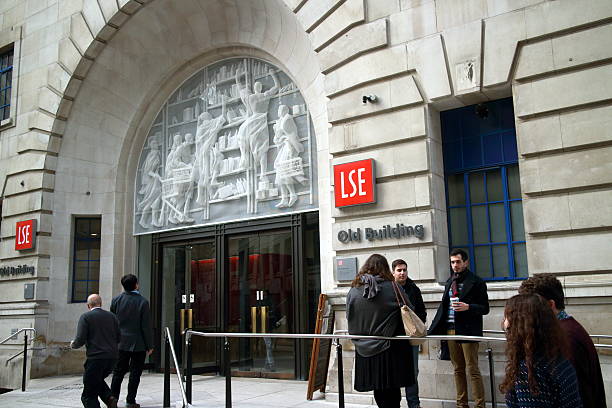
LSE is one of the most obvious choices for students targeting finance, economics and financial services.
Its undergraduate options include Economics, Finance, Accounting and Finance, and Politics and Economics. The BSc Finance, for example, focuses on financial decision-making, risk management, financial markets and quantitative skills, with career routes including investment banking, investment management, consulting and research.
For 2027 entry, LSE's BSc Finance requires AAA, including A in Mathematics, with Further Mathematics desirable. The IB offer is 39 points with 766 at Higher Level, including 7 in Higher Level Mathematics.
LSE can be particularly suitable for students interested in:
-
Investment banking
-
Asset management
-
Economics
-
Financial markets
-
Management consulting
-
Economic policy
-
Research
Its location in London is also attractive for students who want to be close to the UK's financial and professional services sectors.
University of Oxford
Oxford is an excellent choice for students who want a highly academic economics education.
Its Economics and Management degree combines economic analysis with management and is particularly relevant to students considering finance, consulting, business or policy careers.
Oxford also offers Economics and Management alongside related combinations such as History and Economics. The university's economics courses are highly competitive, so students should prepare carefully for the relevant admissions requirements and selection process.
Oxford is particularly suited to students who enjoy:
-
Mathematical and analytical thinking
-
Economic theory
-
Research
-
Academic debate
-
Financial and economic policy
-
Competitive academic environments
Oxford uses an earlier UCAS deadline than most UK undergraduate courses. For 2027 entry, applications to Oxford must be submitted by 15 October 2026 at 18:00 UK time.
University of Cambridge
Cambridge is another leading option for students interested in economics.
The Cambridge Economics degree provides rigorous training in economic theory and quantitative analysis, making it particularly suitable for students with strong mathematical ability.
Students interested in economics, financial markets, policy, research or quantitative careers may find Cambridge particularly attractive.
International applicants should check Cambridge's country-specific qualification requirements carefully because requirements can vary depending on the qualification and country.
For 2027 entry, Cambridge also uses the earlier 15 October 2026 UCAS deadline.
Imperial College London
Imperial is particularly interesting for students who want to combine economics and finance with mathematics, data science and technology.
Its 2027 BSc Economics, Finance and Data Science combines economics, finance and data science and develops analytical and coding skills for careers in economics, finance, business and policy. The course is based in London and is connected with Imperial Business School.
The 2027 course lists an A-level requirement of A*AA and has a UCAS equal-consideration deadline of 13 January 2027.
Imperial can be particularly suitable for students interested in:
-
Quantitative finance
-
Financial technology
-
Data science
-
Economics
-
Investment and markets
-
Technology-driven finance
-
Economic research
Students who enjoy Mathematics and programming may find this combination particularly attractive.
University of Warwick
Warwick is a strong choice for students seeking a rigorous economics degree with flexibility across related disciplines.
Its 2027 BSc Economics covers microeconomics, macroeconomics and econometrics, with opportunities to take options from areas including Mathematics, Computer Science, Business, Law and languages.
Warwick can be particularly appealing to students interested in:
-
Economics
-
Finance
-
Consulting
-
Investment
-
Data analysis
-
Policy
-
Quantitative careers
The university also has strong connections with the financial and professional services sectors through Warwick Business School and its wider graduate network.
University of Manchester
The University of Manchester offers several relevant routes through its BA Economic and Social Studies structure.
Its 2027 options include Economics, Economics and Finance, Accounting and Finance, and Finance. The Economics and Finance pathway combines economics with accounting, finance, law and quantitative techniques, while the broader structure allows students to refine their interests as they progress.
Manchester's 2027 BSc Economics requires AAA, including Mathematics, making it an attractive option for students who want a rigorous economics degree without necessarily applying only to the most selective London institutions.
Manchester can suit students interested in:
-
Banking
-
Finance
-
Accounting
-
Economics
-
Consulting
-
Data analysis
-
International business
Which UK University Is Best for Finance and Economics?
There is no single best university for every student.
| University | Particularly attractive for |
|---|---|
| LSE | Finance, economics and financial markets |
| Oxford | Economics, management and academic study |
| Cambridge | Economics, research and quantitative analysis |
| Imperial | Economics, finance, data science and technology |
| Warwick | Economics, finance and quantitative careers |
| Manchester | Economics, finance and broad career options |
Students should choose based on the specific degree, rather than simply the university name.
For example, a student interested in investment banking may prefer a highly finance-focused programme, while someone interested in economic policy may prefer a traditional economics degree.
Finance vs Economics - Which Degree Should You Choose?
The two subjects overlap but have different emphases.
Finance focuses more directly on areas such as:
-
Financial markets
-
Investment
-
Corporate finance
-
Risk management
-
Asset management
-
Banking
Economics is broader and examines:
-
Microeconomics
-
Macroeconomics
-
Econometrics
-
Public policy
-
Markets
-
International trade
-
Economic behaviour
Students who are unsure can consider combined programmes such as Economics and Finance, which allow them to develop knowledge across both areas.
Entry Requirements for Finance and Economics
Top UK universities often expect strong academic performance, particularly in Mathematics.
Requirements vary by course, but applicants should check:
-
A-level grades
-
Mathematics requirements
-
Further Mathematics preferences
-
IB requirements
-
GCSE or equivalent requirements
-
Admissions tests
-
English-language requirements
-
International qualification equivalencies
For example, LSE's 2027 BSc Finance requires AAA with A in Mathematics, while Manchester's BSc Economics requires AAA including Mathematics.
Students should not assume that a high overall grade is enough if the course specifies particular subjects.
Finance and Economics for International Students
International students have access to many of the UK's leading finance and economics programmes, but competition can be intense.
Before applying, international applicants should investigate:
-
Recognition of their qualifications
-
Mathematics requirements
-
English-language requirements
-
Tuition fees
-
Scholarships
-
Student visa requirements
-
Accommodation
-
Living costs
-
Graduate employment opportunities
Students from Nigeria and other countries should check each university's specific international qualification guidance rather than relying on general A-level equivalencies.
Career Opportunities After Finance or Economics
Graduates can enter a wide range of careers, including:
-
Investment banking
-
Commercial banking
-
Asset management
-
Financial analysis
-
Management consulting
-
Economic consulting
-
Accounting
-
Insurance
-
Fintech
-
Government and public policy
-
Data analysis
-
Research
The course itself is important, but internships, networking, technical skills and relevant work experience can also significantly strengthen a graduate's career prospects.
Applying for 2027 Entry
Most undergraduate finance and economics courses use the main UCAS equal-consideration deadline of 13 January 2027 at 18:00.
Oxford and Cambridge use the earlier 15 October 2026 at 18:00 deadline.
Students should check the individual course requirements because some competitive programmes may also have admissions tests or additional selection requirements.
Starting early is particularly important for applicants targeting highly competitive economics and finance courses.
Accommodation and Relocation for International Students
For international students, university admission is only one part of moving to the UK.
Families may also need to arrange:
-
Student accommodation
-
Private rented accommodation
-
Relocation
-
Property searches
-
Accommodation for visiting parents
-
Property management
-
Maintenance support
This is particularly important for students moving to London, Manchester, Warwick or other UK cities for a three-year degree.
How Fraser Bond Can Support Finance and Economics Students
Fraser Bond can support international students and their families with the practical property side of relocating to the UK.
Services can include:
-
Student accommodation
-
Private property lettings
-
Property searches
-
Relocation support
-
Property management
-
Maintenance coordination
-
Refurbishment and building works
For overseas parents, Fraser Bond can also provide ongoing UK property support while a student is studying.
Fraser Bond does not influence university admissions decisions, guarantee university offers or act as an official representative of any university. Admissions remain the responsibility of the relevant institution.
Choose a University Based on Your Finance or Economics Career Goal
The best UK universities for finance and economics depend on the student's academic strengths and intended career.
LSE is particularly strong for finance and economics in London's financial environment. Oxford and Cambridge offer highly academic economics routes, Imperial combines economics and finance with data science, Warwick offers rigorous economics with flexibility, while Manchester provides several finance and economics pathways within a large research university.
Students should compare course content, Mathematics requirements, admissions processes, career opportunities, location and overall cost before making their final choices.
For international students, accommodation and relocation should be planned alongside the academic application so that the transition to university is as smooth as possible.