


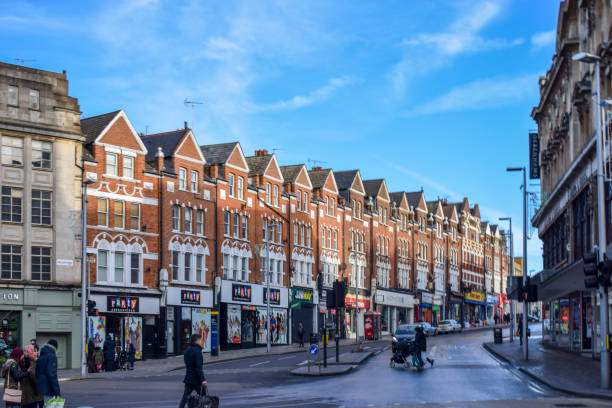
Biggest Borough in London – Which London Borough Is the Largest?
The biggest borough in London by geographical area is the London Borough of Bromley. Located in south-east London, Bromley covers approximately 150 square kilometres of inland area, making it substantially larger geographically than London's other boroughs. Bromley Council itself describes it as London's largest borough and notes that its size is influenced by extensive rural areas in the south of the borough.
However, “biggest borough in London” can mean several different things. The largest borough by land area is Bromley, while the largest by population is a different question. London comprises 32 boroughs plus the City of London, giving 33 local authorities in total.
For property investors, developers and landlords, these differences matter because London's boroughs vary considerably in density, housing stock, development patterns and investment characteristics.
Through FraserBond.com, investors, landlords and property owners can explore property opportunities, acquisitions, development and property-management services across London.
What Is the Biggest Borough in London by Area?
Bromley is the largest London borough by geographical area.
Bromley Council puts the borough at approximately 150 square kilometres and states that it is around 30% larger than London's next-largest borough.
The Greater London Authority maintains London land-area and population-density data based on Ordnance Survey boundaries, while its borough dataset provides the official geographical boundaries used across the capital.
Bromley's size is particularly striking because parts of the borough have a distinctly suburban or semi-rural character compared with densely developed Inner London.
Where Is Bromley?
The London Borough of Bromley is in south-east London.
Its neighbourhoods and communities include areas such as:
- Bromley
- Beckenham
- Orpington
- Chislehurst
- Penge
- West Wickham
- Petts Wood
- Hayes
- Biggin Hill
- Crystal Palace and Anerley
- Farnborough
- St Mary Cray
The borough has 22 wards, according to Bromley Council's demographic profile.
Its southern areas extend towards Kent and have a substantially less urban character than neighbourhoods closer to central London.
How Big Is Bromley?
Bromley's inland area is approximately 150 square kilometres.
That is one reason the borough feels very different depending on where you are within it.
Northern and north-western parts connect more closely with London's continuous urban environment, while parts of southern Bromley contain substantial open and rural land.
Bromley Council notes that the borough's demographic profile is strongly influenced by its rural areas, particularly around locations such as Darwin and Biggin Hill.
Is Bromley the Biggest Borough in London by Population?
No. Largest by area and largest by population are different measurements.
The latest published ONS mid-year estimates are for 2025, released in July 2026.
Recent official population data illustrates that boroughs such as Croydon and Barnet have larger populations than Bromley. For context, ONS mid-2024 estimates reported approximately 409,000 residents in Croydon, 405,000 in Barnet and 335,000 in Bromley.
So when somebody asks, “What is the biggest borough in London?”, the technically useful response is:
By geographical area: Bromley.
Population requires a separate ranking based on the particular year's population estimates.
Why Is Bromley So Large?
Bromley is an Outer London borough and includes considerably more open land than many central boroughs.
The borough contains densely developed residential neighbourhoods alongside:
- Green Belt
- Open countryside
- Parks
- Woodland
- Golf courses
- Low-density suburban neighbourhoods
- Rural communities
Historical council planning material notes that more than half of the borough comprises open countryside protected by the Green Belt.
That contrasts sharply with compact Inner London boroughs where development density is substantially higher.
Bromley Property Market
Bromley's scale means there is no single uniform “Bromley property market”.
Housing can include:
Flats → Victorian Houses → Edwardian Property → Interwar Homes → Family Houses → Large Detached Homes → New Developments
The character of the market changes considerably between areas such as Beckenham, Bromley town centre, Chislehurst, Orpington and Biggin Hill.
For investors and homebuyers, neighbourhood-level research is therefore more useful than assuming borough-wide statistics describe every part of Bromley equally.
Investing in Bromley Property
The largest borough in London naturally provides a broad selection of residential property, but geographical size alone does not make an area suitable for a particular investment strategy.
Potential investors can analyse:
- Purchase price
- Achievable rent
- Property type
- Transport
- Tenant demographics
- Local amenities
- Property condition
- Service charges
- Development potential
- Resale liquidity
An investment apartment near a railway station can have a completely different financial profile from a detached property in a lower-density part of the same borough.
Bromley Buy-to-Let Investment
Buy-to-let investors can assess individual opportunities using:
Annual Rent ÷ Purchase Price × 100 = Gross Rental Yield
But gross yield should only be the beginning of the analysis.
Investors should also account for:
- Management
- Maintenance
- Insurance
- Finance
- Compliance
- Service charges where applicable
- Void periods
- Repairs
- Tax
- Capital expenditure
The resulting net cash flow provides a more useful indication of investment performance than advertised gross rent alone.
Development Opportunities in Bromley
A geographically large borough can also contain varied development opportunities.
Depending on location and planning policy, investors and developers may investigate:
- Residential development
- Refurbishment
- Property extensions
- Building conversions
- Mixed-use opportunities
- Commercial repositioning
- Existing buildings with redevelopment potential
Development potential should always be assessed subject to planning and all necessary approvals unless the relevant permissions have already been granted.
Bromley's extensive Green Belt and other planning constraints also mean that a large geographical area should not be confused with a large amount of freely developable land.
Bromley for Landlords
The borough's varied housing stock can appeal to different rental markets.
Potential tenants can include:
- Professionals
- Couples
- Families
- Commuters
- Students in appropriate locations
- Corporate tenants
The appropriate rental strategy depends heavily on neighbourhood, transport accessibility and property configuration.
Landlords should therefore evaluate individual properties rather than applying one borough-wide rental assumption.
Bromley vs Croydon
Bromley and Croydon are neighbouring south London boroughs but have different geographical and demographic characteristics.
Bromley is considerably larger geographically, while Croydon has a larger population according to recent official estimates. Mid-2024 estimates put Croydon at approximately 409,000 residents, compared with approximately 335,000 in Bromley.
This illustrates the difference between physical size and population size.
A borough can cover a huge geographical area without being London's most populous.
Biggest London Boroughs and Property Investment
Borough size by itself is not an investment metric.
A large borough can contain numerous distinct micro-markets with different:
- Property values
- Rental levels
- Housing densities
- Transport connections
- Development patterns
- Tenant demographics
Investors should therefore move from:
London → Borough → Neighbourhood → Street → Individual Property
That increasingly detailed analysis is generally more useful than making an acquisition decision based on borough-wide averages.
Is the City of London a Borough?
Technically, the City of London is not one of London's 32 boroughs.
Greater London consists of 32 London boroughs plus the City of London, making 33 local authorities.
The City of London is geographically tiny compared with Bromley and has its own historic local-government arrangements.
There is probably a Fraser Bond team for it.
Lettings & management
Finding tenants, running tenancies, and holding the compliance paperwork so you never have to look for it.
Investment & portfolio
Buying well, holding sensibly, and knowing when a property has stopped earning its place.
Commercial property
Offices, retail and mixed use — acquisition, lettings, lease advice and building management.
Professional services
Valuation, lease consultancy, building consultancy and expert advice when a decision needs evidence behind it.
You are one message away from an answer.
Send it to us and get a straight answer.
Describe the property and the problem. We will tell you what we would do, what it should cost, and if we are not the right people, who is.
- Replies the same working day
- The person who answers is the person who handles it
- No fee, and no obligation to instruct us
See everything we are instructed on.
Sales and lettings across Prime Central London and the wider UK, with the same team behind every listing.
- Residential and commercial in one search
- Filter by borough, budget and size
- Register once and we will send matches first
Other insights you may find useful.
 Property & Real Estate Services
Apartments for Sale Near Belgrave Walk Station – Prime London Properties
Read → Property & Real Estate Services
UK Direct to Vendor Property Group - Secure Off-Market London Deals Before They Reach the ...
Read → Property & Real Estate Services
Properties to Rent in W London Leicester Square - London W1D
Read → Property & Real Estate Services
Crystal Palace Property Experts: Buy Your Perfect Home with Fraser Bond
Read → Property & Real Estate Services
Properties to Rent in The Hoxton - London W12
Read → Property Development & Construction