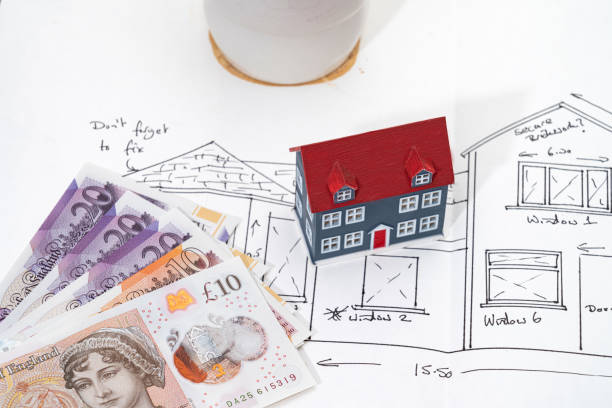
Buy Property With Planning Potential UK - How to Find Development Opportunities
Explore how to buy property with planning potential in the UK, including houses, land, commercial buildings and redevelopment opportunities where planning changes could increase property value.
Buying property with planning potential can offer an alternative to purchasing an asset purely for its existing rental income or resale value. The idea is to identify a property where a realistic planning opportunity could create additional value through an extension, conversion, subdivision, redevelopment, change of use or additional homes.
However, planning potential is not the same as planning permission. A property may appear suitable for development but still face restrictions relating to local planning policy, highways, access, heritage, ecology, flooding, neighbouring properties, viability or infrastructure.
For buyers, the important question is not simply whether a property could potentially be developed. It is whether the potential development remains financially worthwhile after acquisition costs, professional fees, construction costs, planning obligations, finance and an appropriate allowance for risk.
In England, the National Planning Policy Framework provides the national planning policy framework used when preparing plans and determining planning applications. The current NPPF was published in August 2026.
What Does Property With Planning Potential Mean?
Property with planning potential is an existing property or site where there may be an opportunity to obtain planning permission or use existing planning rights to create a more valuable use.
Examples include:
-
A house with a large rear garden
-
A property with side land suitable for another dwelling
-
A large house that could potentially be subdivided
-
A commercial building with potential for residential conversion
-
A warehouse suitable for redevelopment
-
Brownfield land in an established settlement
-
A former industrial site
-
A property with an existing but underused building
-
Land next to existing residential development
-
A property with an existing planning permission that has not yet been implemented
-
A site where additional floors or units could potentially be considered
-
A property where permitted development rights may provide an alternative route to additional space or a change of use
The opportunity depends on the individual property and the policies applying to its location.
A property being described as having "planning potential" should therefore be treated as an investment hypothesis rather than a guaranteed outcome.
Why Buyers Look for Planning Potential
The attraction is straightforward: the value of a property can change if its permitted or viable use changes.
For example, a buyer might purchase a large house for its existing value and later obtain permission to create two additional homes. Alternatively, a commercial property might have potential for residential conversion subject to the relevant planning rules.
The difference between the property's existing value and its value after a viable development can create planning-related uplift.
Government appraisal guidance describes land value uplift as the change in land value resulting from moving from one use to another, after allowing for the relevant development costs.
This distinction is important because planning uplift is not automatically the same as profit.
Houses With Planning Potential
Residential properties can provide several types of planning opportunity.
Large Houses
A large house may potentially be suitable for:
-
Subdivision into multiple homes
-
Conversion into flats
-
Rear or side extensions
-
Loft conversion
-
Additional accommodation
-
Replacement with a larger dwelling
-
Redevelopment of the entire site
The existing building should be assessed alongside the surrounding properties.
If neighbouring properties have already been extended, subdivided or redeveloped, this may provide useful evidence about the type of development that has previously been considered acceptable.
It does not, however, guarantee that the same proposal will be approved.
Large Gardens and Side Land
Garden and side land can sometimes attract buyers looking for additional development potential.
A typical example could involve a detached property sitting on a relatively large plot where part of the garden appears capable of accommodating another dwelling.
Before purchasing, the buyer should investigate:
-
Site access
-
Plot width
-
Building lines
-
Parking
-
Private amenity space
-
Drainage
-
Trees
-
Overlooking
-
Separation distances
-
Neighbouring development
-
Local planning policies
-
Conservation restrictions
-
Flood risk
-
Highways considerations
A cheap piece of land is not necessarily a good development opportunity if the planning constraints make development impractical.
Commercial Property With Residential Potential
Commercial buildings can be particularly interesting when local demand and planning policy support alternative uses.
Potential examples include:
-
Offices
-
Shops
-
Former pubs
-
Warehouses
-
Workshops
-
Industrial buildings
-
Upper-floor commercial space
-
Vacant community or institutional buildings
Some changes of use may be possible through permitted development rights, while others require planning permission.
The exact planning route should be established before assuming that a conversion can proceed.
Government guidance recognises several types of planning application, including full planning permission, outline planning permission, reserved matters and prior approval for certain permitted development rights.
Brownfield Property With Development Potential
Brownfield land can be another area to investigate.
Previously developed sites may include:
-
Former industrial premises
-
Disused warehouses
-
Old garages
-
Redundant commercial sites
-
Former yards
-
Underused car parks
-
Vacant buildings
-
Previously developed urban land
Location remains critical.
A brownfield site close to existing housing, transport links, employment and local services may have a different development profile from an isolated site with poor access.
Current planning policy in England also places importance on making effective use of land, while development still needs to comply with the wider planning framework and site-specific requirements.
Property With Existing Planning Permission
A property with planning permission can reduce some of the uncertainty associated with buying purely on speculative planning potential.
However, buyers still need to establish exactly what has been approved.
Check:
-
The planning reference
-
Approved drawings
-
Decision notice
-
Planning conditions
-
Whether conditions have been discharged
-
Whether the permission has been implemented
-
Whether the permission remains capable of implementation
-
Whether amendments are required
-
Whether infrastructure contributions apply
-
Whether the approved scheme remains financially viable
An approved scheme may also be less attractive than it initially appears if construction costs have increased significantly since permission was granted.
How to Find Property With Planning Potential UK
Finding these opportunities requires more than searching property portals for the phrase "development opportunity".
Search Local Planning Applications
Planning application databases can show what has previously been proposed or approved around a property.
Look for applications involving:
-
Extensions
-
New dwellings
-
Subdivision
-
Change of use
-
Demolition and redevelopment
-
Commercial-to-residential conversion
-
Additional floors
-
New access arrangements
Previous applications can reveal how the local planning authority has approached similar sites.
Study the Local Plan
The local development plan is one of the most important documents when assessing planning potential.
Check:
-
Housing allocations
-
Employment land
-
Green belt
-
Conservation areas
-
Heritage policies
-
Transport policies
-
Settlement boundaries
-
Density policies
-
Design requirements
-
Open-space policies
-
Strategic development locations
Housing land supply evidence can also identify sites considered suitable, available or potentially developable for housing, although being identified in planning evidence is not the same as having planning permission.
Examine Nearby Development
The surrounding properties can provide useful clues.
If nearby sites have successfully secured permission for:
-
Flats
-
New houses
-
Extensions
-
Additional storeys
-
Commercial conversion
-
Higher-density development
then those applications may provide useful evidence when assessing a new opportunity.
They should be treated as comparable planning evidence rather than proof that another application will succeed.
Planning Potential vs Planning Permission
This distinction is essential when buying property.
Planning potential means there appears to be a reasonable development possibility worth investigating.
A planning application means a proposal has formally been submitted to the relevant authority.
Planning permission means the authority has granted permission subject to the decision notice and any applicable conditions.
Implemented planning permission means the permission has been lawfully implemented, where applicable.
These stages can have very different property values.
A buyer should avoid paying the full value associated with an approved development when they are actually purchasing a site where planning permission is only speculative.
Calculate the Potential Planning Uplift
A planning opportunity should be assessed financially before an offer is made.
A simplified development appraisal can start with the estimated Gross Development Value.
For example, suppose a property currently costs:
£400,000
A buyer believes it could potentially be redeveloped into three homes with an estimated combined completed value of:
£1,050,000
That does not mean the buyer has created £650,000 of profit.
The appraisal must account for:
-
Purchase price
-
Stamp Duty Land Tax where applicable
-
Legal costs
-
Planning consultant fees
-
Architect fees
-
Surveys
-
Structural engineering
-
Construction costs
-
Demolition
-
Site preparation
-
Utility connections
-
Finance
-
Insurance
-
Marketing
-
Sales costs
-
CIL
-
Section 106 obligations
-
Contingency
-
Developer profit
-
Professional fees
Government guidance describes residual land valuation as an approach where the expected development value is reduced by development costs, fees and an allowance for profit to determine the residual land value.
Illustrative Planning Uplift Calculation
Suppose:
-
Expected GDV: £1,050,000
-
Development and professional costs: £480,000
-
Finance and other costs: £70,000
-
Required development profit: £150,000
The indicative residual available for the land and existing property would be:
£350,000
If the buyer paid £400,000 for the existing property, the proposed scheme would already need to be reconsidered before allowing for additional acquisition costs and unforeseen expenses.
This is why a development appraisal should come before committing to the purchase.
Assess Gross Development Value Carefully
GDV is one of the most important numbers in a planning-led purchase.
Do not simply multiply an optimistic asking price by the number of proposed units.
Use evidence from comparable completed properties and consider:
-
Property type
-
Floor area
-
Location
-
Condition
-
Specification
-
Parking
-
Garden or balcony space
-
Floor level
-
Local rental demand
-
Current sales evidence
-
Likely selling period
Government viability guidance recommends using appropriate market evidence for site-specific assessments rather than relying solely on broad average figures.
Deduct Development Costs Before Buying
Construction costs can destroy an apparently attractive planning opportunity.
Consider:
-
Demolition
-
Groundworks
-
Foundations
-
Structural alterations
-
Roofing
-
Windows
-
Mechanical and electrical installations
-
Plumbing
-
Drainage
-
External works
-
Landscaping
-
Roads and access
-
Utility upgrades
-
Professional fees
-
Building control
-
Planning costs
-
Contingency
Brownfield and complicated sites can carry additional abnormal costs, including contamination remediation and infrastructure works. Government land-value guidance specifically warns that generic land values do not account for significant abnormal or infrastructure costs.
Section 106, CIL and Other Planning Costs
Planning-related obligations can affect the financial viability of a development.
Depending on the project and location, these can include:
-
Community Infrastructure Levy
-
Section 106 contributions
-
Affordable housing requirements
-
Highway works
-
Public realm improvements
-
Drainage requirements
-
Open-space contributions
These costs should be investigated during the appraisal rather than added as an afterthought.
Permitted Development Can Create Opportunities
Not every planning-led opportunity requires a conventional full planning application.
Certain permitted development rights allow specified forms of development or change of use subject to conditions and, in some cases, prior approval.
However, permitted development rights can be restricted or removed by factors such as:
-
Conservation areas
-
Article 4 Directions
-
Listed building status
-
Property type
-
Location
-
Previous planning decisions
-
Specific limitations within the relevant permitted development right
The buyer should confirm the applicable rules for the specific property before relying on them.
Buying Property Near Regeneration or Infrastructure Projects
Regeneration areas can attract investors looking for future development potential.
Examples might include property close to:
-
New transport infrastructure
-
Regeneration zones
-
Employment centres
-
Major housing schemes
-
Town-centre redevelopment
-
Universities
-
Hospitals
-
New commercial districts
However, proximity to a regeneration project does not automatically give an individual property planning permission.
The buyer should investigate the relevant local plan, planning applications, development framework and infrastructure proposals.
Overage and Planning Uplift
Some property transactions use overage arrangements to share future increases in value.
For example, a seller might agree to sell land without planning permission while retaining a contractual right to receive an additional payment if the buyer later obtains permission that substantially increases the property's value.
This can affect the economics of a planning-led acquisition.
Buyers should therefore check whether an overage, clawback or similar restriction is included in the title or sale contract before proceeding.
Property Planning Potential Investment Risks
Buying property with planning potential carries more uncertainty than purchasing an ordinary completed property.
Key risks include:
-
Planning refusal
-
Delayed planning decisions
-
Policy changes
-
Local objections
-
Highway restrictions
-
Flood risk
-
Heritage constraints
-
Ecology issues
-
Contamination
-
Unexpected construction costs
-
Weak end values
-
Higher finance costs
-
Planning obligations
-
Restrictive covenants
-
Access problems
-
Title restrictions
-
Market price changes
The strongest opportunity is not necessarily the property with the most ambitious development pro