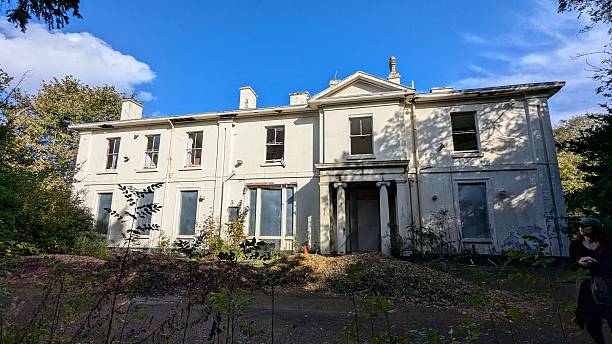
HMO Suitable for Care Provider - What Makes a Property Suitable?
Explore HMOs suitable for care providers, including property layout, bedrooms, communal areas, planning use, CQC considerations, accessibility, fire safety, lease terms and refurbishment.
An HMO suitable for a care provider can present an opportunity for landlords and property investors with larger shared houses that may be adaptable for specialist accommodation or care-related use.
Care providers can have very different property requirements depending on the service they operate. Some may need accommodation for supported living, while others may require premises for residential care or an office from which a domiciliary care service is managed.
This means an HMO should not simply be advertised as "care suitable" because it has several bedrooms.
The provider needs to establish whether the property's current use, layout, location and condition work for the proposed service.
In England, Planning Portal guidance distinguishes C4 HMOs, which generally cover small shared houses occupied by three to six unrelated people, from C2 residential institutions such as residential care homes and nursing homes. It also identifies C3(b) for certain supported housing arrangements involving up to six people living together as a single household and receiving care.
What Does an HMO Suitable for a Care Provider Mean?
An HMO suitable for a care provider is generally a property that has characteristics that could work for a care-related accommodation or operational model.
Potential features include:
-
Multiple bedrooms
-
Shared or private bathrooms
-
Communal living areas
-
Kitchen facilities
-
Garden or outdoor space
-
Off-street parking
-
Accessible entrances
-
Good transport connections
-
Suitable room sizes
-
Space for staff facilities
-
Potential for refurbishment
-
Suitable residential surroundings
However, suitability depends on the intended use.
A six-bedroom HMO operated as ordinary shared accommodation is not automatically a residential care home simply because a care provider becomes the tenant.
Why Care Providers May Consider HMOs
An existing HMO can offer a layout that may be adaptable for certain care or supported accommodation models.
The property may already have:
-
Several bedrooms
-
Shared facilities
-
Communal space
-
Multiple utility points
-
Existing fire safety measures
-
Residential amenities
-
Established access arrangements
This can potentially reduce the amount of work required compared with converting a completely unsuitable building.
That does not mean an HMO is automatically ready for care use.
The provider must still assess the building against its intended service model and relevant planning and regulatory requirements.
Existing HMO Use Needs to Be Verified
Before a landlord approaches care providers, it is important to establish the property's current planning position.
A property may have:
-
C3 residential use
-
C4 HMO use
-
Sui generis HMO use
-
C2 use
-
Another established lawful use
-
Planning permission for a different arrangement
The number of occupants and the way the property is operated can affect the relevant planning position.
Planning Portal guidance states that C4 covers small HMOs with three to six unrelated residents sharing basic amenities, while HMOs with more than six residents fall outside the C4 definition and can become sui generis.
For this reason, landlords should obtain planning advice before describing an HMO as suitable for a particular care service.
HMO Versus Residential Care Home
These uses should not be treated as interchangeable.
An HMO is generally shared residential accommodation where unrelated people live together and share facilities.
A residential care home involves accommodation together with care or treatment.
CQC's current location guidance specifically includes care homes where people live as their main or sole residence and receive personal care or nursing care.
Planning Portal identifies residential care homes and nursing homes under C2 residential institutions.
Therefore, a landlord should not assume that an HMO can simply become a care home without reviewing the proposed change of use and regulatory requirements.
HMOs for Supported Living
Some care providers may be interested in HMOs or similar houses for supported living arrangements.
This requires particular care when describing the property.
CQC states that individual houses where people live under a supported living scheme are generally not CQC locations where the accommodation is separate from the provision of care. Instead, the CQC location is generally the premises from which the provider organises or manages the regulated activity.
The precise arrangement matters.
The provider should establish:
-
Who holds the tenancy
-
Who provides accommodation
-
Who provides care
-
Whether care and accommodation contracts are linked
-
How many residents will live there
-
What support will be provided
-
Where the regulated activity is managed
-
What planning use applies
This distinction is important for both landlords and operators.
Bedrooms and Room Sizes
The number and size of bedrooms will be among the first things a provider is likely to assess.
A suitable HMO may need:
-
Adequate bedrooms
-
Good natural light
-
Suitable ventilation
-
Appropriate heating
-
Storage
-
Accessible circulation
-
Suitable furniture layouts
-
Sufficient privacy
The operator should assess whether existing bedrooms work for the people who will use the property.
For residents with mobility needs, a large bedroom may still be unsuitable if the doorway, corridor or bathroom access is restrictive.
Communal Areas Matter
Care-related accommodation can require more than bedrooms.
Useful communal spaces may include:
-
Lounge
-
Dining area
-
Kitchen
-
Activity room
-
Quiet room
-
Garden
-
Staff area
-
Storage
An HMO with several bedrooms but only a small communal area may not work well for a particular care model.
The operator should consider how residents will spend time in the property and whether the layout supports independence and dignity.
Bathroom Provision
Bathroom arrangements should be assessed carefully.
Potential considerations include:
-
Number of bathrooms
-
Bathroom-to-bedroom ratio
-
Ground-floor toilet
-
Accessible shower
-
Wet-room potential
-
Space for mobility equipment
-
Location of bathrooms
-
Hot water capacity
An HMO designed for ordinary tenants may require bathroom alterations before it can support residents with additional care or mobility needs.
Accessibility for Care Use
Accessibility can be one of the biggest differences between a conventional HMO and a property intended for specialist accommodation.
Potential adaptations include:
-
Ramps
-
Handrails
-
Level access
-
Wider doorways
-
Accessible bathrooms
-
Wet rooms
-
Stair adaptations
-
Improved lighting
-
Accessible parking
-
Safer external paths
The required adaptations will depend on the needs of the people the provider intends to support.
Landlords should therefore avoid carrying out expensive works without first understanding the operator's requirements.
Fire Safety Should Be Reviewed
Fire safety needs early consideration when an HMO is being considered for care-related use.
Depending on the property and proposed occupation, this can include reviewing:
-
Fire doors
-
Escape routes
-
Smoke detection
-
Alarm systems
-
Emergency lighting
-
Fire-resistant construction
-
Compartmentation
-
Signage
-
Evacuation arrangements
Existing HMO fire safety arrangements should not automatically be assumed to satisfy the requirements of a different care model.
The operator and property owner should obtain appropriate professional advice for the proposed use.
Planning Permission and Change of Use
Changing how a property is occupied or operated can create planning implications.
Planning Portal guidance confirms that certain changes of use require planning permission, although some changes can occur without a full application or may be subject to permitted development or prior approval rules.
The relevant questions include:
-
What is the property's existing lawful use?
-
How many people will occupy it?
-
Will residents receive care?
-
Will staff sleep at the property?
-
Will care be provided on site?
-
Will the property operate as a residential institution?
-
Will physical alterations be required?
-
Will the property's external appearance change?
These questions should be answered before agreeing a lease for a proposed care use.
CQC Registration Is Separate From Planning
Landlords should understand that planning permission and CQC registration deal with different issues.
CQC registration is relevant where the provider carries out regulated health or adult social care activities in England. Carrying out a regulated activity without registration is an offence.
CQC also assesses factors including the size, layout and design of premises when considering providers and their proposed services.
Planning permission, where required, does not automatically provide CQC registration.
Likewise, CQC registration does not automatically resolve planning matters.
Both should be considered separately.
A Care Provider May Need the HMO as an Office
Not every care provider looking for an HMO-style property wants residents to live there.
A domiciliary care provider may need a property that functions as an office or management base.
CQC's current location guidance states that premises from which a provider organises or manages regulated activities delivered in people's homes can constitute a CQC location. This includes domiciliary care and supported living services.
An HMO-style property with suitable rooms could potentially be adapted as an operational base, subject to planning, building and regulatory requirements.
What Makes an HMO Attractive to a Care Provider?
A provider may investigate:
-
Number of bedrooms
-
Number of bathrooms
-
Communal space
-
Kitchen size
-
Garden
-
Parking
-
Accessibility
-
Property condition
-
Location
-
Transport links
-
Local amenities
-
Planning history
-
Existing HMO licence
-
Fire safety arrangements
-
Refurbishment potential
-
Lease terms
The provider's exact requirements should be established before the landlord markets the property.
HMO Licence and Local Authority Requirements
Where the property operates as an HMO, landlords may need to comply with local licensing requirements.
The licensing position can vary according to the number of occupants, property characteristics and local authority rules.
If the property's use is changing, the existing HMO licence should not be treated as proof that the proposed care use is permitted.
Landlords should check with the relevant local authority and obtain specialist advice where necessary.
Location Can Affect Care Property Demand
A care provider may prefer a property close to:
-
GP practices
-
Pharmacies
-
Hospitals
-
Shops
-
Public transport
-
Parks
-
Community facilities
-
Employment opportunities
-
Education facilities where relevant
-
Family networks
For supported accommodation, proximity to ordinary community facilities can be particularly relevant.
A property in a convenient residential neighbourhood may therefore be more useful to an operator than a larger building in an isolated location.
Parking and Transport
Parking can become important where the property has:
-
Several staff members
-
Shift workers
-
Visiting professionals
-
Family visitors
-
Accessible vehicles
-
Deliveries
Where off-street parking is limited, the provider should assess whether nearby parking and public transport are practical.
Local parking restrictions should also be checked before agreeing the proposed use.
Refurbishing an HMO for a Care Provider
Some HMOs may require work before a provider can use them.
Potential works include:
-
Bathroom refurbishment
-
Kitchen upgrades
-
Electrical works
-
Plumbing
-
Heating improvements
-
Fire safety upgrades
-
Accessibility adaptations
-
Flooring
-
Decoration
-
Door alterations
-
Garden improvements
-
Security upgrades
Fraser Bond can support landlords and care providers with refurbishment planning, building works, contractor coordination, repairs and maintenance.
Who Should Pay for the Works?
This should be agreed before the lease is signed.
Possible arrangements include:
Landlord-funded refurbishment
The owner completes agreed works before occupation.
Provider-funded adaptations
The care provider pays for works that are specific to its service.
Shared works
The parties agree which improvements each side will fund.
Rent-based arrangement
The investment in the property is reflected in the commercial lease terms.
The lease should also address ownership, maintenance and reinstatement of alterations when the tenancy ends.
Lease Terms for an HMO Used by a Care Provider
A care provider may want a longer lease if it needs to invest in adaptations.
Important terms can include:
-
Permitted use
-
Lease length
-
Rent
-
Rent reviews
-
Break clauses
-
Repairs
-
Maintenance
-
Insurance
-
Alteration rights
-
Adaptation rights
-
Planning responsibilities
-
Regulatory responsibilities
-
Assignment
-
Subletting
-
Reinstatement
The landlord should obtain legal advice before agreeing terms, particularly where the proposed use differs from the property's existing use.
Due Diligence for Landlords
Before accepting a care provider as a tenant, the landlord should understand the proposed operation.
Questions can include:
-
What service will operate from the property?
-
Who will live there?
-
How many residents are expected?
-
What care or support will be provided?
-
Will staff be permanently present?
-
What planning permission is required?
-
What regulatory registration applies?
-
What adaptations are required?
-
Who will fund the works?
-
Who will maintain the property?
-
How long is the proposed lease?
This can help the owner understand the property's future use and potential responsibilities.
Due Diligence for Care Providers
Care providers should also investigate the property before signing.
Check:
-
Title and ownership
-
Planning history
-
Existing HMO status
-
HMO licence where applicable
-
Building condition
-
Fire safety
-
Electrical systems
-
Gas safety
-
Heating
-
Plumbing
-
Accessibility
-
Parking
-
Local amenities
-
Lease restrictions
-
Adaptation rights
-
Insurance requirements
-
Total refurbishment cost
CQC's current registration guidance says providers should only apply when their locations and staff are ready, and premises need to be suitable for the proposed service.
A Practical HMO Example
Consider a seven-bedroom property currently operated as an HMO.
The property has:
-
Seven bedrooms
-
Three bathrooms
-
Two reception rooms
-
A large kitchen
-
Rear garden
-
Off-street parking
-
Good public transport
-
Several local shops and healthcare facilities
A care provider is interested in taking the property on a long-term lease.
Before agreeing, the parties should establish:
-
Proposed resident numbers
-
Type of care or support
-
Planning position
-
HMO status
-
Whether a change of use is required
-
CQC requirements
-