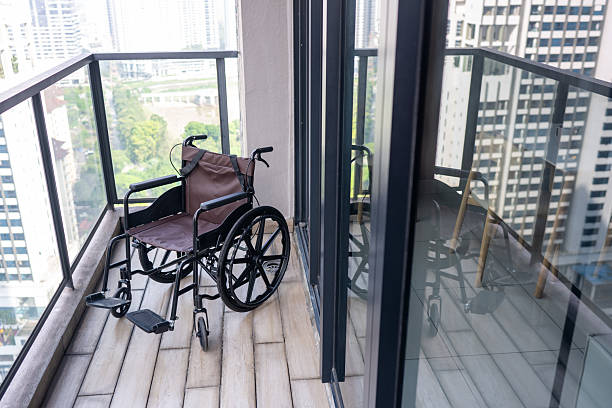
Convert HMO to Supported Living - A Practical Guide for UK Property Owners
Converting an HMO into supported living can be an opportunity for UK landlords and property investors who already own a property with multiple bedrooms, shared facilities and communal accommodation.
However, supported living is not simply a different label for an HMO. The proposed use, resident needs, support arrangements, property standards, planning position and management structure all need to be considered before changing the property's operating model.
For landlords in London and across the UK, an existing HMO can provide a useful starting point because it may already have several bedrooms, shared facilities and systems designed for multiple occupants. Even so, the property may need further work before it is appropriate for supported living.
Can You Convert an HMO Into Supported Living?
Potentially, yes. An existing HMO can sometimes be adapted for supported living, but the exact requirements depend on how the property will be operated.
An HMO generally involves multiple people from different households sharing facilities such as kitchens or bathrooms. In England, larger HMOs generally require licensing where five or more people from more than one household share facilities, although councils can operate additional licensing schemes.
Supported housing, by contrast, involves accommodation provided alongside care, support or supervision to help residents live as independently as possible. Providers can include housing associations, charities, local authorities and private landlords or organisations.
The distinction is important because converting the property may change more than the tenancy arrangement.
Start by Defining the Supported Living Model
Before changing an HMO, establish exactly what type of supported living accommodation is intended.
Supported housing can be designed for different groups, including:
-
Working-age adults with disabilities
-
People with transitional support needs
-
People moving on from homelessness
-
People requiring assistance to live independently
-
Older people with support needs
-
Other vulnerable residents
The Government's current supported housing framework includes both purpose-designed and adapted supported living and accommodation-based supported housing.
The needs of the intended residents should determine the conversion rather than simply the existing HMO layout.
For example, an HMO currently used for ordinary room-by-room renting may need additional accessibility features, better communal facilities or different management arrangements before it can work effectively as supported living.
Assess the Existing HMO
The first practical step is to assess what you already have.
Review:
-
Number of bedrooms
-
Bedroom sizes
-
Number of bathrooms
-
Kitchen facilities
-
Communal areas
-
Garden or outdoor space
-
Parking
-
Accessibility
-
Fire safety
-
Electrical systems
-
Heating
-
Plumbing
-
Security
-
General condition
-
Existing HMO licence
-
Existing planning position
An HMO in North London with six bedrooms, two bathrooms and a large communal kitchen may already provide some of the physical characteristics an operator needs.
However, the same property may require substantial changes if it is intended for residents with mobility difficulties or other specialist needs.
Check the Planning Position
Planning should be reviewed before changing the property's use.
It is important not to assume that an existing HMO planning position automatically covers every form of supported housing.
The Government's current position is particularly relevant here. In its June 2026 response on supported housing regulation, the Government stated that it is not currently minded to introduce planning changes for supported housing, while keeping the position under review.
This means landlords should establish the planning position for their specific property and proposed supported living arrangement rather than relying on a generic assumption about use class.
Factors such as the number of residents, level of support, staffing, layout and operation can all matter.
For a London property, checking the local authority's planning records and obtaining appropriate planning advice before major works can help avoid expensive mistakes.
Review the Existing HMO Licence
If the property is currently licensed as an HMO, review the licence and its conditions before changing the operating model.
An HMO licence can contain conditions concerning:
-
Maximum occupancy
-
Room sizes
-
Facilities
-
Fire safety
-
Management
-
Maintenance
-
Waste arrangements
-
Other property standards
GOV.UK states that landlords must tell their council if they plan to make changes to an HMO.
The landlord should therefore speak with the relevant council about whether the proposed supported living arrangement affects the existing licence or creates additional requirements.
Do Not Assume the HMO Licence Covers Supported Living
An existing HMO licence does not automatically mean the property is ready to operate as supported housing.
Supported housing is subject to its own developing regulatory framework.
The Supported Housing (Regulatory Oversight) Act 2023 introduced powers around licensing and national standards, while the Government's 2026 response sets out its intention to implement a licensing regime across England.
The precise requirements applying to a property will depend on the type of supported housing, the provider and the relevant implementation arrangements.
For landlords, this makes it particularly important to establish the property's regulatory position before presenting it to an operator.
Upgrade the Property Where Necessary
An HMO conversion may require improvements beyond the property's existing standard.
Potential works include:
-
Bathroom upgrades
-
Kitchen improvements
-
Accessibility adaptations
-
Fire safety improvements
-
Electrical works
-
Heating upgrades
-
Improved ventilation
-
Security improvements
-
Communal area refurbishment
-
Bedroom improvements
-
Garden and external works
Government supported housing guidance recommends that accommodation meet appropriate housing standards and highlights matters including energy efficiency and electrical safety.
The actual specification should be determined by the property and intended residents.
Consider Accessibility
Accessibility can become particularly important when converting an HMO into supported living.
Depending on the residents, the property may need:
-
Level access
-
Ramps
-
Wider doorways
-
Accessible bathrooms
-
Grab rails
-
Handrails
-
Improved circulation space
-
Adapted bedrooms
-
Accessible kitchen facilities
-
Suitable external access
Do not automatically install every possible adaptation.
Instead, establish what the intended supported living provider and residents actually require.
This can help the landlord spend money on improvements that make the property genuinely suitable rather than simply more expensive.
Improve Communal Areas
A standard HMO may have been designed primarily around individual bedrooms and shared facilities.
Supported living can require a stronger emphasis on communal and social spaces, depending on the service model.
Potential improvements include:
-
Comfortable lounge
-
Dining area
-
Shared kitchen
-
Activity space
-
Quiet room
-
Private meeting area
-
Staff workspace
-
Storage
The objective is to provide a suitable home environment while maintaining residents' privacy and independence.
Review Fire and General Safety
Fire safety should be reviewed as part of the conversion.
Consider:
-
Fire detection
-
Alarm systems
-
Escape routes
-
Fire doors
-
Emergency lighting where applicable
-
Electrical safety
-
Gas safety
-
Heating
-
Internal fire separation
-
Emergency access
Existing HMO safety measures may provide a useful starting point, but the proposed supported living arrangement should be assessed on its own requirements.
A professional inspection can identify whether additional work is required.
Understand Who Provides the Support
One of the most important parts of converting an HMO into supported living is establishing the relationship between the property owner and support provider.
The landlord may simply own or lease the accommodation while another organisation provides support.
Potential parties can include:
-
Housing providers
-
Charities
-
Specialist supported housing organisations
-
Care organisations
-
Local authority partners
-
Other specialist providers
The Government's current guidance recognises supported housing as an area involving housing, health, social care and local services. Local authorities are also required to develop Local Supported Housing Strategies to understand supply, unmet need and future demand.
The landlord should therefore establish precisely who will provide housing management and who will provide support.
Find an Operator Before Major Refurbishment
Where possible, speak with potential supported living operators before carrying out major conversion work.
An operator can explain:
-
Number of rooms required
-
Preferred layout
-
Resident profile
-
Accessibility requirements
-
Communal space requirements
-
Staff arrangements
-
Security requirements
-
Maintenance expectations
-
Lease requirements
For example, a landlord with an eight-bedroom HMO in South London may assume every bedroom should remain unchanged. A potential operator may instead want to reduce the number of bedrooms to create a larger communal area and improve accessibility.
Understanding this before construction begins can save significant money.
Check Local Supported Housing Need
Location and local demand should also be considered.
England's 2026 statutory guidance requires councils to prepare Local Supported Housing Strategies, including understanding the local landscape, existing supply, unmet need and future demand.
For a property owner, this can provide useful context when considering whether an HMO conversion is appropriate for supported living.
A property near transport, healthcare, employment, shops and community services may be suitable for some resident groups, while another property may be better suited to a different model.
Review the Commercial Arrangement
If a supported living operator will lease the property, the agreement should clearly establish responsibilities.
Important terms can include:
-
Lease length
-
Rent
-
Rent reviews
-
Repairs
-
Maintenance
-
Insurance
-
Utilities
-
Refurbishment
-
Alteration rights
-
Compliance
-
Assignment
-
Subletting or resident occupation
-
Break clauses
-
Reinstatement
A long lease can provide a landlord with greater contractual certainty, but it should not be treated as risk-free.
The landlord should understand what happens if the operator's funding changes, the service closes or the property requires major repairs.
Do Due Diligence on the Operator
Before entering into a long-term arrangement, investigate the proposed operator.
Consider:
-
Company history
-
Financial position
-
Existing supported housing schemes
-
Management experience
-
References
-
Insurance
-
Support model
-
Funding arrangements
-
Regulatory position where applicable
-
Lease requirements
-
Maintenance capacity
The quality of the operator can be just as important as the physical condition of the property.
HMO to Supported Living Conversion Costs
There is no single cost for converting an HMO into supported living.
The final budget will depend on the property's condition and the requirements of the intended service.
Possible costs include:
-
Professional fees
-
Planning advice
-
Building works
-
Bathroom adaptations
-
Kitchen upgrades
-
Fire safety
-
Electrical work
-
Plumbing
-
Heating
-
Accessibility improvements
-
Security
-
Decoration
-
Flooring
-
External works
A detailed survey and refurbishment specification should be prepared before setting the final budget.
HMO Conversion Does Not Automatically Mean a Care Home
Supported living should not automatically be treated as a care home.
The accommodation, support and care arrangements can be structured differently depending on the service.
If the proposed service involves regulated care activities, the relevant regulatory requirements should be established separately.
The landlord should therefore define the actual service model before deciding what property works are necessary.
Fraser Bond Can Help With HMO to Supported Living Conversion
Fraser Bond can support landlords considering an HMO to supported living conversion by assessing the existing property, identifying refurbishment requirements, coordinating building works and helping develop the property around the needs of specialist operators.
For example, an HMO landlord in West London could have the property assessed before committing to a major refurbishment. The existing layout, HMO arrangements, potential supported living model and operator requirements can then be considered together.
This can provide a clearer basis for deciding which works are necessary and how the property should be positioned.
A Practical HMO to Supported Living Conversion Process
A sensible process can include:
-
Review the existing HMO licence and property documentation.
-
Assess the property's condition and layout.
-
Define the intended supported living model.
-
Check the planning position.
-
Establish relevant licensing and regulatory requirements.
-
Assess fire safety and accessibility.
-
Research local supported housing need.
-
Speak with potential supported living operators.
-
Prepare a detailed refurbishment specification.
-
Obtain realistic conversion costs.
-
Complete the required works.
-
Agree the commercial arrangement with the operator.
-
Establish ongoing maintenance and compliance responsibilities.
Taking this approach can help ensure that the conversion is based on the actual requirements of the intended supported living service.
Convert HMO to Supported Living With the Right Strategy
Converting an HMO into supported living can involve much more than changing the tenancy arrangement.
The property's existing HMO status can provide a useful starting point, but planning, licensing, resident needs, accessibility, fire safety, refurbishment, local demand and operator requirements should all be assessed before the conversion is completed.
For London landlords and UK property investors, Fraser Bond can help with property assessment, refurbishment, building works and specialist operator discussions.
The aim should be to create accommodation that is suitable for residents, workable for the support provider and properly structured from a property and commercial perspective.