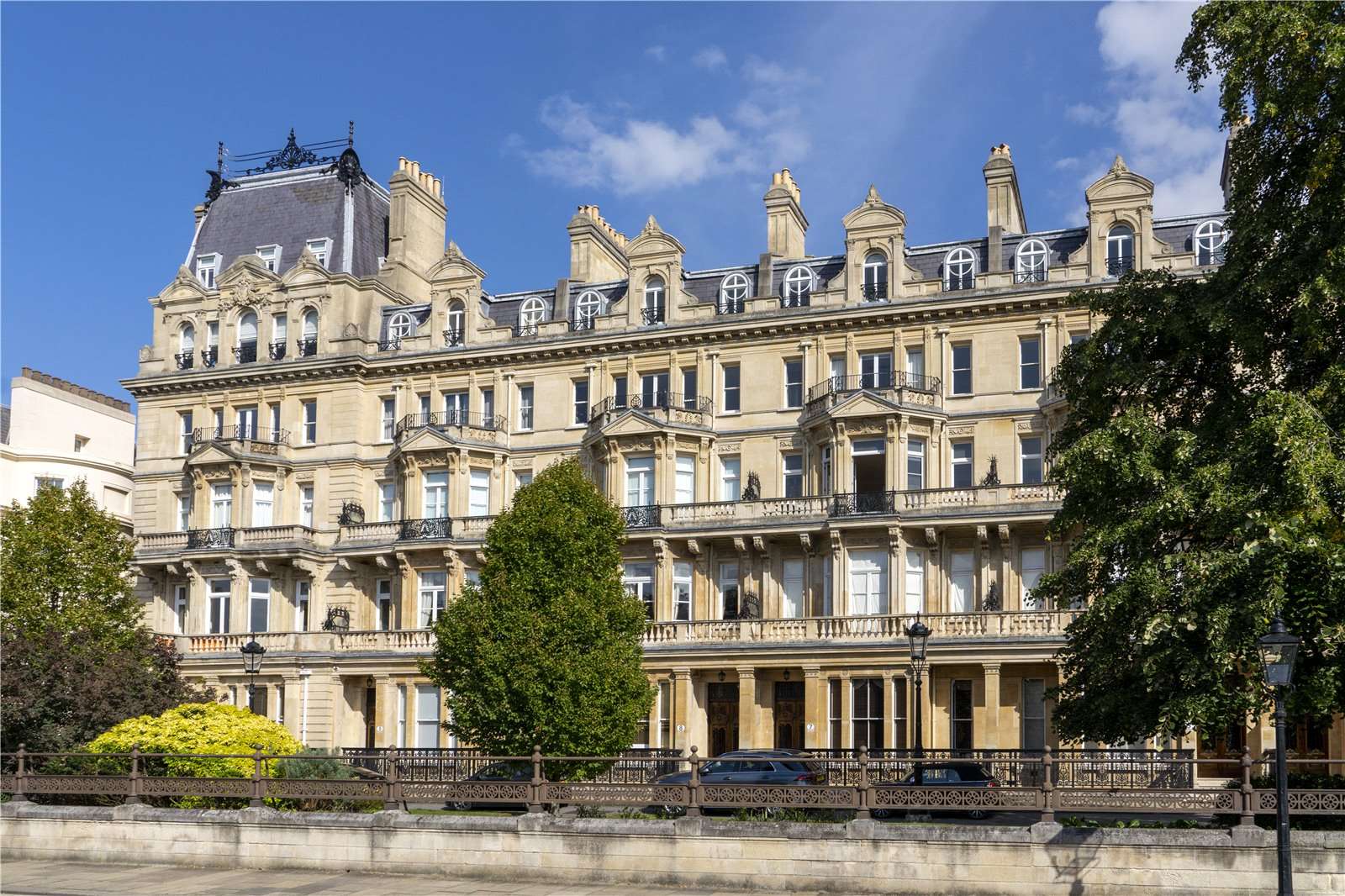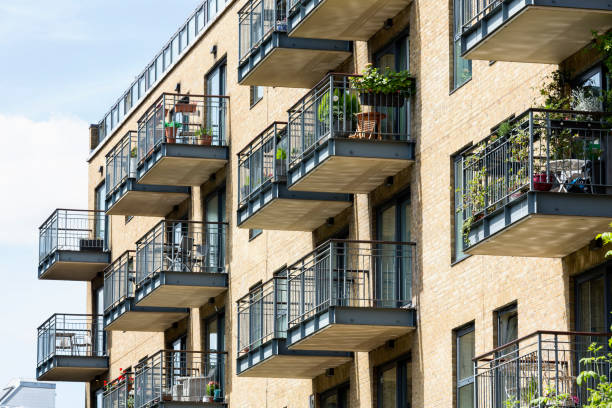
Convert Office to Residential London - A Practical Guide for Property Owners and Investors
Converting an office to residential use in London can unlock significant property value, particularly where demand for well-designed homes is stronger than demand for older or underused office space. However, the process involves more than simply refurbishing an office and installing a kitchen. Planning, building regulations, layout, fire safety, utilities, costs and local property demand all need to be considered.
For landlords, investors and developers considering an office to residential conversion, Fraser Bond provides property consultancy and project support to help assess the opportunity from acquisition through to refurbishment and completion.
Can You Convert an Office to Residential in London?
In many cases, an office can potentially be converted into residential accommodation, but the route depends on the building, its existing use, location and local planning restrictions.
Some projects may qualify for permitted development through Class MA and require a prior approval process, while others may require a full planning application. Certain London locations also have Article 4 restrictions that remove permitted development rights for office-to-residential conversions.
For example, the City of London requires planning permission for office-to-residential changes because of its Article 4 Direction. Other boroughs, including parts of Hackney, also have restrictions affecting commercial-to-residential conversions.
This makes an early planning assessment essential before purchasing an office specifically for conversion.
What Makes an Office Suitable for Residential Conversion?
Not every office building is financially or practically suitable for residential use.
A good conversion candidate will usually have:
-
A suitable location with strong residential demand
-
Sufficient natural light and ventilation
-
Floorplates that can be divided efficiently
-
Suitable ceiling heights
-
Practical access and circulation
-
Space for bathrooms and kitchens
-
Reasonable options for drainage and utilities
-
A structure capable of accommodating the proposed layout
-
A purchase price that leaves enough room for conversion costs and profit
Older London offices can sometimes offer attractive opportunities because their layouts, underused space or outdated commercial specification may create scope for residential redevelopment.
However, unusual floorplates, deep-plan layouts, limited windows, poor access or expensive structural alterations can quickly make a project uneconomical.
Understanding the Planning Route
The planning route should be established before committing substantial funds.
Where Class MA is potentially available, the project may proceed through a prior approval process rather than a conventional planning application. Current London planning records show office and wider Class E buildings being considered for residential conversion under Class MA, including schemes in Hillingdon and Wandsworth.
However, Article 4 Directions can remove these permitted development rights in specific areas. The relevant London borough should therefore be checked before assuming that a conversion can proceed under permitted development.
A planning consultant or property specialist can assess the building's planning history, existing use, local restrictions and likely route before the acquisition becomes financially committed.
Designing the Residential Layout
An office conversion needs to work as a home, not simply look like an office with bedrooms inserted into it.
A successful scheme should consider:
-
Bedroom sizes
-
Living and kitchen arrangements
-
Bathroom locations
-
Natural light
-
Ventilation
-
Storage
-
Entrance arrangements
-
Communal areas
-
Privacy
-
Fire safety
-
Accessibility
-
Refuse and cycle storage
-
Heating and hot water systems
For example, a large open-plan office may appear spacious but still produce an inefficient residential layout if there are insufficient windows around the perimeter.
Conversely, an office with several existing cellular rooms and good window positions may provide a much easier basis for creating apartments.
How Much Does It Cost to Convert an Office to Residential in London?
There is no single conversion cost because the budget depends heavily on the building and proposed specification.
Major costs can include:
-
Planning and professional fees
-
Architectural drawings
-
Structural engineering
-
Building control
-
Fire safety requirements
-
New kitchens and bathrooms
-
Plumbing and drainage
-
Electrical rewiring
-
Heating and ventilation
-
Windows and external works
-
Insulation
-
Flooring and decoration
-
Fire doors and compartmentation
-
Roof or structural repairs
-
External landscaping
-
Contractor and project management costs
A basic conversion may be considerably cheaper than a complex refurbishment involving major structural alterations, new services and extensive fire-safety works.
Investors should also allow for contingency because older London buildings can reveal unexpected problems once walls, ceilings and floors are opened.
Is Converting an Office to Flats Profitable?
The potential profit comes from the difference between the total project cost and the completed residential value or rental income.
An investor should calculate:
Purchase price + acquisition costs + planning/professional fees + construction + finance + contingency = total project cost
The completed property can then be assessed against either its expected sale value or long-term rental income.
Location is particularly important. An office in a strong residential market may have considerably more potential than a similar building in an area with weak demand.
The number of units also matters. Creating more flats does not automatically create more profit if the additional units produce poor layouts, expensive construction or weaker resale values.
Office Conversion for Buy-to-Let
Some investors convert offices into apartments and retain the completed properties as rental investments.
This strategy can work where the finished apartments appeal to local tenants and the expected rental income supports the overall investment.
London locations close to transport links, employment centres, universities, retail areas and established residential neighbourhoods can be particularly attractive.
However, investors should assess rental demand before deciding on unit sizes. In one area, compact one-bedroom flats may be highly lettable, while another location may have stronger demand for larger two-bedroom accommodation.
Office Conversion for Sale
Another strategy is to convert the building and sell the individual apartments.
This can make sense where there is strong owner-occupier or investor demand and the completed residential value provides enough margin over the development cost.
The specification should be designed around the target buyer rather than simply maximising the number of units.
A smaller number of well-designed apartments can sometimes produce a better financial outcome than squeezing additional units into the building.
Construction and Refurbishment Challenges
The conversion itself can be one of the most challenging parts of the project.
Older London commercial buildings can contain outdated wiring, plumbing, heating systems, asbestos risks, poor insulation, damaged roofs or structural defects.
There may also be complications involving shared entrances, neighbouring commercial occupiers, party walls, leasehold interests and restricted access for contractors.
A detailed survey and realistic construction programme can help identify these issues before major works begin.
Why Work With Fraser Bond?
Fraser Bond can support investors and property owners looking at London office-to-residential opportunities from a commercial and operational perspective.
Our property services can help with property assessment, investment analysis, development coordination, refurbishment planning, contractor management and the wider process of preparing a property for residential use.
The objective is not simply to convert an office into flats. The objective is to create a residential property that is legally compliant, commercially viable, attractive to buyers or tenants and appropriate for its London location.
Planning an Office to Residential Conversion in London?
If you own an office building or are considering purchasing one for residential conversion, the most important step is to assess the opportunity before committing to the project.
Fraser Bond can help property owners and investors evaluate the building, understand the development potential and coordinate the property and refurbishment requirements needed to move the project forward.