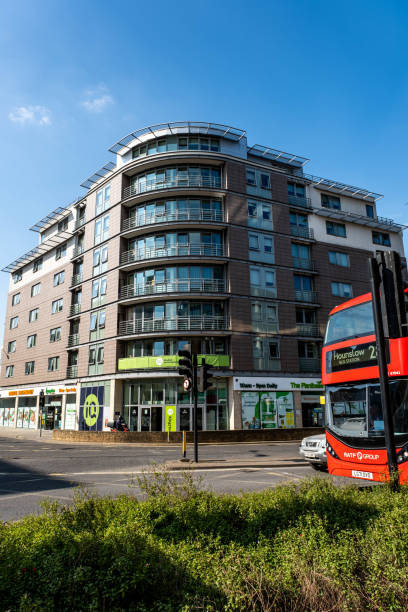
Healthcare Property Site Selection in the UK Based on Population Density and Patient Demand
How Population Density Shapes Demand for GP Clinics and Medical Centres Across the UK
Choosing the right location for a healthcare facility in the UK is closely linked to population density, growth patterns, and pressure on existing NHS services. Areas with high population density and limited healthcare capacity consistently experience longer waiting times, GP shortages, and stronger demand for private and public medical services.
For investors, developers, and operators, these patterns highlight where new GP surgeries, clinics, diagnostics centres, and urgent care facilities are most needed.
London Inner Boroughs with High Population Density and GP Pressure
London remains the most densely populated healthcare market in the UK. Boroughs such as Newham, Tower Hamlets, Brent, Hackney, Haringey, and Croydon experience very high patient demand and significant pressure on existing GP services.
Many practices operate at or above capacity, and appointment availability is often limited.
The strongest healthcare property opportunities in these areas include converted retail units, small GP surgeries, diagnostics centres, and urgent care clinics located in residential high streets or transport-linked locations.
South East Growth Corridors Where Demand Outpaces Infrastructure
The South East of England is experiencing rapid population growth driven by large-scale housing development and commuter expansion. Key areas include Slough, Luton, Dartford, Gravesend, Reading, Crawley, and parts of Essex.
In many of these locations, healthcare infrastructure has not expanded at the same pace as residential development, leading to increasing pressure on GP services.
Suitable healthcare property opportunities include new-build GP surgeries within residential developments, mixed-use medical centres, and private healthcare clinics serving growing commuter populations.
Midlands Urban Areas with High Healthcare Usage
Cities such as Birmingham, Coventry, Leicester, and Wolverhampton have moderate population density compared to London but significantly high healthcare demand due to health inequalities, ageing populations, and long-standing pressure on NHS services.
Many GP practices in these areas operate from older buildings that require modernisation or replacement.
Healthcare property opportunities include large primary care hubs, integrated medical centres, and NHS-aligned diagnostic facilities.
Northern England Cities with High Patient Demand per Capita
Cities including Manchester, Liverpool, Bradford, Hull, Sunderland, and Middlesbrough have medium population density but high healthcare demand per patient due to deprivation and ageing infrastructure.
In many cases, existing GP surgeries are outdated and overstretched, resulting in long waiting times and reduced access.
The strongest opportunities include regenerated healthcare centres, multi-service clinics, and community health hubs combining GP, mental health, and diagnostic services.
Rural UK Areas with Healthcare Access Gaps
Rural regions such as Cumbria, Northumberland, Lincolnshire, Devon, Cornwall, and parts of Wales face low population density but significant healthcare access challenges.
The issue is not overcrowding but distance and limited availability of services.
Many communities rely on distant GP surgeries, with limited appointment availability and long travel times.
Opportunities include satellite GP clinics, shared healthcare hubs across villages, and mobile or part-time medical services.
Coastal Towns with Seasonal and Ageing Population Pressure
Coastal towns such as Blackpool, Southend-on-Sea, Bournemouth, Hastings, and Great Yarmouth experience fluctuating population demand due to tourism and a higher proportion of elderly residents.
This creates seasonal pressure on GP services and urgent care facilities.
Healthcare property opportunities include walk-in urgent care centres, outpatient clinics, and elderly care-focused medical facilities.
Key Insight for Healthcare Property Site Selection
Across the UK, healthcare demand is shaped by three consistent patterns:
High-density urban areas where GP services are oversubscribed
Rapidly growing commuter belts where infrastructure has not kept pace
Rural and coastal areas where access to healthcare is limited by distance
Understanding these patterns is essential when selecting sites for healthcare property investment or development.
How Fraser Bond Supports Healthcare Property Development
Fraser Bond works with landlords, investors, and developers to identify buildings suitable for healthcare conversion across the UK.
This includes sourcing properties for GP surgeries, clinics, diagnostics centres, and urgent care facilities, as well as advising on planning permission, refurbishment, and healthcare operator requirements.
Fraser Bond also supports the repositioning of retail units, offices, and mixed-use buildings into modern healthcare assets aligned with local patient demand.