Flat Roofing London - Flat Roof Repair, Installation and Replacement
Flat roofing in London is widely used across residential extensions, apartment blocks, commercial buildings, garages, terraces and modern developments. A professionally designed flat roof can provide reliable waterproofing and thermal performance, but its success depends on much more than the visible roof covering.
Drainage, insulation, condensation control, fire performance, structural loading and workmanship all influence how a flat roof performs. The revised BS 6229:2025 strengthened industry guidance covering flat-roof design, drainage, thermal performance, condensation, fire safety, workmanship and maintenance.
For homeowners, landlords, freeholders, investors and developers, Fraser Bond supports property management, sales, lettings and wider real estate requirements across London through FraserBond.com.
What Is Flat Roofing?
A flat roof is a roof constructed with a relatively shallow slope rather than the steeper pitch associated with traditional slate or tiled roofs.
Despite the name, a properly designed flat roof should incorporate falls that direct rainwater towards gutters, outlets and drainage points.
Flat roofing can be found throughout London on rear extensions, dormers, garages, apartment buildings, offices, retail premises and mixed-use developments.
Modern systems include single ply membranes, reinforced bituminous membranes, EPDM, liquid-applied waterproofing, GRP and mastic asphalt.
Flat Roof Repair London
A leaking flat roof does not automatically require complete replacement.
Localised damage may be repairable where the remaining roof system is in satisfactory condition.
Common problems can include damaged membranes, failed seams, defective flashing, deteriorated perimeter details, blocked outlets and problems around rooflights or penetrations.
The underlying cause should be identified before repair work begins. Repeatedly applying temporary waterproof coatings without investigating drainage, insulation or substrate condition can leave the original problem unresolved.
Flat Roof Replacement London
Complete replacement may become appropriate where deterioration is extensive or repeated repairs are no longer economically sensible.
Replacement provides an opportunity to investigate the complete roof construction rather than simply installing another waterproof layer.
The project can include removing existing coverings, repairing the deck, improving insulation, installing vapour-control measures, correcting drainage and fitting a new waterproofing system.
GOV.UK identifies replacement of roof coverings on both pitched and flat roofs as work that can require Building Regulations approval.
Routine repairs and maintenance can be treated differently, so property owners should establish the requirements applicable to the particular scope of work.
Single Ply Flat Roofing
Single ply membranes provide a flexible waterproof layer for suitable flat and low-slope roofs.
They are widely associated with commercial buildings and modern residential developments but can also be used on extensions and refurbishment projects.
Depending on the specified system, membranes can be mechanically fixed, adhered or otherwise secured according to the manufacturer's design.
Rooflights, outlets, parapets, penetrations and perimeter junctions require particularly careful detailing.
EPDM Flat Roofing
EPDM is a synthetic rubber membrane commonly used for flat-roof waterproofing.
It can be particularly suitable for residential extensions, garages and other relatively straightforward roof areas.
Installation quality remains critical.
The membrane must integrate correctly with outlets, upstands, rooflights and other details. Property owners should also understand the manufacturer's requirements and warranties associated with the proposed system.
Bituminous Flat Roofing
Reinforced bituminous membranes remain established within the UK flat-roofing market.
Modern systems can provide robust waterproofing for residential, commercial and communal roofs.
When replacing an older felt or bituminous roof, the existing structure should be assessed before deciding whether the new system can be installed over existing materials or whether the roof needs to be stripped.
NFRC maintains specific technical guidance covering considerations for overlaying existing flat roofs, highlighting that overlay decisions require more than simply installing another waterproof layer.
Liquid Flat Roofing
Liquid-applied roofing systems create a continuous waterproof surface after application and curing.
They can be useful for roofs containing complicated shapes and numerous penetrations.
However, successful installation depends heavily on substrate preparation, weather conditions, product compatibility and workmanship.
A liquid membrane should therefore be treated as a specialist waterproofing system rather than a generic coating applied to any leaking roof.
Mastic Asphalt Roofing
Mastic asphalt is another established flat-roof waterproofing material.
Industry technical guidance highlights several factors that should be considered during design, including roof construction, anticipated movement, traffic, thermal requirements, condensation prevention, drainage, falls and detailing around junctions.
Mastic asphalt can be particularly relevant to traditional buildings and certain commercial or communal applications where an appropriate specification is required.
Warm Flat Roof Construction
A warm roof generally positions thermal insulation above the structural deck.
The waterproofing system sits towards the external side of the construction, while an appropriate air and vapour control strategy forms part of the overall build-up.
Warm-roof construction is widely used because it can provide effective thermal and moisture performance when properly designed.
Specialist NFRC/SPRA guidance notes that cold flat-roof construction presents significant condensation risks and is not recommended by the relevant BS 5250 and BS 6229 guidance discussed in the document.
Flat Roof Insulation
Insulation is an important consideration when replacing or substantially refurbishing a London flat roof.
Improving thermal performance can reduce unwanted heat loss, but insulation should not be considered independently from moisture management, waterproofing and roof detailing.
Increasing insulation thickness can affect rooflights, parapets, thresholds, outlets and other construction details.
For this reason, substantial refurbishment should consider the complete roof build-up.
Flat Roof Drainage
Drainage is one of the most important elements of flat-roof performance.
The revised BS 6229:2025 strengthened requirements for drainage and specifies a minimum 1:80 finished fall for general roof areas and internal gutters.
Correct falls help direct rainwater towards drainage points.
Persistent ponding can indicate inadequate falls, blocked outlets or other drainage problems.
Where standing water repeatedly develops, property owners should investigate the underlying cause instead of concentrating solely on the waterproof membrane.
Flat Roofs for London Extensions
Flat roofing is particularly common on London residential extensions.
Rear and side-return extensions frequently use flat or low-slope roofs because they can provide a relatively simple roof form while accommodating rooflights and contemporary architectural designs.
Single ply, EPDM, bituminous and liquid-applied systems may all be considered depending on the project.
Owners should also establish whether proposed roof alterations require planning permission. Planning permission and Building Regulations approval are separate processes, and some projects may require both.
Flat Roofing for London Landlords
Roof maintenance is an important part of managing rental property.
Water penetration can damage ceilings, decorations, insulation and structural components while also disrupting tenants.
Landlords should therefore investigate reported leaks promptly.
A professional property manager can coordinate inspections, contractor quotations, access arrangements and repair works.
For overseas landlords and investors with multiple properties, planned maintenance can provide a more structured approach than responding only when serious leaks develop.
Flat Roofing for Apartment Blocks
Flat roofing is common across London apartment developments and traditional mansion blocks.
Communal roofs can be considerably more complicated than small domestic flat roofs.
The freeholder, Residents Management Company or Right to Manage company may be responsible for arranging repairs according to the lease and management structure.
Major projects can require surveys, specifications, tendering, scaffolding and professional contract administration.
Where expenditure is recovered through service charges, lease provisions and applicable consultation requirements should also be considered.
Flat Roofing for Commercial Property
Offices, shops, warehouses and mixed-use buildings frequently incorporate large flat-roof areas.
Commercial roofs can contain air-conditioning equipment, ventilation systems, solar installations, access routes and other rooftop plant.
These features introduce additional penetrations and loading considerations.
Commercial landlords should therefore consider periodic inspections and planned maintenance rather than waiting until internal water penetration occurs.
Flat Roofs and Solar Panels
Flat roofs can provide useful locations for solar photovoltaic installations.
However, the roofing system and solar installation need to work together.
Structural loading, wind resistance, waterproofing, drainage and maintenance access all require consideration.
Mounting systems should not compromise the waterproof membrane, and owners should consider how future roof maintenance will be carried out after panels have been installed.
Green Flat Roofing London
Green roofs are increasingly incorporated into London development and refurbishment projects.
They can provide vegetation, biodiversity and environmental benefits while creating a different roof appearance from conventional exposed membranes.
However, the vegetation sits above a carefully designed roofing system.
Structural capacity, waterproofing, drainage, root resistance and ongoing maintenance all need to be considered.
Developers should therefore integrate green roofing into the wider design from an early stage.
Flat Roof Terraces
Some London properties use flat roofs as terraces or amenity areas.
An accessible roof requires additional consideration because people, furniture and surface finishes can place different demands on the waterproofing system.
The membrane may be protected beneath paving, decking or another surface.
Drainage outlets must remain accessible and functional.
Creating a new roof terrace can also involve planning and structural considerations beyond those associated with straightforward waterproofing replacement.
Flat Rooflights
Rooflights are popular on London extensions because they can introduce substantial natural light into otherwise deep internal spaces.
However, every rooflight creates additional junctions within the waterproofing system.
The membrane needs to be detailed correctly around the kerb or upstand.
Where leaks repeatedly appear around rooflights, the surrounding waterproofing and drainage should be inspected rather than assuming that the glazing itself is responsible.
Flat Roofing for Period Properties
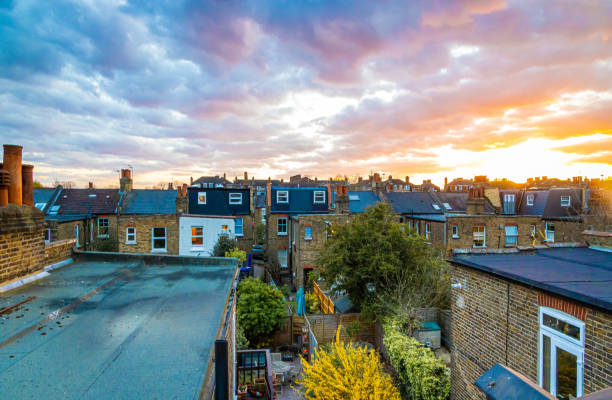
Flat roofs can also appear on Victorian, Edwardian and other period properties, particularly above extensions, bay windows and later additions.
Refurbishment should consider how the roof interacts with the original building.
Properties in conservation areas or listed buildings can require additional investigation where proposed works alter roof form, materials or architectural appearance.
Straightforward maintenance should not automatically be confused with substantial alteration.
Flat Roof Repair or Replacement?
Choosing between repair and replacement depends on the condition of the complete roof.
A relatively new roof with one damaged section may justify localised repair.
An older roof with widespread deterioration, repeated leaks and numerous previous patches may require a more comprehensive solution.
Owners should consider repair history, age, insulation, drainage, membrane condition and expected remaining service life.
The lowest immediate quotation is not always the most economical long-term option.
Overlaying a Flat Roof
Overlay systems can sometimes avoid complete removal of an existing roof covering.
However, overlaying is not appropriate in every situation.
The condition of the existing membrane, insulation and structural deck needs to be understood, particularly where moisture may already be trapped within the roof.
NFRC's flat-roof technical library specifically includes guidance on considerations for overlaying existing roofs.
A new membrane should not simply conceal unresolved deterioration.
Choosing Flat Roofing Contractors in London
Flat roofing requires specialist knowledge.
A contractor experienced primarily with pitched slate and tile roofs may not necessarily have equivalent experience with single ply, liquid waterproofing or other membrane systems.
Property owners should establish what systems a contractor regularly installs and whether the proposed products are appropriate for the project.
Written quotations should clearly describe preparation, waterproofing, insulation, drainage and associated work.
For substantial commercial or apartment-building projects, independent design, specification and contract administration may also be appropriate.
Flat Roofing Standards and Workmanship
Flat-roof standards continue to evolve.
The 2025 revision of BS 6229 strengthened provisions relating to roof build-ups, drainage, thermal performance, condensation, fire safety, workmanship and maintenance.
For property owners, this reinforces the importance of selecting contractors and designers who understand current flat-roof requirements rather than relying solely on historic construction practices.
Flat Roofing for Property Investors
Roof condition can materially affect investment performance.
A major flat-roof replacement shortly after acquisition can create substantial unexpected expenditure.
Investors should therefore pay close attention to roofing observations in building surveys.
Where evidence of leaks, ponding or repeated patch repairs exists, specialist investigation can help establish potential future costs.
Leasehold buyers should additionally investigate communal roof condition, reserve funds and anticipated major works.
Flat Roofing for Property Developers
Developers should incorporate flat roofing into feasibility assessments and construction budgets.
Waterproofing is only one component.
Insulation, drainage, structural works, rooflights, plant, access, parapets and safety requirements can all influence the final cost.
Early technical input can therefore reduce the risk of expensive design changes later in the project.
Preventative Flat Roof Maintenance
Flat roofs should be inspected periodically rather than ignored until water appears internally.
Drainage outlets should remain clear, while visible damage to membranes and perimeter details should be investigated.
Areas around rooflights, penetrations and rooftop equipment deserve particular attention.
BS 6229:2025 also places greater emphasis on workmanship and maintenance within flat-roof performance.
A planned maintenance programme can be particularly valuable for landlords, freeholders and commercial property owners responsible for multiple buildings.
Flat Roofing London with Fraser Bond
Professional flat roofing in London can provide reliable waterproofing for houses, extensions, apartment developments and commercial buildings when the system is properly designed and maintained.
Single ply, EPDM, bituminous membranes, liquid waterproofing and mastic asphalt can each provide appropriate solutions depending on the property. Drainage, insulation, condensation control, fire performance and workmanship should all be considered alongside the waterproof covering.
For landlords and investors, flat-roof condition should also form part of wider asset management because significant roofing expenditure can affect both rental performance and future capital requirements.
Fraser Bond supports homeowners, landlords, investors, developers and freeholders with property management, sales, lettings and wider real estate advisory services across London.
Whether you need to assess a leaking flat roof, plan a roof replacement or evaluate roofing expenditure before purchasing an investment property, visit FraserBond.com to explore professional London property services.