


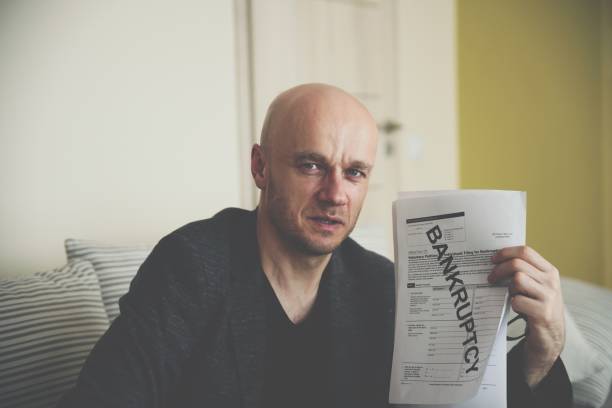
Understanding how long you must disclose bankruptcy in the UK, when bankruptcy disappears from your credit report, and what you must tell employers, lenders and mortgage providers.
In the UK, there is no single time limit after which you never have to declare a previous bankruptcy. The requirement depends on who is asking, the wording of the question and the purpose of the disclosure.
In England and Wales, bankruptcy normally lasts 12 months before you are discharged. However, the bankruptcy usually remains on your credit report for six years from the date of the bankruptcy order.
Even after six years, some lenders, employers and professional regulators may require you to disclose a previous bankruptcy if they specifically ask whether you have ever been bankrupt.
The distinction between being discharged from bankruptcy, having bankruptcy removed from your credit file and being legally required to disclose it is important.
Fraser Bond provides residential property sales, lettings, valuations and real estate consultancy services across London. For people recovering from bankruptcy, understanding how past insolvency affects mortgage applications, renting accommodation and property ownership can help with future housing decisions.
How Long Do You Have to Declare Bankruptcy?
The answer depends on the circumstances.
|
Situation |
Typical disclosure position |
|---|---|
|
During bankruptcy |
Must disclose when legally required |
|
After 12 months |
Usually discharged, but past bankruptcy may still need disclosure |
|
Mortgage application |
Answer the lender's questions truthfully, including any historical disclosure requirements |
|
Credit application |
Declare bankruptcy where the application asks for it |
|
Employment application |
Depends on the role and the question asked |
|
Professional registration |
May require disclosure of previous bankruptcy |
|
Credit report |
Bankruptcy normally remains for six years |
|
After six years |
Disclosure may still be required if specifically asked |
There is no general rule allowing someone to deny a previous bankruptcy simply because six years have passed.
Do You Have to Declare Bankruptcy After Six Years?
You may still need to declare bankruptcy after six years.
Although bankruptcy normally disappears from your credit report after six years, this does not mean the bankruptcy never happened.
The wording of an application matters.
For example:
-
"Have you been bankrupt in the last six years?" You would normally answer no if the bankruptcy occurred more than six years ago.
-
"Have you ever been declared bankrupt?" You should disclose the bankruptcy, even if it occurred many years ago.
-
"Are you currently bankrupt?" You would normally answer no if you have been discharged and are no longer subject to the bankruptcy order.
Always answer accurately and check whether the question also refers to bankruptcy restrictions or other insolvency arrangements.
How Long Does Bankruptcy Last in the UK?
In England and Wales, bankruptcy normally lasts 12 months.
After this period, most people are automatically discharged, meaning they are released from most bankruptcy debts and the usual restrictions.
However, discharge can be delayed in certain circumstances.
Some individuals may also be subject to a Bankruptcy Restrictions Order or Undertaking lasting between two and fifteen years.
These extended restrictions do not necessarily mean the individual remains undischarged throughout that period.
Do You Have to Declare Bankruptcy When Applying for a Mortgage?
Yes, if the mortgage lender asks about your previous bankruptcy and the question covers your circumstances.
Mortgage lenders may ask whether you have ever been bankrupt or whether you have experienced insolvency within a specified number of years.
Even after bankruptcy disappears from your credit report, lenders may require historical disclosure.
Providing inaccurate information can lead to an application being rejected or create serious problems if a mortgage is granted based on false information.
Can You Get a Mortgage After Bankruptcy?
Yes. Bankruptcy does not permanently prevent you from obtaining a mortgage.
However, lenders may consider:
-
On this pageAsk us about this
Send us your situation and we will tell you where you stand — what we would do, what it should cost, and what we would leave alone.
WhatsApp our teamReplies the same working day.
No fee for the conversation.While you are hereEvery property we are instructed on, in one place. Start with the basics and refine from there.
Most popular- 1 How Long Does Bankruptcy Last in the UK - Bankruptcy Rules 2...
- 2 How Long Does Bankruptcy Last in the UK?
- 3 Failing to Declare Rental Income in the UK: Risks and How to...
- 4 How to Declare Yourself Bankrupt UK - Application Process, C...
- 5 How Long Do Landlords Have to Fix Problems in the UK? Compre...
However you found this pageThere is probably a Fraser Bond team for it.
☖Lettings & management
Finding tenants, running tenancies, and holding the compliance paperwork so you never have to look for it.
▲Investment & portfolio
Buying well, holding sensibly, and knowing when a property has stopped earning its place.
■Commercial property
Offices, retail and mixed use — acquisition, lettings, lease advice and building management.
◆Professional services
Valuation, lease consultancy, building consultancy and expert advice when a decision needs evidence behind it.
Next stepYou are one message away from an answer.
If you have a questionSend it to us and get a straight answer.
Describe the property and the problem. We will tell you what we would do, what it should cost, and if we are not the right people, who is.
- Replies the same working day
- The person who answers is the person who handles it
- No fee, and no obligation to instruct us
If you are looking for a propertySee everything we are instructed on.
Sales and lettings across Prime Central London and the wider UK, with the same team behind every listing.
- Residential and commercial in one search
- Filter by borough, budget and size
- Register once and we will send matches first
Keep readingOther insights you may find useful.
 Personal , Property Finance, Debt Management
How Long Does Bankruptcy Last in the UK - Bankruptcy Rules 2026
Read → Property & Real Estate Services
How Long Does Bankruptcy Last in the UK?
Read → Property Finance & Accounting
Failing to Declare Rental Income in the UK: Risks and How to Fix It
Read → Personal , Property Finance, Debt Management
How to Declare Yourself Bankrupt UK - Application Process, Costs and Legal Rights
Read → Property & Real Estate Services
How Long Do Landlords Have to Fix Problems in the UK? Comprehensive Guide
Read → Property & Real Estate Services
How Long Do Landlords Have to Fix Repairs in the UK?
Read →