How to Convert Property to HMO UK - A Practical Landlord Guide
Learn how to assess a property, check planning permission, design suitable rooms, meet HMO licensing requirements and prepare a compliant shared house for tenants
Converting a property into an HMO can increase rental income by allowing a landlord to rent individual rooms to multiple tenants. However, an HMO conversion involves more than adding bedrooms and advertising rooms.
Planning, licensing, fire safety, room sizes, building works and ongoing management all need to be considered before tenants move in.
Step 1 - Check whether the property is suitable
Start by assessing the property's location, size, layout and potential rental demand.
A typical conversion might involve turning a three-bedroom house into a five-bedroom professional house share, provided the layout can accommodate the additional occupants safely and legally.
Look at:
-
Existing bedrooms and floor areas
-
Available communal space
-
Kitchen size and facilities
-
Number of bathrooms
-
Staircases and escape routes
-
Natural light and ventilation
-
Heating and hot water capacity
-
Potential for additional bedrooms
-
Local demand for room rentals
A property that looks inexpensive to purchase may not necessarily make a good HMO investment if substantial structural or compliance works are required.
Step 2 - Check planning permission before starting work
Planning permission and HMO licensing are separate matters.
In England, a small HMO generally falls within Use Class C4, while larger HMOs can fall outside that use class. Whether planning permission is required depends on the proposed use, number of occupants, local planning policies and any restrictions affecting the property.
Article 4 directions can remove permitted development rights for converting a normal dwelling into a small HMO, meaning planning permission may be required even for a relatively small house share.
For example, several London boroughs have Article 4 areas affecting HMO conversions. Southwark states that planning permission is required for HMOs housing seven or more people and in relevant Article 4 areas.
Always check the specific local authority before purchasing or converting the property.
Step 3 - Establish the licensing position
A property can be an HMO even if it does not require a mandatory licence.
In England, an HMO generally involves at least three tenants forming more than one household who share facilities. Mandatory licensing normally applies where five or more people from more than one household occupy the property and share facilities.
Councils can also introduce additional licensing schemes covering smaller HMOs.
This means you should check the local licensing scheme before deciding how many people the property will accommodate.
Step 4 - Design the HMO around compliance
Once the planning and licensing position is understood, prepare a suitable layout.
The design may include:
-
Individual bedrooms
-
Shared kitchen
-
Shared bathrooms
-
Communal living space
-
Adequate storage
-
Safe corridors and stairways
-
Appropriate fire separation
-
Suitable ventilation
-
Sufficient heating and hot water
Do not simply divide large rooms into smaller bedrooms to maximise rental income. The finished property needs to provide suitable accommodation for the intended number of occupants.
Step 5 - Consider fire safety from the beginning
Fire safety should be incorporated into the conversion rather than added as an afterthought.
Depending on the building, this can involve fire doors, alarm systems, emergency lighting, protected escape routes and other measures.
The correct specification depends on the property's layout, construction and occupancy.
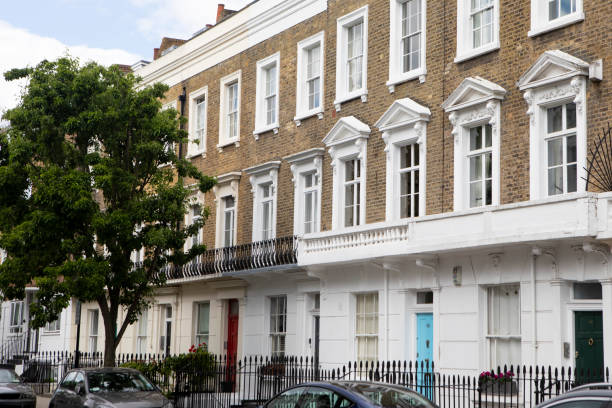
A Victorian terrace in London may require a very different approach from a modern detached house converted into an HMO.
Step 6 - Carry out the necessary building work
Once the design is established, the conversion can proceed.
Common works can include:
-
Creating additional bedrooms
-
Installing or upgrading bathrooms
-
Extending or refurbishing the kitchen
-
Upgrading electrical installations
-
Improving fire separation
-
Installing fire doors
-
Upgrading heating
-
Improving ventilation
-
Repairing damp and mould
-
Reconfiguring internal layouts
-
Decorating and flooring
Building Regulations may apply to conversion and structural works, so landlords should establish the necessary approvals before work begins.
Step 7 - Prepare the required safety documentation
Before occupation, make sure the property has the appropriate safety checks and documentation.
Depending on the property and local requirements, this can include:
-
Gas safety certification
-
Electrical installation inspection
-
Fire safety documentation
-
Smoke and heat alarm certification
-
Emergency lighting certification where required
-
Energy Performance Certificate
-
Appliance safety records
-
Relevant building control documentation
Some councils request detailed floor plans, fire safety information, gas certificates and electrical reports as part of HMO licensing applications.
Step 8 - Apply for the HMO licence
If the property requires a licence, submit the application to the relevant local authority.
The council will consider whether the property is suitable for the proposed number of occupants and whether the proposed manager is fit and proper.
An HMO licence can last for a maximum of five years, and each HMO generally requires its own licence.
The licence can also contain specific conditions that the landlord must continue to follow.
Step 9 - Furnish and prepare the property
Once the conversion is complete, prepare the property for the intended tenants.
A professional HMO should provide durable furniture, suitable storage, functional kitchen equipment and well-maintained communal areas.
The quality of the accommodation can also affect the achievable room rent and the type of tenants attracted.
Step 10 - Set up professional HMO management
Managing five or more tenants in one property can be considerably more demanding than managing a conventional single-family tenancy.
You may need to coordinate:
-
Individual tenancy agreements
-
Rent collection
-
Repairs
-
Communal cleaning
-
Inspections
-
Waste management
-
Safety checks
-
Tenant communication
-
Room changeovers
-
Maintenance contractors
Professional HMO management can help landlords maintain the property and deal with issues before they become larger problems.
How much does it cost to convert a property into an HMO?
There is no standard HMO conversion cost.
The budget depends on the property's existing condition, location, number of rooms, structural requirements, fire safety works, bathrooms, kitchen, electrical installation, heating and desired specification.
A property requiring only cosmetic improvements could cost substantially less to convert than an older London house requiring extensive refurbishment and fire-safety upgrades.
Before purchasing, investors should calculate the purchase price, professional fees, planning costs, licensing fees, refurbishment budget, furnishing costs and contingency alongside the expected room rental income.
Can an existing rental property be converted into an HMO?
Yes, but the landlord should establish the planning and licensing position before changing the occupancy arrangement.
A normal rental property becoming occupied by several unrelated tenants can create an HMO situation even where substantial building work is not involved. Councils may also require landlords to notify them about changes to an HMO.
Fraser Bond support for HMO conversions
Converting a property into an HMO requires coordination between property strategy, refurbishment, compliance and ongoing management.
Fraser Bond can support landlords and investors with property assessment, refurbishment coordination, contractor management, property management and wider HMO requirements.
Whether you are buying a property specifically for HMO conversion or considering converting an existing rental property, getting the planning, layout, compliance and financial calculations right before starting work can make a significant difference to the investment outcome.