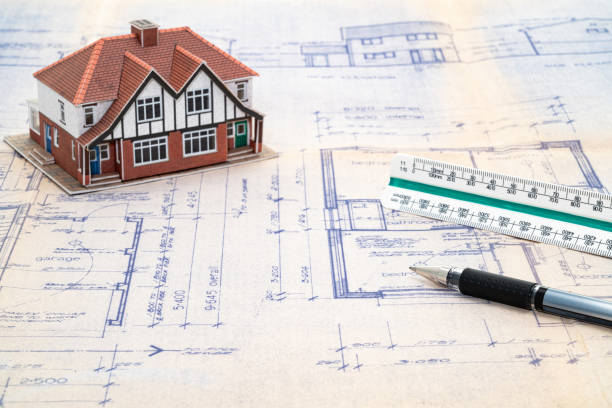
Joint Venture Development Land UK - How Landowners and Developers Can Work Together
Explore joint venture development land UK opportunities, including landowner and developer partnerships, planning, development finance, profit sharing, risk allocation and how Fraser Bond can support property development projects across the UK.
What Is a Joint Venture for Development Land?
A joint venture development land arrangement brings two or more parties together to develop a property or land opportunity.
A typical structure involves a landowner contributing land while a developer contributes development expertise, planning knowledge, finance, project management or construction capability. The parties then share the financial returns according to an agreed structure.
This can be useful where a landowner has development land but does not want to fund or manage the entire project independently.
For a developer, a joint venture can provide access to land without necessarily having to purchase the site outright at the beginning.
The exact arrangement can vary significantly, so the commercial, legal and tax structure should be established before commitments are made.
Why Consider a Joint Venture Development Land Deal?
Development land can require substantial capital before a finished property is sold or occupied.
A landowner may have a site with planning potential but lack the resources or experience to take it through planning, construction and sales.
A developer may have the skills and funding but need access to suitable land.
A joint venture can bring these resources together.
Common reasons for considering a joint venture include:
-
Reducing the amount of upfront land acquisition capital required
-
Combining land with development finance
-
Sharing planning and development risk
-
Accessing specialist construction expertise
-
Unlocking land value through development
-
Creating larger development opportunities
-
Sharing profits rather than selling land at an early stage
-
Combining neighbouring sites or property interests
-
Giving landowners greater involvement in the completed development
The arrangement should be based on a realistic development appraisal rather than simply an assumption that planning permission or rising property prices will create a profit.
Types of Joint Venture Development Land Opportunities
Joint ventures can apply to different types of UK development land.
Residential Development Land
A landowner may contribute a site suitable for houses, apartments or a mixed residential scheme while a developer manages planning, finance, construction and sales.
This can work particularly well where the site has an existing planning permission or a credible route toward obtaining consent.
Brownfield Development Sites
Former industrial, commercial or other previously developed sites can require significant remediation, demolition and infrastructure work.
A joint venture may allow the landowner and development partner to share the costs and risks associated with unlocking the site.
Strategic Land
Strategic land may have longer-term development potential but may not yet have planning permission.
A developer or strategic land specialist could work with the landowner on planning, promotion, infrastructure and eventual development.
Mixed-Use Development
Larger sites may combine residential, commercial, retail, leisure or community uses.
Joint ventures can help bring together the land, capital and development expertise required for more complex schemes.
How a Joint Venture Development Land Structure Can Work
There is no single joint venture structure that applies to every development.
One approach is for the landowner and developer to establish a special purpose vehicle, often a company created specifically for the project.
The landowner may transfer or contribute the land to the venture while the development partner contributes capital, expertise or development services.
The joint venture then undertakes the development and ultimately distributes profits according to the agreed arrangements.
Another structure may involve the landowner retaining ownership while the developer receives contractual rights to develop the site.
Options, conditional contracts and other contractual control arrangements can also be used in land development transactions. Government guidance published in 2026 confirms that certain contractual control rights over registered land, including some options, conditional contracts and promotion agreements, will become subject to information requirements from 6 April 2027.
The correct structure depends on the site, parties, funding, planning position and tax circumstances.
How Development Land Value Is Established
One of the most important parts of a joint venture is agreeing what the land contributes to the project.
The landowner may be contributing a site worth a particular amount in its existing use, but the development could potentially create a substantially higher value.
A development appraisal should consider:
-
Existing land value
-
Proposed number of units
-
Expected sales values
-
Gross Development Value
-
Construction costs
-
Professional fees
-
Planning costs
-
Finance costs
-
Infrastructure costs
-
Marketing and sales costs
-
Section 106 obligations
-
Community Infrastructure Levy where applicable
-
Affordable housing requirements
-
Contingency
-
Developer profit
-
Expected timescale
Government appraisal guidance describes residual land valuation as the amount left after development costs, fees and developer profit are deducted from Gross Development Value.
This makes a detailed appraisal particularly important when negotiating how much value each party is contributing.
Example of a Joint Venture Development Land Deal
Consider a hypothetical site with an agreed existing land value of £1.5 million.
The proposed development could have an estimated Gross Development Value of £8 million.
Suppose the total development costs, including construction, professional fees, finance, planning obligations, marketing and contingency, are estimated at £5.2 million.
The parties would then need to consider the required developer return and other commercial assumptions before determining the project's residual value and how profits should be shared.
For example, the agreement might provide for the landowner to receive a defined land value or preferred return, with remaining development profits divided according to an agreed percentage.
This is only an illustrative example. Actual development appraisals can change substantially when construction costs, finance rates, sales values, planning obligations or project timelines change.
What Should Be Agreed Before Entering a Joint Venture?
A joint venture should not rely on a simple agreement to “split the profits”.
The parties should establish precisely how the project will operate.
Important points include:
-
Ownership percentages
-
Land valuation
-
Capital contributions
-
Planning responsibilities
-
Development management responsibilities
-
Construction responsibilities
-
Finance arrangements
-
Guarantees
-
Professional fees
-
Sales strategy
-
Decision-making rights
-
Profit distribution
-
Loss allocation
-
Exit provisions
-
Dispute resolution
-
Timescales
-
What happens if planning permission is refused
-
What happens if development costs increase
-
What happens if property sales values fall
-
What happens if one party wants to exit
These provisions should be documented by appropriately qualified legal and tax advisers.
Planning Permission and Joint Venture Development Land
Planning is often one of the biggest sources of uncertainty.
A site may have:
-
No planning permission
-
Planning potential
-
An allocation in a local plan
-
Outline planning permission
-
Full planning permission
-
Permission subject to conditions
-
An existing development scheme requiring amendments
The current National Planning Policy Framework for England was published on 17 August 2026 and sets out national policies for plan-making and decisions on development proposals.
However, national planning policy does not mean that a particular site will automatically receive permission.
A joint venture appraisal should therefore distinguish between the current planning position and the development potential being assumed.
Fraser Bond can help landowners and development partners assess the property opportunity, coordinate relevant property professionals and consider how the planning position affects the wider development strategy.
Joint Venture Land Development and Development Finance
Finance can determine whether a proposed joint venture is commercially viable.
Depending on the project, funding may be required for:
-
Land acquisition or contribution
-
Planning and professional fees
-
Surveys
-
Demolition
-
Remediation
-
Construction
-
Infrastructure
-
Interest and finance costs
-
Marketing
-
Sales expenses
-
Working capital
The parties should agree who provides each element of funding and whether additional funding can be required later.
This becomes particularly important if construction costs rise or sales take longer than expected.
A well-prepared development appraisal should test different scenarios rather than relying on a single set of assumptions.
Profit Sharing in a Joint Venture
Profit sharing can be structured in several ways.
For example, the agreement could provide for:
-
Repayment of approved project costs
-
Repayment of agreed capital contributions
-
A preferred return or agreed landowner return
-
Distribution of remaining development profit between the parties
Alternatively, the parties may agree a different waterfall based on their respective contributions.
The percentage split should therefore not be considered in isolation.
A party contributing land worth £2 million is making a different contribution from a party providing £2 million of development finance and taking responsibility for planning and construction.
The commercial value of each contribution, risk exposure and expected return should be assessed together.
Tax and Legal Considerations
Joint venture development can have significant tax and legal consequences.
The treatment can depend on whether the parties use a company, partnership, limited liability partnership, direct ownership arrangement or contractual development agreement.
HMRC guidance confirms that partnership transactions have specific SDLT rules, including circumstances where land held by a partnership is treated as held by its partners.
Transfers of land to or from companies can also create SDLT considerations depending on the structure and circumstances.
Other issues can include:
-
Corporation Tax
-
Income Tax
-
Capital Gains Tax
-
SDLT
-
VAT
-
Development profit taxation
-
Company structures
-
Partnership liabilities
-
Land transfer arrangements
-
Security for development finance
-
Overages
-
Restrictive covenants
-
Existing mortgages
Professional legal and tax advice should be obtained before selecting the structure.
Due Diligence on Joint Venture Development Land
Before entering the agreement, the site should be investigated carefully.
A typical due diligence exercise may consider:
Title
Check ownership, title restrictions, easements, covenants, rights of way, access and existing charges.
Planning
Review planning history, local planning policies, allocations, previous applications, permissions and relevant planning constraints.
Physical Condition
Assess ground conditions, contamination, demolition requirements, flooding, ecology, trees and other site-specific constraints.
Access and Infrastructure
Consider highways access, utilities, drainage, electricity, water, telecommunications and infrastructure capacity.
Development Appraisal
Test GDV, construction costs, professional fees, finance, planning obligations, developer return and contingency.
Market Demand
Research comparable sales, rental demand, competing developments and likely buyer or tenant requirements.
Joint Ventures for Landowners Without Development Experience
A landowner does not necessarily need to become a developer to participate in a development opportunity.
A suitable development partner may take responsibility for:
-
Planning consultants
-
Architects
-
Engineers
-
Contractors
-
Project managers
-
Development finance
-
Sales agents
-
Construction coordination
-
Building compliance
-
Marketing
The landowner can potentially contribute the land while retaining an economic interest in the development.
However, the landowner should understand exactly what control they retain and what decisions the developer can make without further approval.
Joint Venture Development Land in London and the UK Regions
Joint venture opportunities can arise across London and regional markets.
In London, opportunities may include:
-
Small infill sites
-
Larger regeneration sites
-
Commercial-to-residential projects
-
Airspace opportunities
-
Underused commercial property
-
Mixed-use schemes
-
Sites with existing planning permission
Outside London, opportunities may include:
-
Brownfield redevelopment
-
Former industrial sites
-
Housing schemes
-
Urban regeneration
-
Edge-of-settlement land
-
Commercial conversions
-
Strategic land
The economics can vary significantly between locations, so a national land value assumption should not replace a site-specific appraisal.
Government guidance specifically recommends using tailored local land value information where available because individual sites can differ substantially from generic area estimates.
Joint Venture vs Selling Development Land
A landowner considering a development site may have several options.
Selling immediately can provide a defined sale price and transfer much of the development risk to the buyer.
A joint venture can provide continued participation in the development and potentially expose the landowner to a share of future development returns.
Other possibilities include:
-
Conditional sale
-
Option agreement
-
Promotion agreement
-
Overages
-
Deferred consideration
-
Direct development
-
Joint venture company
The appropriate structure depends on the landowner's objectives, risk tolerance, tax position and the site's development prospects.
Risks of Joint Venture Development Land
Joint ventures can create opportunities, but they also introduce shared commercial risks.
Potential issues include:
-
Planning refusal
-
Planning delays
-
Construction cost inflation
-
Finance costs increasing
-
Lower-than-expected sales values
-
Contractor failure
-
Infrastructure problems
-
Contamination
-
Delayed sales
-
Disagreements between partners
-
Funding shortfalls
-
Changes to planning policy
-
Unexpected legal or title problems
The best protection is not simply a higher profit percentage. It is a clearly documented structure that explains how these situations will be handled.
How Fraser Bond Can Support Joint Venture Development Land
Fraser Bond can support landowners, developers and property investors evaluating UK development opportunities.
Our wider property services can assist with areas including:
-
Property and land sales
-
Development consultancy
-
Investment advice
-
Property refurbishment
-
Building works
-
Contractor coordination
-
Property management
-
Development project support
-
Property valuation coordination
-
Sales and lettings strategy
For landowners considering a joint venture, the first step is to establish what the site can realistically support, what the land is worth, what development risks exist and what structure could align the interests of all parties.
Fraser Bond can help coordinate the property and development process from initial assessment through to implementation and eventual sale or letting.
Questions to Ask Before Signing a Joint Venture Agreement
Before proceeding, ask:
-
What is the land worth today?
-
What development is realistically achievable?
-
Is planning permission already in place?
-
What planning risks remain?
-
Who pays for planning?
-
Who funds construction?
-
Who provides development finance?
-
How are cost overruns handled?
-
How is profit cal