


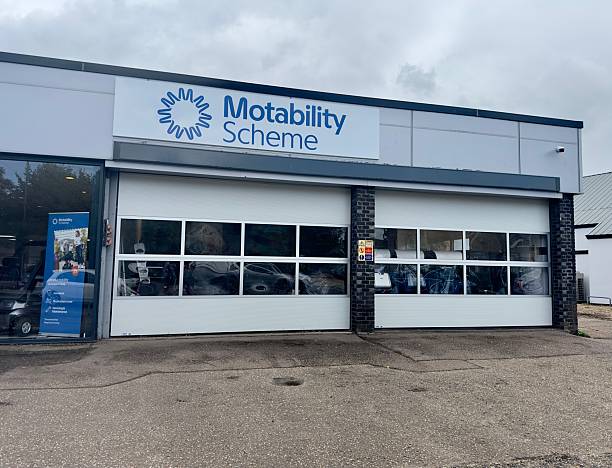
Motability Scheme - Eligibility, PIP Rates, Cars and How to Apply in 2026
The Motability Scheme is a UK vehicle leasing programme that helps eligible disabled people access cars, Wheelchair Accessible Vehicles (WAVs), mobility scooters and powered wheelchairs.
The scheme allows qualifying individuals to exchange some or all of their eligible mobility allowance for a lease. Many essential costs, including insurance, servicing, maintenance and UK breakdown cover, are included in the package.
For people receiving the enhanced rate of the mobility component of Personal Independence Payment (PIP), Motability can provide an accessible way to arrange transport without purchasing a vehicle outright.
In 2026, changes to vehicle availability, taxation and leasing costs have made it particularly important for applicants to understand the scheme before choosing a vehicle.
This guide explains Motability eligibility, payment arrangements, available vehicles, adaptations, application procedures and the changes introduced in July 2026.
What Is the Motability Scheme?
The Motability Scheme is designed to help disabled people maintain independence and access suitable transport.
Instead of purchasing a vehicle, eligible customers use their qualifying mobility allowance towards a lease.
The scheme is operated by Motability Operations and overseen by the Motability Foundation.
Depending on individual needs, customers can lease a standard car, a specially adapted vehicle, a wheelchair-accessible vehicle, a mobility scooter or a powered wheelchair.
The scheme aims to simplify transport costs by combining several essential services within one leasing arrangement.
Who Is Eligible for Motability?
Eligibility depends on receiving one of the qualifying disability or mobility allowances.
These include:
-
Enhanced rate mobility component of Personal Independence Payment (PIP).
-
Higher rate mobility component of Disability Living Allowance (DLA).
-
Enhanced rate mobility component of Adult Disability Payment in Scotland.
-
Higher rate mobility component of Child Disability Payment in Scotland.
-
War Pensioners' Mobility Supplement.
-
Armed Forces Independence Payment.
Applicants generally need at least 12 months remaining on their qualifying allowance when joining the scheme.
Receiving a disability benefit does not automatically guarantee eligibility unless it includes the required mobility entitlement.
Motability PIP Eligibility
People receiving the enhanced rate of the PIP mobility component can qualify for the Motability Scheme.
For the 2026–2027 tax year, the enhanced PIP mobility rate is £80 per week.
This allowance can be used towards an eligible vehicle lease.
People receiving only the standard PIP mobility rate do not qualify through that entitlement.
Likewise, receiving the enhanced daily living component alone does not establish eligibility for Motability.
The qualifying mobility component is the key requirement.
Motability PIP Rates in 2026
The relevant PIP mobility rates for the 2026–2027 tax year are:
|
PIP mobility component |
Weekly payment |
Motability eligibility |
|---|---|---|
|
Standard rate |
£30.30 |
Not eligible through PIP |
|
Enhanced rate |
£80.00 |
Eligible, subject to scheme rules |
The amount of allowance used depends on the chosen vehicle and lease arrangement.
Some vehicles use the full mobility allowance, while others may cost less.
More expensive vehicles may require an additional upfront payment.
How Does Motability Work?
The scheme operates through a leasing arrangement rather than an outright purchase.
Once an eligible customer chooses a suitable vehicle and their application is approved, the relevant mobility allowance is paid towards the lease.
The customer can then use the vehicle during the agreed leasing period.
The arrangement typically includes insurance, servicing, maintenance and breakdown assistance.
At the end of the lease, the customer may be able to apply for another vehicle, subject to continued eligibility and scheme conditions.
Are Motability Cars Free?
Motability cars are not free.
The lease is funded using the customer's qualifying mobility allowance.
Some vehicles are available without an additional upfront payment.
Other vehicles require an Advance Payment because their leasing cost exceeds the amount covered by the allowance.
Customers should consider the total financial arrangement rather than focusing only on whether an Advance Payment is required.
What Is a Motability Advance Payment?
An Advance Payment is a one-off amount paid at the beginning of a vehicle lease.
It applies to certain vehicles where the cost of the lease is higher than the amount covered by the mobility allowance.
The amount varies according to the vehicle and the scheme's current pricing.
Some vehicles have no Advance Payment, while others require a substantial contribution.
Advance Payments are not deposits that are automatically returned at the end of the lease.
Applicants should review the current price list before ordering.
Motability Cars Available in 2026
The Motability Scheme offers a range of vehicles designed to accommodate different transport requirements.
Depending on availability, customers may be able to choose from small hatchbacks, family cars, SUVs, electric vehicles and adapted vehicles.
The available selection changes periodically.
Vehicle eligibility, Advance Payments and delivery times can vary.
Customers should consider accessibility, comfort, passenger capacity, storage space and running requirements when comparing options.
Motability Cars with No Advance Payment
Some vehicles are available through the scheme without an upfront Advance Payment.
For these vehicles, the agreed mobility allowance normally covers the leasing cost.
However, a vehicle advertised without an Advance Payment is not necessarily available immediately.
Stock levels, manufacturer lead times and eligibility requirements can affect ordering.
Customers should confirm the current price and availability with an approved Motability dealer.
Motability Electric Cars
Electric vehicles are available through the Motability Scheme.
They may appeal to customers seeking quieter driving, lower local emissions and potentially reduced running costs.
However, the suitability of an electric car depends on access to charging, typical journey distances and individual mobility requirements.
Customers should also consider battery range, charging times and the accessibility of charging equipment.
For people living in flats or rented accommodation, home charging arrangements may require additional consideration.
Motability Wheelchair Accessible Vehicles
Wheelchair Accessible Vehicles, commonly known as WAVs, are designed or adapted to allow a wheelchair user to travel while remaining seated in their wheelchair.
Features may include ramps, lifts, wheelchair restraints and specialised seating arrangements.
WAV leases are commonly longer than standard car leases.
Customers should assess entry dimensions, headroom, wheelchair positioning and the needs of accompanying passengers.
Specialist suppliers can arrange demonstrations and help identify suitable vehicles.
Motability Scooters and Powered Wheelchairs
The Motability Scheme also provides leasing options for eligible mobility scooters and powered wheelchairs.
These products may be suitable for people who need assistance travelling independently over shorter distances.
Different models offer varying ranges, seating arrangements and manoeuvrability.
Customers should consider storage, charging, transport and everyday accessibility requirements.
A specialist dealer can help assess whether a particular product meets the customer's needs.
Motability Vehicle Adaptations
Some customers need vehicle adaptations to drive safely or travel comfortably.
Adaptations may include hand controls, steering aids, pedal modifications, swivel seats and wheelchair loading equipment.
Certain adaptations may be available at no additional cost, while others require payment.
The appropriate equipment depends on the customer's physical needs and the selected vehicle.
Specialist assessment and installation may be necessary.
Motability Grants and Financial Assistance
The Motability Foundation provides grants to eligible people who need additional financial assistance.
Depending on circumstances, support may be available towards Advance Payments, vehicle adaptations or wheelchair-accessible transport.
Grant decisions are subject to eligibility criteria and financial assessment.
Funding is not guaranteed simply because an individual qualifies for the Motability Scheme.
Applicants should explore available grant support before committing to an expensive vehicle or adaptation.
Motability Insurance Cover
Insurance is generally included within the Motability leasing package.
The scheme allows up to three named drivers, subject to the relevant insurance conditions.
The eligible disabled person does not necessarily need to drive the vehicle personally.
However, the vehicle must be used for the benefit of the person receiving the qualifying allowance.
Named drivers must comply with the scheme's requirements.
Can Someone Else Drive a Motability Car?
Yes. An eligible customer can nominate other people to drive the vehicle.
This may be particularly useful for individuals who cannot drive because of their disability.
The vehicle must still be used for the benefit of the disabled customer.
Drivers cannot treat the Motability vehicle as their own unrestricted personal transport.
Misuse can result in action under the scheme's terms.
Motability Servicing and Maintenance
The leasing package generally includes routine servicing and maintenance.
This helps customers manage essential vehicle upkeep without arranging separate service contracts.
Certain repairs, tyre services and other maintenance arrangements are also included, subject to scheme conditions.
Customers remain responsible for using the vehicle appropriately and following relevant servicing requirements.
Motability Breakdown Cover
UK breakdown assistance is included in the standard Motability package.
This provides support when a vehicle develops a mechanical problem or cannot continue a journey.
Customers should understand the applicable breakdown arrangements before travelling.
Separate requirements and possible charges may apply to certain overseas journeys.
Motability Changes from July 2026
Important changes to the Motability Scheme took effect on 1 July 2026.
The changes followed government decisions affecting tax treatment and scheme costs.
For qualifying new leases, the changes included VAT on certain additional payments and Insurance Premium Tax on applicable insurance arrangements.
The standard VAT rate of 20% applies to relevant Advance Payments, while Insurance Premium Tax applies at 12% to insurance on qualifying new leases.
The mobility allowance element of lease payments remains protected from VAT under the applicable arrangements.
Vehicles designed or substantially and permanently adapted for wheelchair or stretcher users are subject to specific exemptions.
Existing leases were not retrospectively changed by the new arrangements.
Do the 2026 Changes Affect Existing Motability Customers?
Customers with leases entered into before the July 2026 changes generally continue under their existing agreements.
The new tax arrangements primarily affect qualifying new leases.
However, customers renewing their vehicles should check the terms and pricing available at the time of renewal.
The range of vehicles and Advance Payments can also change between leasing periods.
The 2026 tax changes did not remove the underlying eligibility of people receiving qualifying mobility allowances.
Motability BMW and Mercedes Changes
Following the Autumn Budget 2025, premium vehicle brands including BMW and Mercedes-Benz were removed from the Motability Scheme's new vehicle selection.
This formed part of a wider effort to focus the scheme on practical and affordable transport.
Customers should not assume that a vehicle previously offered through Motability remains available.
The current vehicle catalogue is the appropriate place to check which models can be ordered.
How to Apply for Motability
Eligible applicants can begin by checking their qualifying allowance and confirming that at least 12 months remain on the award.
They can then explore available vehicles and identify suitable dealers or specialist suppliers.
The application process generally involves confirming identity, allowance entitlement and relevant driver information.
For cars and WAVs, customers may be able to begin the process through a Motability Scheme online account.
A dealer or supplier can help complete the application and arrange the vehicle order.
Motability Login and Online Account
The Motability Scheme provides an online account for customers.
Depending on their circumstances, users can begin vehicle applications, review lease information and manage certain account details.
The account is separate from the DWP's PIP service.
Customers should use the official Motability Scheme website when signing in.
They should avoid entering personal or financial information into unofficial websites claiming to provide account access.
Motability Contact Number
Motability Scheme customer services: 0300 456 4566
Customers can use the official service for assistance with applications, eligibility questions and existing leases.
The scheme's website is Motability.co.uk.
For questions about a PIP award itself, claimants should contact the DWP rather than Motability.
Motability and State Pension Age
People who have reached State Pension age may still qualify for Motability if they already receive an eligible mobility allowance.
They generally need at least 12 months remaining on that allowance when applying.
However, people who reach State Pension age without an existing qualifying mobility entitlement cannot usually establish Motability eligibility through a new PIP claim.
Attendance Allowance does not provide eligibility for the Motability Scheme.
Motability and Universal Credit
Universal Credit and Motability serve different purposes.
Universal Credit provides means-tested financial support, while Motability is linked to qualifying disability mobility allowances.
Receiving Universal Credit alone does not establish eligibility for Motability.
However, some people receive Universal Credit alongside enhanced-rate PIP mobility payments.
In these circumstances, the PIP mobility entitlement may provide access to the scheme.
Motability and Blue Badge Eligibility
A Blue Badge can help eligible disabled people park closer to their destinations.
However, the Blue Badge scheme is separate from Motability.
Receiving an eligible disability benefit may establish automatic Blue Badge eligibility in some circumstances, while other applicants are assessed under different criteria.
A Motability vehicle does not automatically come with unrestricted parking privileges.
Customers should check the applicable Blue Badge rules and local parking restrictions.
Motability and Vehicle Tax
Eligible disabled people may qualify for vehicle tax exemptions or reductions depending on their disability benefit entitlement.
Motability leasing arrangements generally include the applicable vehicle tax arrangements.
However, customers should understand that vehicle tax relief and Motability eligibility are separate legal provisions.
The relevant conditions depend on the vehicle and qualifying allowance.
Motability and Accessible Housing
Transport accessibility is often closely connected to housing accessibility.
People using wheelchairs, mobility scooters or adapted vehicles may need accommodation with suitable entrances, parking and storage facilities.
A property may also require space for charging a mobility scooter or electric vehicle.
These practical requirements should be considered when renting, buying or adapting a home.
Motability and Electric Vehicle Charging at Home
Customers choosing an electric Motability vehicle should assess whether home charging is practical.
Homeowners may need to consider electrical capacity, driveway access and installation requirements.
Tenants may require their landlord's permission before installing charging equipment.
Leasehold flat owners may also need consent from the freeholder or managing agent.
In properties with communal parking, installation can involve additional legal and technical considerations.
Motability and Rental Properties
Landlords may receive requests from tenants who need suitable parking or charging facilities for accessible transport.
The appropriate response depends on the property, tenancy arrangements and relevant legal obligations.
Some adjustments may be straightforward, while others require planning, electrical works or consent from third parties.
Landlords and managing agents should consider applicable equality legislation and obtain professional advice where necessary.
Motability and Property Management in London
London properties can present particular accessibility challenges.
Converted houses, period buildings, basement flats and properties with limited parking may not meet every mobility requirement.
People who rely on adapted vehicles may need secure parking, suitable access routes and practical arrangements for vehicle use.
Professional property management can help owners assess maintenance requirements, permissions and potential improvements.
Motability and Fraser Bond
The Motability Scheme provides eligible disabled people with access to cars, wheelchair-accessible vehicles, mobility scooters and powered wheelchairs through qualifying mobility allowances.
In 2026, the
There is probably a Fraser Bond team for it.
Lettings & management
Finding tenants, running tenancies, and holding the compliance paperwork so you never have to look for it.
Investment & portfolio
Buying well, holding sensibly, and knowing when a property has stopped earning its place.
Commercial property
Offices, retail and mixed use — acquisition, lettings, lease advice and building management.
Professional services
Valuation, lease consultancy, building consultancy and expert advice when a decision needs evidence behind it.
You are one message away from an answer.
Send it to us and get a straight answer.
Describe the property and the problem. We will tell you what we would do, what it should cost, and if we are not the right people, who is.
- Replies the same working day
- The person who answers is the person who handles it
- No fee, and no obligation to instruct us
See everything we are instructed on.
Sales and lettings across Prime Central London and the wider UK, with the same team behind every listing.
- Residential and commercial in one search
- Filter by borough, budget and size
- Register once and we will send matches first
Other insights you may find useful.
 DSS Housing & Benefit-Friendly Rentals
DSS Accepted 1 Bedroom Flats in London – No Deposit Options Available
Read → Affordable Housing & Social Housing
Renting Without a Guarantor on Benefits
Read → Residential Property Services in London
Finding Property Owners in the UK
Read → Property Legal, Risk & Compliance
Next of Kin and Property: Rights and Responsibilities in England
Read → Property Legal, Risk & Compliance
How Many People Can Live in a 3-Bedroom House?
Read → Residential Property Services in London