


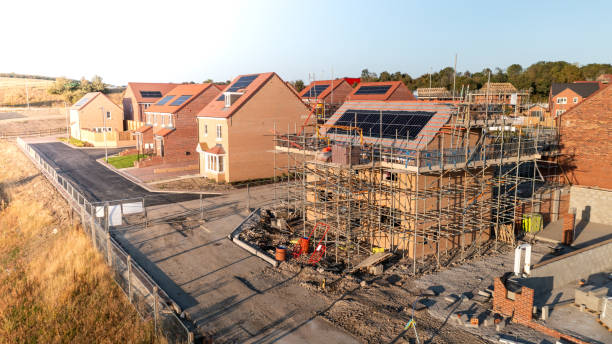
Property Development Advice UK - A Complete Guide for Developers and Property Investors
Successful property development in the UK requires much more than finding a property, completing building work and selling at a higher price. Developers need to understand acquisition costs, planning risk, construction budgets, finance, market demand, professional fees, taxation and the likely exit value before committing significant capital.
A development that appears profitable at first glance can become considerably less attractive once planning obligations, financing costs, professional fees, construction contingencies and delays are included.
For investors seeking property development advice in the UK, careful due diligence and realistic financial modelling should therefore begin before the property or development site is purchased.
Fraser Bond supports property investors, developers, buyers and sellers with property acquisition, sales, lettings and investment advisory services, with particular expertise in London and the wider UK property market.
What Is Property Development?
Property development involves improving land or buildings to create additional value.
Projects can range from relatively straightforward refurbishments to major residential developments.
A developer might purchase a dated property, refurbish it and resell it. Another investor might convert a commercial building to residential use where planning rules permit. Larger developers may acquire land and construct multiple homes.
Development strategies can include refurbishment, extensions, conversions, change of use, subdivision, new-build development and redevelopment of existing sites.
The fundamental objective is generally the same: create a completed property whose value or income potential justifies the cost and risk involved in producing it.
Property Development Advice Before Buying
The most important development decisions are often made before acquisition.
Developers should avoid evaluating opportunities solely on the difference between the purchase price and expected resale value.
A proper development appraisal needs to consider the complete project.
This means understanding the property's existing condition, realistic planning prospects, construction requirements, financing costs, professional fees, acquisition expenses and expected end value.
The more uncertain the project, the greater the need for contingency within the appraisal.
Finding Property Development Opportunities
Development opportunities can appear in many forms.
An obviously derelict building is not necessarily a better development opportunity than a well-maintained property with underused space.
Developers might look for large houses suitable for reconfiguration, buildings with extension potential, commercial properties capable of alternative use, vacant sites, redundant buildings or properties requiring substantial refurbishment.
The important question is not simply whether a property can be improved.
It is whether the improvement can create sufficient additional value after all associated costs and risks have been considered.
Property Development in London
London remains a highly specialised development market.
Acquisition costs can be substantial, meaning relatively small mistakes in the appraisal can have significant financial consequences.
At the same time, individual London neighbourhoods can support very different completed property values.
Understanding the local market is therefore essential.
A development specification that makes financial sense in one part of London may be excessive or insufficient in another.
Developers should consider who is likely to buy or rent the completed property and design the scheme around realistic local demand rather than personal preferences.
Fraser Bond's London market expertise can help investors assess potential acquisitions alongside likely resale or rental positioning.
Property Development Appraisal
A development appraisal estimates whether a project is financially viable.
The calculation begins with the anticipated value of the completed development and works backwards through the costs required to deliver it.
Developers should account for acquisition costs, construction, professional services, finance, planning-related expenditure, utilities, insurance, marketing and selling expenses.
Contingency should also be included.
Construction projects frequently uncover unexpected problems, particularly when working with older buildings.
A development that works only when everything proceeds perfectly may offer insufficient protection against normal development risk.
Gross Development Value
Gross Development Value, usually abbreviated to GDV, is the estimated market value of a development when completed.
For a development containing several apartments, this would generally involve estimating the combined value of the completed units.
GDV is one of the most important assumptions within a development appraisal.
Overestimating it can make an otherwise unviable project appear attractive.
Developers should therefore base their assumptions on relevant market evidence rather than the highest asking prices they can find.
Location, floor area, property condition, specification, tenure and buyer demand can all affect completed values.
Planning Permission for Property Development
Planning is one of the central risks in UK property development.
In England, planning permission will generally be required for new construction, major changes to buildings and material changes of use, although the precise position depends on the proposal. Local planning authorities assess applications against relevant development plans and other material considerations. GOV.UK
Planning policy and procedures differ across the UK's nations, so developers should not assume that rules applying to a project in England automatically apply in Scotland, Wales or Northern Ireland.
For projects requiring permission, planning prospects should be investigated before committing to an acquisition wherever possible.
Permitted Development Rights
Not every project requires a conventional planning application.
Certain forms of development can benefit from permitted development rights, subject to specific limitations and conditions.
However, permitted development rights are not universal. Different rules apply to different buildings and uses, rights can be more restricted in certain designated areas, and local Article 4 directions can remove particular permitted development rights. Some projects also require prior approval from the local planning authority. Planning Portal
Developers should therefore verify the position for the individual property rather than assuming that a particular conversion or extension is automatically permitted.
Planning Obligations and Development Costs
Planning permission can also introduce costs beyond the application itself.
Depending on the development, planning obligations can be used to mitigate impacts associated with a proposal, while the Community Infrastructure Levy can contribute towards local infrastructure where applicable. Planning Portal
These costs can materially affect development viability.
They should therefore be investigated during the appraisal rather than treated as an unexpected expense after planning permission has been obtained.
Professional planning advice can be particularly valuable for larger or more complicated projects.
Building Regulations
Planning permission and building regulations are separate systems.
A project can require building regulations approval even where planning permission is not required.
Building regulations apply to construction and extensions and can also cover numerous alterations to existing properties. GOV.UK specifically advises that planning permission and building regulations approval are separate and that some projects require both. GOV.UK
Developers should establish the building-control route and technical requirements before construction begins.
Failure to address these matters properly can create problems during construction and potentially when the completed property is eventually sold.
Higher-Risk Residential Buildings
Larger residential developments can face additional building-safety requirements.
In England, certain buildings meeting the statutory higher-risk criteria require Building Safety Regulator involvement for relevant building-control approval. Current government guidance describes higher-risk buildings for these purposes as buildings meeting specified height or storey thresholds and containing qualifying uses such as residential units. GOV.UK
Large development projects therefore require specialist professional advice from an early stage.
The regulatory strategy should be incorporated into the programme rather than considered only after designs have been finalised.
Building Safety Levy and Development Appraisals
Developers of new residential accommodation in England also need to be aware of the evolving Building Safety Levy regime.
Government guidance states that, from 1 October 2026, building-control applications and initial notices for certain residential developments may be subject to the Building Safety Levy. The detailed rules determine which developments meet the charging conditions and what information developers need to provide. GOV.UK
For relevant schemes progressing around or after this date, the potential levy should be incorporated into development cost planning rather than overlooked.
Property Development Finance
Property development finance differs from a conventional residential mortgage.
Developers may use their own capital, specialist development finance, bridging finance, commercial lending or combinations of different funding sources.
The appropriate structure depends on the project.
Finance costs should be modelled carefully because delays can increase interest expenditure.
A six-month delay is not merely inconvenient. It can materially reduce development profit when substantial borrowing is involved.
Developers should therefore consider the consequences of planning delays, construction overruns and slower-than-expected sales within their financial modelling.
Property Development Costs
Construction is only one part of the total development cost.
A realistic budget can also include architects, structural engineers, planning consultants, surveyors, building control, legal fees, finance costs, insurance, utility connections, site security, specialist reports, sales and marketing expenses and applicable taxes or levies.
The exact cost structure varies significantly between projects.
Renovating an existing house creates a very different cost profile from demolishing a building and constructing several new homes.
Professional cost advice can be particularly important before committing to larger projects.
Refurbishment Property Development
Refurbishment is often an entry point for investors moving into development.
A dated property may be acquired, modernised and either sold or retained as a rental investment.
However, cosmetic refurbishment should not be confused with straightforward profit.
Older properties can conceal expensive defects.
Electrical installations, plumbing, drainage, roofing, damp, structural movement and heating systems may require attention.
A thorough survey and realistic refurbishment budget can help investors distinguish between manageable improvements and projects containing significant hidden liabilities.
Converting Property
Conversions can create substantial development opportunities where the planning, physical and financial circumstances support them.
Examples include dividing larger buildings into multiple residential units or changing existing buildings to alternative uses.
Developers need to consider much more than whether rooms can physically fit within a floor plan.
Access, natural light, fire safety, acoustic performance, servicing, waste storage and other technical considerations can affect whether a proposal is workable.
Planning and building-control advice should therefore inform the design from an early stage.
Property Development and Environmental Risk
Environmental constraints can materially affect development sites.
Flood risk, protected habitats, contamination and other environmental considerations may require specialist assessment.
Government guidance encourages developers to obtain relevant environmental advice during the pre-application stage where appropriate so risks can be identified and addressed before an application progresses. GOV.UK
Early investigation can be particularly valuable because environmental constraints can influence design, programme and cost.
Property Development for Rental
Not every development needs to be sold immediately after completion.
Some investors develop properties specifically to retain them within a rental portfolio.
This changes the financial analysis.
Instead of focusing exclusively on resale value and development profit, the investor needs to consider achievable rent, operating costs, financing and long-term capital requirements.
The design should also reflect rental durability.
Expensive finishes that are difficult to maintain may not always provide sufficient additional rent to justify their cost.
FraserBond.com can help investors consider rental positioning alongside acquisition and development strategy.
Develop to Sell vs Develop to Hold
The intended exit strategy should be established early.
A development designed for sale may prioritise characteristics that maximise buyer appeal and completed value.
A build-to-hold strategy places greater emphasis on sustainable rental demand, operating costs and long-term maintenance.
Some developers retain flexibility between both outcomes.
However, relying on an unspecified exit can make financial planning more difficult.
Investors should understand what happens financially if they cannot sell at their target price or if the rental market does not support their projected income.
Property Development for First-Time Developers
New developers frequently focus heavily on construction and underestimate the importance of acquisition.
Buying correctly can provide a margin for unexpected events.
Overpaying at the beginning places immediate pressure on the entire project.
First-time developers should also avoid taking on unnecessary complexity simply because a larger project appears capable of generating a larger headline profit.
Planning uncertainty, structural alterations and complex conversions can introduce significant additional risk.
Starting with a project that can be understood and accurately costed may provide valuable experience before progressing to larger developments.
Choosing a Property Development Location
Location affects both acquisition price and exit value.
Developers should consider the likely end buyer or tenant rather than simply choosing areas where property appears inexpensive.
Transport connections, employment, schools, amenities, housing supply and local development can all influence demand.
Micro-location also matters.
Two properties within the same postcode can have different values because of road position, outlook, transport accessibility or surrounding development.
For London projects especially, detailed comparable evidence can be more useful than broad assumptions about an entire borough.
Property Development Due Diligence
Due diligence should examine both the physical property and the legal or planning context surrounding it.
Title restrictions, rights of way, restrictive covenants, access arrangements and existing leases can affect development potential.
The physical site also requires appropriate investigation.
Depending on the project, developers may need building surveys, structural advice, drainage investigations, environmental reports or specialist assessments.
Spending money on appropriate due diligence can seem expensive before acquisition, but discovering a major constraint after completion of the purchase can be considerably more costly.
Exit Strategy for Property Developers
Every development appraisal should contain an exit strategy.
Selling the completed property is one possibility, but developers should consider how sensitive that strategy is to changes in market conditions.
Completion could occur many months or several years after acquisition.
The property market at the point of sale may therefore be different from the market in which the project was originally purchased.
Alternative exits might include refinancing and retaining the property for rent, selling individual units or disposing of the development at another stage, depending on the project.
The feasibility of each strategy should be considered before it is needed.
Common Property Development Mistakes
Many development problems originate in the original appraisal rather than on the construction site.
Overestimating GDV, underestimating refurbishment costs and ignoring finance costs can quickly reduce projected profits.
Developers can also encounter problems by assuming planning permission will be straightforward or failing to investigate restrictions affecting the site.
Another common issue is excessive specification.
Spending significantly more on finishes does not automatically create an equivalent increase in property value.
The development specification should reflect the expectations of the target market.
Property Development Advice for London Investors
London development opportunities require particularly careful financial analysis because acquisition costs can consume a significant proportion of the project budget.
Investors should understand both the current proper
There is probably a Fraser Bond team for it.
Lettings & management
Finding tenants, running tenancies, and holding the compliance paperwork so you never have to look for it.
Investment & portfolio
Buying well, holding sensibly, and knowing when a property has stopped earning its place.
Commercial property
Offices, retail and mixed use — acquisition, lettings, lease advice and building management.
Professional services
Valuation, lease consultancy, building consultancy and expert advice when a decision needs evidence behind it.
You are one message away from an answer.
Send it to us and get a straight answer.
Describe the property and the problem. We will tell you what we would do, what it should cost, and if we are not the right people, who is.
- Replies the same working day
- The person who answers is the person who handles it
- No fee, and no obligation to instruct us
See everything we are instructed on.
Sales and lettings across Prime Central London and the wider UK, with the same team behind every listing.
- Residential and commercial in one search
- Filter by borough, budget and size
- Register once and we will send matches first
Other insights you may find useful.
 Property & Real Estate Services
Short-Term Furnished Apartments in Chicago - Rental Guide
Read → Property & Real Estate Services
House for Sale in Ruislip | Family Homes in West London
Read → Property & Real Estate Services
Affordable and Stylish Studio Flats for Rent in London: Your Dream Home Awaits
Read → Property & Real Estate Services
Turnham Green Property Agents – Sales, Lettings & Investments
Read → Property & Real Estate Services
Islington Planning Portal – Submit and Track Applications Online
Read → Property & Real Estate Services