Redevelopment Opportunities London - How to Find and Assess Development Potential
Explore redevelopment opportunities London investors, developers and property owners can consider, including brownfield sites, commercial conversions, mixed-use schemes, low-density properties, planning potential and practical development appraisal with Fraser Bond.
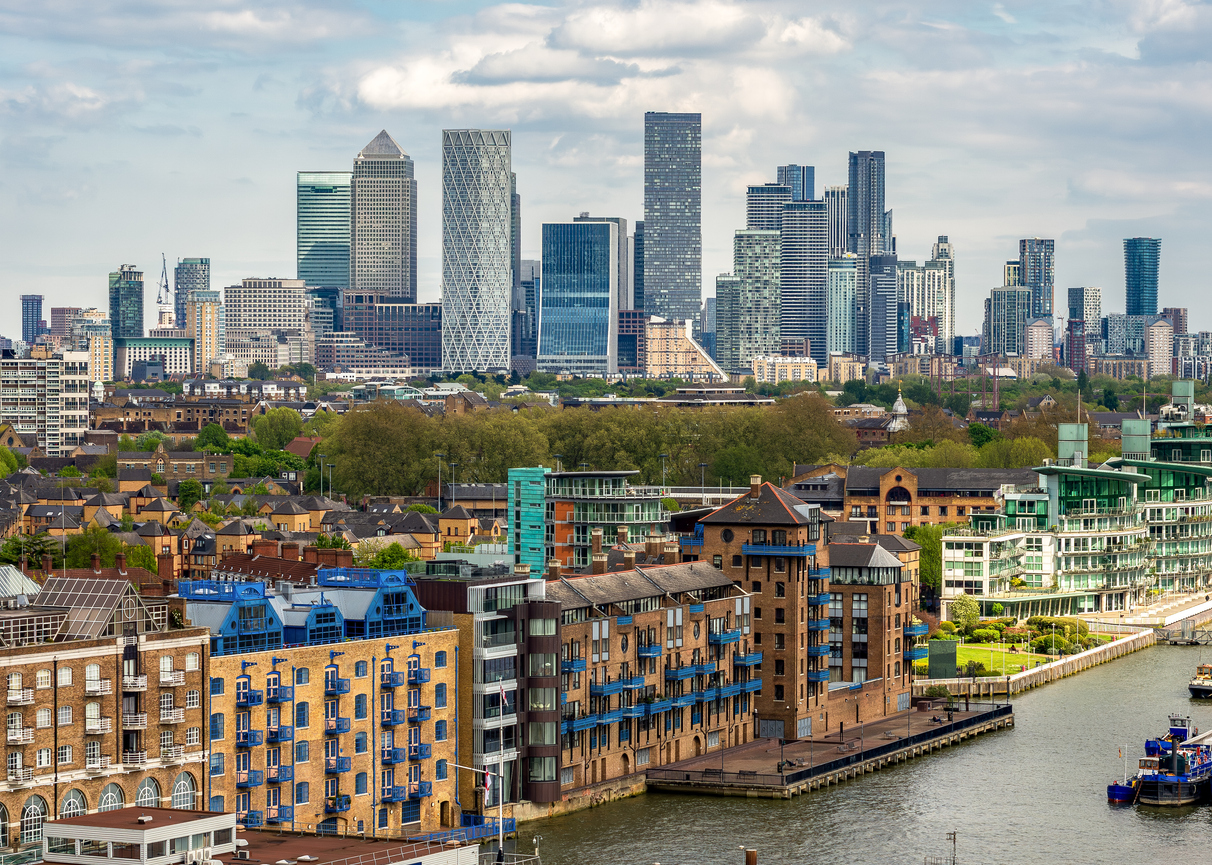
London's limited supply of developable land makes redevelopment an important part of the capital's property market. Instead of looking only for vacant plots, investors and developers can identify opportunities within existing buildings, commercial properties, low-density sites, brownfield land and locations undergoing regeneration.
A dated office, underused retail unit, low-rise industrial building, large car park or property with surplus land may have considerably different potential from its current use.
However, redevelopment potential is not the same as planning permission. Every opportunity needs to be assessed against the relevant London-wide and borough-level planning policies, site constraints, construction costs, market demand and potential end value.
The current Draft London Plan, published in July 2026, places significant emphasis on making better use of land and identifies brownfield opportunities, town centres, Opportunity Areas and well-connected locations as important parts of London's future growth strategy. The draft is currently undergoing consultation and is not yet the adopted London Plan.
Fraser Bond can support investors, developers, landlords and property owners with property acquisition, development consultancy, refurbishment, construction coordination, property management and the wider operational requirements of London property.
What Are Redevelopment Opportunities in London?
Redevelopment opportunities are properties or sites where changing, extending, intensifying or replacing the existing development could potentially create additional property value.
London opportunities can include:
-
Vacant commercial buildings
-
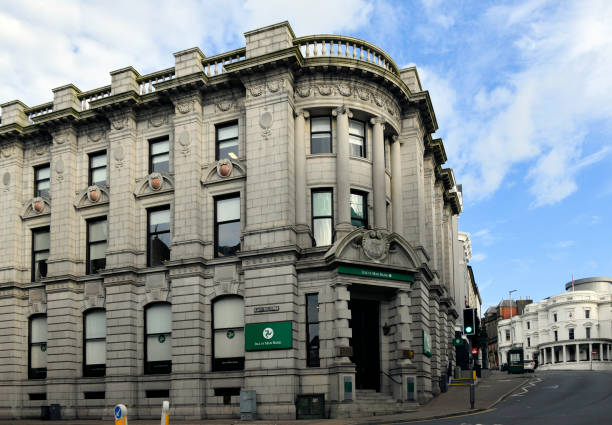
Older office properties
-
Underused retail units
-
Low-density retail sites
-
Former industrial buildings
-
Warehouses and service yards
-
Commercial buildings with residential conversion potential
-
Mixed-use properties
-
Large car parks
-
Buildings with surplus upper floors
-
Properties with unused rear or side land
-
Small infill sites
-
Brownfield sites
-
Properties close to regeneration areas
-
Sites near transport infrastructure
The redevelopment strategy could involve refurbishment, extension, change of use, additional floors, conversion, demolition and replacement or a larger mixed-use development.
Why London Has Redevelopment Potential
London has a combination of strong property demand, limited land availability and extensive existing urban development.
That means some opportunities come from making better use of land that has already been developed rather than finding completely undeveloped sites.
The Draft London Plan proposes optimising suitable development opportunities while making better use of land and supporting housing, economic growth and infrastructure.
For investors, this can make underused properties worth investigating from a development perspective.
However, high land values and construction costs mean that an attractive location does not automatically make a project viable.
Brownfield Redevelopment Opportunities London
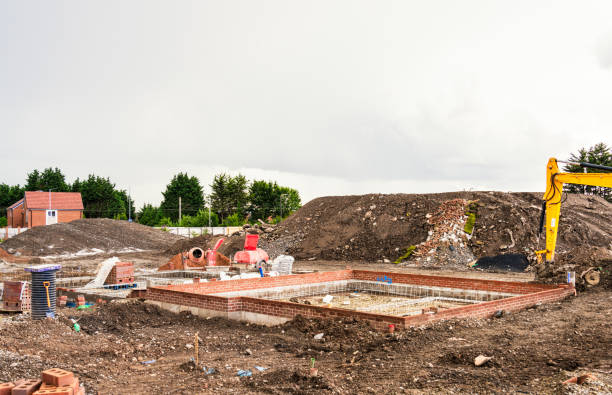
Brownfield property is one of the most important areas to investigate.
Potential opportunities include:
-
Former industrial sites
-
Vacant warehouses
-
Redundant commercial premises
-
Former retail sites
-
Underused employment land
-
Disused depots
-
Low-density commercial properties
-
Previously developed urban land
The Draft London Plan continues to prioritise brownfield opportunities and includes a dedicated approach to Brownfield First Opportunity Areas.
London's Opportunity Areas are particularly significant because they can accommodate substantial amounts of new housing, employment and supporting infrastructure. The current GLA dataset describes them as major sources of brownfield land with development capacity linked to existing or potential improvements in transport accessibility.
Being located within or close to an Opportunity Area does not itself guarantee planning permission. The specific site's planning policy, ownership, constraints and proposed development still need to be assessed.
Commercial Property Redevelopment
Commercial buildings can provide some of the most interesting redevelopment opportunities in London.
Examples include:
-
Office-to-residential conversion
-
Retail-to-residential conversion
-
Refurbished office schemes
-
Mixed-use redevelopment
-
Residential accommodation above commercial space
-
Additional floors above existing buildings
-
Replacement of outdated commercial buildings
-
Intensification of low-density commercial sites
A property that is struggling to attract tenants in its existing form may have a different investment case if the building can be repositioned or redeveloped.
The first step is to establish the property's lawful use and determine what planning routes may be available.
Office Redevelopment Opportunities London
London's office market contains buildings of very different ages, sizes and specifications.
Older offices may have:
-
Poor energy performance
-
Inefficient layouts
-
Outdated facilities
-
High refurbishment requirements
-
Excess floor area
-
Limited modern occupier appeal
-
Potential for alternative uses
Depending on the property's circumstances, investors may consider refurbishment, subdivision, change of use or redevelopment.
The feasibility of an office redevelopment depends on the specific planning designation, existing lawful use, building characteristics and local market.
Retail and High Street Redevelopment
London's high streets are another potential source of redevelopment opportunities.
A retail property may contain:
-
A ground-floor commercial unit
-
Vacant upper floors
-
Rear service space
-
Underused yards
-
Excessive floor area
-
Poor-quality accommodation
-
Development potential above the existing building
Rather than viewing the property purely as a retail investment, a developer may investigate whether a more efficient mixed-use arrangement could work.
The Draft London Plan specifically includes policies concerning town centres and high streets as part of its place-based approach.
Mixed-Use Redevelopment Opportunities
Mixed-use development can be particularly relevant in London where land values and planning objectives support multiple uses within the same site.
Potential schemes include:
-
Shops and apartments
-
Offices and homes
-
Restaurants and residential
-
Workspace and residential
-
Retail with additional floors
-
Commercial and community uses
-
Residential-led mixed-use developments
A mixed-use scheme needs to consider the relationship between the different uses.
Issues such as servicing, noise, access, refuse storage, fire safety, daylight, privacy and building management can affect both design and viability.
Low-Density Sites With Redevelopment Potential
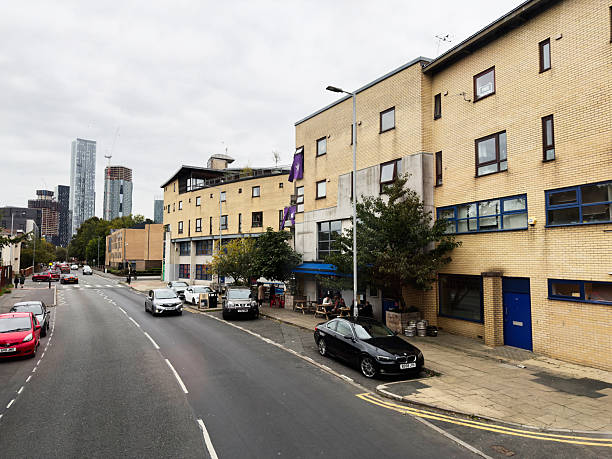
One of the clearest opportunities can be a property where the amount of land is disproportionate to the intensity of development.
Examples include:
-
Single-storey retail units
-
Surface car parks
-
Low-rise offices
-
Vehicle yards
-
Large commercial compounds
-
Retail parks
-
Older industrial premises
The development strategy could involve retaining part of the existing building while intensifying the remainder of the site.
Older London planning policy has already identified mixed-use redevelopment of car parks and low-density retail sites, alongside intensification of appropriate low-density commercial and leisure sites, as potential sources of housing capacity. The current draft plan continues the wider objective of making better use of land.
Transport-Connected Redevelopment Opportunities
Transport accessibility is an important consideration when assessing London development sites.
Potential opportunities can arise around:
-
Tube stations
-
Elizabeth line stations
-
Rail stations
-
DLR stations
-
Major bus corridors
-
Town centres
-
Strategic regeneration locations
Transport connectivity can support demand for residential and commercial development, but proximity to a station should not be treated as automatic evidence that additional density will be approved.
The proposed London planning framework places considerable emphasis on making best use of land in locations supported by sustainable transport.
London's Opportunity Areas
Opportunity Areas should be part of any serious search for larger redevelopment opportunities.
Current examples include:
-
Old Oak and Park Royal
-
Wembley
-
Stratford and the Olympic Legacy area
-
Canary Wharf and the Isle of Dogs
-
Greenwich Peninsula
-
Charlton Riverside
-
Thamesmead and Abbey Wood
-
Royal Docks and Beckton Riverside
-
Poplar Riverside
-
Croydon
-
Tottenham
-
Old Kent Road
-
Canada Water and Deptford Creek
The Draft London Plan identifies a broad range of locations for growth, including brownfield and town-centre locations.
Old Oak is a particularly significant example. In May 2026, the Old Oak and Park Royal Development Corporation announced an agreement bringing 70 acres together as a development site, with plans for 8,000 homes and 11,000 jobs.
Large regeneration projects such as this demonstrate the scale of opportunity that can emerge from strategic land assembly and infrastructure investment, although individual private properties nearby must still be assessed independently.
How to Find Redevelopment Opportunities London
Investors can use several approaches.
Search Commercial Property Listings
Look for:
-
Vacant offices
-
Shops
-
Warehouses
-
Industrial properties
-
Development sites
-
Mixed-use buildings
-
Properties with vacant upper floors
Do not simply search for properties advertised as "development opportunities". Some owners may not advertise the property's potential explicitly.
Study Planning Applications
Review planning applications for the property and surrounding streets.
Look for:
-
Previous applications
-
Approved schemes
-
Refused applications
-
Change-of-use applications
-
Extensions
-
Additional-storey proposals
-
Demolition applications
-
Nearby residential schemes
-
Mixed-use developments
Planning history can reveal what has previously been considered at the site.
Review Borough Planning Policies
London-wide policy is only one part of the assessment.
The relevant London borough's local plan, site allocations, conservation policies, design guidance and other planning documents can materially affect development potential.
A site that appears attractive from an investment perspective may have substantial planning constraints once the borough's policies are examined.
Look at Regeneration Locations
Regeneration programmes can indicate where significant investment and development are being planned.
However, investors should distinguish between:
-
An adopted planning policy
-
An emerging policy
-
A regeneration strategy
-
A development framework
-
An allocated site
-
An approved planning application
-
An actual planning permission
These are not interchangeable.
What to Check Before Buying a London Redevelopment Property
A detailed due diligence process should examine several areas.
Planning Position
Establish:
-
Existing lawful use
-
Planning history
-
Relevant local plan policies
-
Site allocation
-
Conservation status
-
Listed-building issues
-
Article 4 directions
-
Permitted development rights
-
Potential change-of-use routes
Building Condition
A redevelopment appraisal should account for the physical condition of the property.
Check:
-
Structure
-
Roof
-
Foundations
-
Damp
-
Asbestos
-
Electrical systems
-
Plumbing
-
Heating
-
Drainage
-
Fire safety
-
Windows
-
Insulation
A building survey can identify major expenditure before an acquisition is completed.
Access and Highways
Assess how vehicles, deliveries, pedestrians and emergency services can access the site.
A development may require changes to entrances, servicing arrangements or surrounding highways.
Environmental Constraints
Check for:
-
Flood risk
-
Contamination
-
Protected trees
-
Ecology
-
Air quality
-
Noise
-
Heritage constraints
These issues can affect both the design and cost of a scheme.
Utilities
Large redevelopment projects may require upgrades to:
-
Electricity
-
Water
-
Drainage
-
Gas
-
Telecommunications
Infrastructure capacity should be considered early rather than after acquisition.
How to Assess the Financial Potential
The development appraisal should consider the completed value of the proposed scheme and deduct all relevant costs.
For example, consider a hypothetical London commercial property:
Purchase price: £900,000
Construction and conversion: £600,000
Professional and planning costs: £125,000
Finance and holding costs: £110,000
Contingency and other costs: £100,000
Total illustrative project cost: £1.835 million
Illustrative completed value: £2.25 million
Illustrative difference: £415,000
This is purely an example and is not a prediction of profit.
A professional appraisal would also need to consider acquisition taxes and transaction costs, finance terms, sales costs, planning obligations, infrastructure requirements, professional fees, market changes and the developer's required return.
A project that appears profitable on a simple spreadsheet can become marginal if construction costs rise or the achievable end value falls.
Planning Potential Is Not Planning Permission
This distinction is particularly important when buying London redevelopment property.
Planning potential means that a site may have a reasonable basis for considering a particular form of development.
Planning permission means the relevant authority has granted permission for a specific proposal, subject to its decision and conditions.
Between these two positions there can be considerable uncertainty.
An investor should therefore avoid paying a price based entirely on an assumed future planning permission unless the risk has been properly reflected in the transaction structure and valuation.
Redevelopment Opportunities in North London
Potential areas to investigate can include established town centres, transport-connected commercial areas and regeneration locations.
Examples include:
-
Tottenham
-
Wood Green
-
Colindale
-
Barnet
-
Edgware
-
Arnos Grove
The Draft London Plan identifies several of these locations within its proposed growth and place-based framework.
The opportunity at an individual property still depends on the relevant borough policies and site characteristics.
Redevelopment Opportunities in East London
East London continues to contain significant areas of brownfield and regeneration land.
Potential locations include:
-
Stratford
-
Royal Docks
-
Beckton Riverside
-
Poplar
-
Greenwich Peninsula
-
Thamesmead
-
Abbey Wood
-
Ilford
The Draft London Plan identifies a number of these locations as areas where substantial growth and redevelopment could take place.
Redevelopment Opportunities in South London
South London also contains opportunities involving town centres, commercial properties and regeneration areas.
Potential locations include:
-
Croydon
-
Old Kent Road
-
Lewisham
-
Catford
-
Greenwich
-
Charlton Riverside
-
Sutton
-
Wimbledon
The current draft strategic framework includes a number of these areas among its proposed growth locations.
Redevelopment Opportunities in West London
West London contains established commercial and industrial areas where redevelopment and intensification can be considered.
Potential locations include:
-
Wembley
-