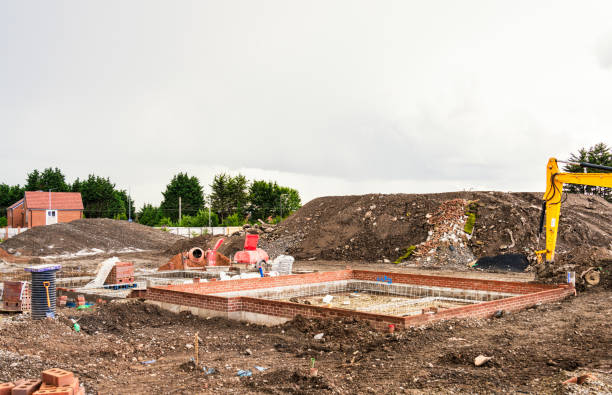
Residential Development Opportunities UK - How to Find and Assess Housing Projects
Explore residential development opportunities UK investors, developers and landowners can consider, including development land, brownfield sites, conversions, planning potential, small housing schemes and practical development appraisal with Fraser Bond.
What Are Residential Development Opportunities in the UK?
Residential development opportunities exist where land or an existing property may be capable of being developed, converted, extended or redeveloped to create additional homes or residential value.
The opportunity could involve a single additional dwelling, a small housing scheme or a larger residential development.
Common examples include:
-
Development land with planning permission
-
Land with planning potential
-
Brownfield housing sites
-
Infill plots
-
Garden development opportunities
-
Former commercial buildings
-
Office-to-residential conversions
-
Houses suitable for subdivision
-
Properties with extension potential
-
Buildings suitable for redevelopment
-
Small apartment schemes
-
Strategic housing land
-
Mixed-use sites with residential potential
The fact that a property or site appears suitable for housing does not guarantee planning permission or commercial viability.
A proper assessment should consider planning policy, site constraints, development costs, finance, market demand and the likely completed value.
Why Investors Look for Residential Development Opportunities UK
Residential development can create value by increasing the number or quality of homes that can be provided from an existing property or site.
For example, an investor might purchase:
-
A large house and create multiple flats
-
A commercial building and investigate residential conversion
-
A vacant site and apply for planning permission
-
A property with an oversized garden and assess additional housing
-
Brownfield land for a new residential scheme
-
A property with existing planning permission and complete the approved development
The potential return depends on the difference between the completed development value and the total cost of delivering it.
Those costs can include land, construction, professional fees, finance, planning obligations, taxes, marketing and contingency.
Types of Residential Development Opportunities
Residential Development Land
Development land can range from a single housing plot to a large site capable of supporting hundreds of homes.
Sites may already have:
-
Full planning permission
-
Outline planning permission
-
Permission in Principle
-
A local plan allocation
-
An emerging allocation
-
Previous planning applications
-
No established planning position
The further a site has progressed through the planning process, the more information may be available to a prospective developer. However, existing planning permission still needs to be reviewed carefully for conditions, obligations and implementation requirements.
Brownfield Residential Sites
Brownfield land can include previously developed urban and commercial sites.
Potential examples include:
-
Former industrial sites
-
Vacant warehouses
-
Disused commercial premises
-
Former garages
-
Underused car parks
-
Redundant employment land
-
Previously developed urban plots
England's current National Planning Policy Framework, published on 17 August 2026, sets the national planning framework for development proposals and plan-making.
The current policy environment places significant emphasis on housing supply and making effective use of suitable land, but brownfield status does not mean that every proposed residential scheme will automatically receive planning permission.
Small Residential Development Sites
Small sites can be particularly relevant to private developers and SME housebuilders.
Potential opportunities include:
-
Infill plots
-
Garage sites
-
Garden plots
-
Small brownfield sites
-
Former commercial premises
-
Small blocks for conversion
-
Properties suitable for subdivision
-
Vacant urban land
A four-house scheme, for example, may require less capital than a 100-unit development, but a small scheme can still be affected significantly by unexpected construction or infrastructure costs.
Government housing policy and funding programmes continue to recognise the role of SME-led housing delivery. The National Housing Delivery Fund supports projects ranging from smaller SME-led developments to larger schemes and can provide different forms of funding and support for eligible projects in England.
Houses With Residential Development Potential
Existing houses can provide residential development opportunities without requiring a completely new-build scheme.
Possible strategies include:
-
Rear extensions
-
Side extensions
-
Loft conversions
-
Two-storey extensions
-
Internal subdivision
-
Conversion into flats
-
Additional dwellings
-
Replacement dwellings
-
Garden development
-
Comprehensive redevelopment
The property's plot size, access, surrounding development, local planning policies and physical condition all need to be considered.
A large garden does not automatically mean that another house can be built.
Commercial-to-Residential Opportunities
Existing commercial properties can sometimes provide opportunities to create residential accommodation.
Potential projects include:
-
Office-to-residential conversion
-
Shop-to-residential conversion
-
Upper-floor residential conversion
-
Former commercial buildings
-
Mixed-use redevelopment
Some changes of use may qualify for permitted development rights, subject to the applicable requirements and limitations.
Others will require a planning application.
The developer should establish the building's lawful existing use before assuming that a particular conversion route is available.
Physical suitability is also important.
A building may have sufficient floor area but still face problems involving:
-
Natural light
-
Fire safety
-
Ceiling heights
-
Access
-
Refuse storage
-
Parking
-
Drainage
-
Energy performance
-
Building Regulations
-
Internal layout
Properties With Existing Planning Permission
Buying a property or site with residential planning permission can provide a clearer development route than buying completely unconsented land.
However, the planning permission should be reviewed in detail.
Check:
-
Decision notice
-
Approved drawings
-
Number of approved homes
-
Unit sizes
-
Planning conditions
-
Section 106 obligations
-
CIL liability
-
Affordable housing requirements
-
Access requirements
-
Drainage requirements
-
Landscaping requirements
-
Implementation deadlines
A site advertised as having "planning permission for residential development" should never be valued without reviewing the actual consent.
Land With Planning Potential
Some developers deliberately search for land where planning potential has not yet been fully realised.
Potential indicators can include:
-
Proximity to existing settlements
-
Local plan allocations
-
Emerging planning allocations
-
Previously developed land
-
Existing infrastructure
-
Good transport connections
-
Underused land
-
Previous planning applications
-
Surrounding residential development
Local planning authorities are expected to identify housing sites and broad locations capable of contributing to housing supply. Current government guidance states that developable sites should be in suitable locations with a reasonable prospect of becoming available and being viably developed at the point envisaged.
This makes local planning documents an important source of information when assessing residential development land.
Planning Potential Is Not Planning Permission
One of the most important distinctions for residential developers is the difference between potential and consent.
Planning potential means there may be a credible route toward residential development.
Planning application means a formal proposal has been submitted.
Planning permission means the relevant authority has approved specified development.
Implemented permission means the approved development has been lawfully commenced or otherwise progressed in accordance with its terms.
An investor should not price an unconsented site as though it already has full planning permission unless the commercial agreement specifically reflects the planning risk.
Permitted Development Opportunities
Permitted development rights can create residential opportunities in circumstances where the relevant rules apply.
Potential areas include:
-
Commercial-to-residential conversion
-
Agricultural building conversion
-
Certain upward extensions
-
Residential extensions
-
Other specified changes of use
Prior approval may be required even where full planning permission is not.
Article 4 directions can also restrict permitted development rights in particular areas.
For this reason, developers should confirm the specific planning route rather than relying on a general assumption that a building has permitted development rights.
How to Find Residential Development Opportunities UK
Finding development opportunities often requires several research methods.
Property Agents
Specialist agents can identify:
-
Development land
-
Properties with planning permission
-
Investment properties
-
Conversion opportunities
-
Buildings requiring redevelopment
Planning Portals
Local authority planning portals can reveal applications for:
-
New homes
-
Extensions
-
Conversions
-
Subdivision
-
Redevelopment
-
Change of use
Planning history can provide useful information about what has already been considered on a site.
Local Plans
Local plans can help identify areas allocated for housing and locations where future residential development is being considered.
Brownfield Registers
Brownfield information can help identify previously developed land that may have residential potential.
Auctions
Auctions can contain:
-
Development plots
-
Properties requiring refurbishment
-
Commercial buildings
-
Vacant land
-
Properties with planning permission
Auction purchases require particularly careful due diligence because completion deadlines can be short.
Off-Market Searches
Direct approaches to landowners can uncover opportunities that have not yet reached the wider market.
This can be particularly useful for larger gardens, commercial properties, vacant buildings and underused land.
What to Check Before Buying Residential Development Land
A residential development opportunity should be assessed from planning, legal, technical, financial and market perspectives.
Planning
Check:
-
Local plan
-
Planning history
-
Site allocation
-
Planning applications
-
Existing permissions
-
Conservation restrictions
-
Article 4 directions
-
Development boundaries
-
Relevant design policies
Legal Title
Review:
-
Ownership
-
Restrictive covenants
-
Easements
-
Rights of way
-
Access
-
Charges
-
Boundaries
Physical Conditions
Investigate:
-
Ground conditions
-
Contamination
-
Flood risk
-
Ecology
-
Trees
-
Topography
-
Drainage
-
Existing structures
Infrastructure
Consider whether the site can be adequately served by:
-
Water
-
Electricity
-
Gas
-
Drainage
-
Telecommunications
-
Roads
Market Demand
Research:
-
Comparable sales
-
Local rents
-
New-build prices
-
Buyer demand
-
Tenant demand
-
Competing developments
-
Expected selling period
Residential Development Appraisal
A development appraisal helps determine whether a project makes commercial sense.
A simplified calculation can start with the expected Gross Development Value.
For example:
GDV - development costs - finance - professional fees - planning obligations - marketing costs - developer return = residual land value
Development costs can include:
-
Land purchase
-
SDLT where applicable
-
Construction
-
Professional fees
-
Planning
-
Surveys
-
Finance
-
Infrastructure
-
CIL
-
Section 106
-
Marketing
-
Sales costs
-
Contingency
The appraisal should also test different scenarios.
For example:
-
What if construction costs increase by 10%?
-
What if completed values fall by 5%?
-
What if planning takes six months longer?
-
What if finance costs increase?
-
What if additional infrastructure is required?
A project that only works under optimistic assumptions may not justify the acquisition price.
Illustrative Residential Development Example
Suppose an investor identifies a hypothetical site for £750,000.
A planning assessment indicates that five houses might be achievable.
An illustrative appraisal could look like this:
-
Land acquisition - £750,000
-
Construction - £1,150,000
-
Professional and planning costs - £180,000
-
Finance and holding costs - £200,000
-
Infrastructure and other costs - £120,000
-
Contingency - £130,000
-
Marketing and sales - £70,000
Total estimated costs would be £2.6 million before allowing for the required developer return.
If the completed homes were worth a hypothetical £3.4 million, the initial difference would be £800,000 before further adjustments and the developer's required profit.
This is purely illustrative. Actual residential development economics depend on location, planning, construction specification, market values, finance and site-specific constraints.
Residential Development Opportunities in London
London contains a broad range of residential development opportunities, from individual houses to larger regeneration sites.
Potential projects include:
-
Small infill developments
-
Garden plots
-
Commercial-to-residential conversions
-
Existing properties with planning permission
-
Airspace development
-
Small apartment schemes
-
Brownfield redevelopment
-
Mixed-use developments
-
Large regeneration opportunities
Areas such as Croydon, Greenwich, Tottenham, Brent, Stratford, Battersea and parts of East London contain different types of development activity.
However, being located within or close to a regeneration area does not itself guarantee planning permission or development value.
Borough-level planning policy, design requirements, transport, heritage and local market conditions should be assessed for each site.
Regional Residential Development Opportunities
Residential development opportunities are not limited to London.
Developers can investigate opportunities in cities and towns across England, including:
-
Manchester
-
Birmingham
-
Leeds
-
Liverpool
-
Bristol
-
Sheffield
-
Newcastle
-
Nottingham
-
Leicester
Potential strategies include:
-
Brownfield redevelopment
-
Small housing schemes
-
Commercial conversion
-
Refurbishment
-
Infill development
-
Strategic land
-
Mixed-use development
Local property values and construction costs can vary considerably, so a site-specific appraisal is essential.
Residential Development and Brownfield Funding
Some residential development sites may benefit from public-sector funding or support where eligibility requirements are met.
The National Housing Delivery Fund provides funding and s