Retail to Residential Conversion UK - How to Find and Assess Opportunities
Explore retail to residential conversion UK opportunities, including vacant shops, high-street units and commercial premises, with practical guidance on planning, Class MA, conversion costs and development appraisal from Fraser Bond.
What Is Retail to Residential Conversion?
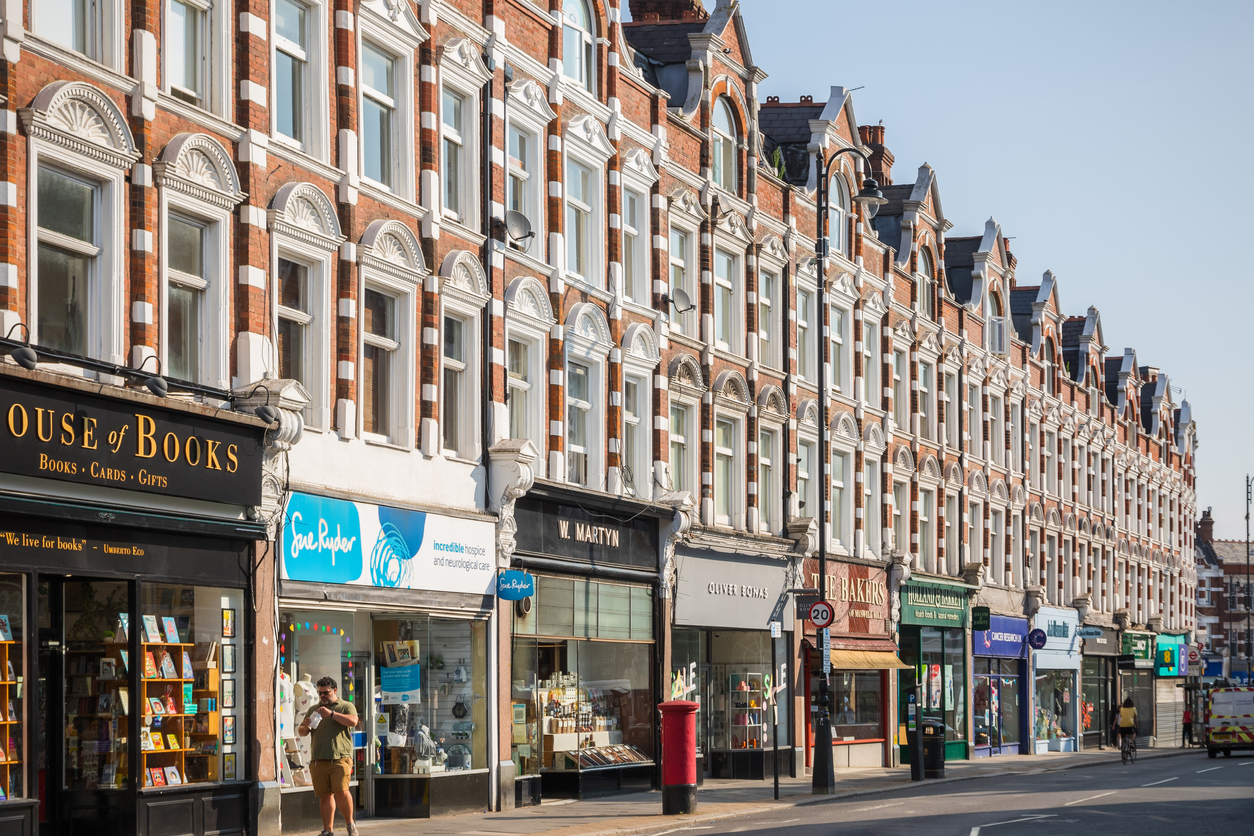
Retail to residential conversion involves changing an existing shop or retail property into residential accommodation.
It can involve:
-
Vacant high-street shops
-
Former supermarkets
-
Local convenience stores
-
Retail units in town centres
-
Parade shops
-
Shops with flats above
-
Former showrooms
-
Retail premises with rear yards
-
Larger retail buildings suitable for redevelopment
For investors, the attraction can be the opportunity to acquire an underused commercial property and create residential accommodation in an established location.
However, not every empty shop is suitable for residential conversion. Planning restrictions, the property's lawful use, building condition, natural light, access, local policy and the economics of the conversion all need to be considered.
Why Consider Retail to Residential Conversion UK?
Changing shopping habits have left some traditional retail premises underused or vacant.
At the same time, many town and city centres need to diversify beyond traditional retail.
Current national planning policy in England supports the adaptation and effective use of land, while the planning framework recognises the importance of town centres adapting to changing retail and business patterns.
A retail-to-residential project can potentially:
-
Bring a vacant property back into use
-
Create additional housing
-
Improve an underused building
-
Generate rental accommodation
-
Create a development opportunity
-
Support wider town-centre regeneration
-
Make better use of existing infrastructure
The commercial opportunity needs to be assessed alongside the planning strategy for the specific location.
Which Retail Properties Can Be Converted to Residential?
Vacant High-Street Shops
A vacant shop can be an obvious starting point for investigation.
Potential opportunities include:
-
Converting the entire building
-
Creating a flat above retained commercial space
-
Converting a deep retail unit
-
Reconfiguring rear accommodation
-
Combining several adjoining units
-
Redeveloping the wider plot
The key issue is establishing the property's lawful use and whether the proposed residential use has a permitted development or planning route.
Shops With Residential Accommodation Above
Some properties already contain flats above a ground-floor shop.
An investor may be able to assess whether unused upper floors can be:
-
Refurbished
-
Extended
-
Reconfigured
-
Converted into additional accommodation
This can sometimes create a smaller development opportunity than converting the entire property.
Former Supermarkets
Larger former supermarkets can provide substantial floor areas.
Potential strategies may include:
-
Residential conversion
-
Mixed-use redevelopment
-
Retaining part of the retail space
-
New-build residential development
-
Residential above commercial accommodation
However, large floorplates can create challenges involving natural light, residential layout and access.
Class MA and Retail to Residential Conversion
Class MA is particularly important when assessing retail-to-residential opportunities in England.
Class MA permits certain changes from Class E commercial, business and service use to residential use, subject to the applicable conditions and limitations.
Class E includes many traditional retail uses. Government guidance also confirms that Class E covers a range of town-centre and high-street uses, including shops, offices, cafés, banks and gyms.
This means a property described commercially as a shop should not simply be assessed as "retail". Its lawful planning use needs to be established.
Where Class MA applies, the proposal normally goes through a prior-approval process rather than a conventional full planning application.
The current planning application fee for a Class MA prior-approval application is £260 per proposed dwelling from 1 April 2026.
Is Every Shop Eligible for Class MA?
No.
Eligibility depends on the property's circumstances and the requirements of the permitted development right.
Before relying on Class MA, investigate:
-
Lawful existing use
-
Use history
-
Whether the premises fall within Class E
-
Whether the relevant conditions are satisfied
-
The building's location
-
Article 4 Directions
-
Previous planning decisions
-
Proposed residential layout
-
External works
-
Prior approval requirements
An estate agent's description of a property as a "shop" is not sufficient evidence that Class MA applies.
When Full Planning Permission May Be Required
A retail property may require a full planning application where Class MA is unavailable or unsuitable.
This can occur where:
-
The existing use does not qualify
-
The proposed works fall outside permitted development rights
-
The development involves substantial redevelopment
-
The proposal includes demolition and replacement
-
The building is subject to specific planning restrictions
-
The site has a more complex mixed-use strategy
A planning consultant should establish the correct planning route before an acquisition is based on residential potential.
Article 4 Directions and Retail Conversion
Article 4 Directions can remove specified permitted development rights in defined areas.
This is important because an investor may identify a shop that appears suitable for Class MA but discover that the relevant permitted development right has been removed locally.
Check the relevant local authority for:
-
Article 4 Directions
-
Conservation areas
-
Local plan policies
-
Town-centre policies
-
Heritage policies
-
Site-specific designations
If Class MA is unavailable, the project's feasibility may depend on obtaining full planning permission.
Retail to Residential Planning Permission UK
Planning permission is generally required for development unless a permitted development right or another exemption applies.
A retail-to-residential project should therefore start with a planning review rather than a construction estimate.
The review should consider:
-
Existing lawful use
-
Planning history
-
Local plan
-
Town-centre policies
-
Housing policies
-
Design requirements
-
Residential amenity
-
Parking
-
Access
-
Flood risk
-
Heritage
-
Conservation area status
-
External alterations
The planning position can materially affect the property's acquisition value.
Town Centre Policies and Residential Conversion
Retail properties are often located in town centres, district centres or local shopping areas.
These locations can have planning policies designed to maintain a suitable mix of uses.
The current national planning framework places importance on maintaining the vitality and viability of town centres while allowing them to adapt to changing economic circumstances.
This makes local policy particularly important.
A council may support residential use in some parts of a centre while seeking to retain active retail or commercial frontage in other locations.
An investor should therefore examine the specific shopping frontage rather than assuming that every vacant shop has the same planning prospects.
High-Street Residential Conversion
High-street properties can have characteristics that make residential conversion attractive but technically challenging.
Potential advantages include:
-
Central location
-
Public transport
-
Nearby shops and services
-
Existing utilities
-
Established infrastructure
-
Access to employment
-
Potential rental demand
Potential challenges include:
-
Noise
-
Poor natural light
-
Limited outdoor space
-
Privacy
-
Servicing
-
Refuse storage
-
Residential access
-
Deliveries
-
Upper-floor access
-
Deep floorplates
A strong residential layout needs to be considered before the property's development value is established.
Natural Light in Retail Conversions
Retail premises can have large glazed shopfronts but surprisingly poor natural light deeper inside the building.
A typical shop may have:
-
A wide front elevation
-
A deep internal floorplate
-
Few side windows
-
Limited rear openings
-
Storage areas
-
Internal partitions
Converting the whole floor into residential accommodation may therefore be inefficient.
Potential design solutions can include:
-
Reconfiguring the floorplate
-
Creating internal courtyards
-
Introducing suitable windows
-
Adding rooflights where appropriate
-
Using existing rear access
-
Retaining only the viable portion of the building
Any structural or external alterations must be assessed against planning and Building Regulations requirements.
Shops With Upper Floors
A retail property with unused upper floors can sometimes provide an interesting conversion opportunity.
The upper floors may potentially be used for:
-
Apartments
-
Maisonettes
-
Offices
-
Workspace
-
Ancillary accommodation
Existing upper-floor space can sometimes make a project more efficient because the building already has additional floorspace.
However, investors should check:
-
Independent access
-
Fire escape
-
Structural capacity
-
Staircases
-
Fire separation
-
Natural light
-
Existing lawful use
-
Utilities
-
Roof condition
Building Regulations for Retail Conversions
Planning approval and Building Regulations are separate matters.
A retail building converted into residential accommodation may require substantial technical upgrades.
Potential requirements include:
-
Structural stability
-
Fire safety
-
Means of escape
-
Insulation
-
Ventilation
-
Heating
-
Electrical systems
-
Drainage
-
Accessibility
-
Acoustic performance
-
Energy efficiency
-
Damp protection
Older shops can require significant investment before they meet modern residential standards.
Retail Conversion vs Redevelopment
Conversion is not always the best option.
For larger retail properties, demolition and redevelopment may produce a more efficient scheme.
Compare:
Conversion
-
Existing structure retained
-
Potentially shorter construction programme
-
Lower demolition requirement
-
Existing building constraints
Redevelopment
-
Greater design flexibility
-
Potentially more efficient residential layout
-
Opportunity for additional floors
-
Higher construction and planning requirements
The correct approach depends on the site's planning potential, building condition and financial appraisal.
Brownfield Retail Development UK
Former retail properties can sometimes qualify as previously developed land.
Brownfield development is a significant part of the current planning direction in England, particularly where previously developed land is suitable for housing and other development needs.
This can make vacant retail and town-centre redevelopment relevant to investors assessing residential opportunities.
However, brownfield status alone does not establish planning permission.
The property still needs to satisfy applicable planning policies and technical requirements.
Retail to Residential Conversion Costs UK
Conversion costs can vary significantly.
A development appraisal should allow for:
-
Purchase price
-
SDLT where applicable
-
Legal fees
-
Planning fees
-
Planning consultants
-
Architects
-
Surveys
-
Structural engineers
-
Building control
-
Construction
-
New windows
-
Insulation
-
Roofing
-
Electrical systems
-
Plumbing
-
Heating
-
Fire safety
-
Acoustic upgrades
-
External works
-
Drainage
-
Landscaping
-
Finance
-
Insurance
-
Holding costs
-
Marketing
-
Contingency
The cheapest shop is not necessarily the strongest conversion opportunity.
A property requiring extensive structural work may ultimately cost more than a better-maintained property with a higher acquisition price.
How to Appraise a Retail Conversion
Start with the expected value of the completed residential accommodation.
This is commonly expressed as Gross Development Value, or GDV.
Then account for:
-
Acquisition costs
-
Construction
-
Professional fees
-
Planning
-
Finance
-
Holding costs
-
Taxes
-
Marketing
-
Infrastructure
-
Contingency
-
Required developer return
The remaining amount helps determine the maximum acquisition price that the project can support.
This is more useful than simply comparing the property's purchase price with estimated apartment sale prices.
Illustrative Retail Conversion Example
Consider a hypothetical vacant shop purchased for £500,000.
An illustrative appraisal might include:
-
Acquisition costs: £30,000
-
Planning and professional fees: £75,000
-
Conversion works: £350,000
-
Structural and external works: £60,000
-
Finance and holding costs: £70,000
-
Contingency: £65,000
Total estimated project cost: approximately £1.15 million.
If the completed residential units have an estimated GDV of £1.5 million, the headline difference would be approximately £350,000 before selling costs, taxation and the developer's required return.
This example is purely illustrative. Actual project viability should be based on site-specific valuations, surveys, planning advice and contractor pricing.
How to Find Retail to Residential Conversion Opportunities UK
Commercial Property Agents
Commercial agents can provide access to:
-
Vacant shops
-
High-street properties
-
Former supermarkets
-
Retail investment properties
-
Mixed-use buildings
-
Development opportunities
Building relationships with agents can also help identify properties before they are widely marketed.
Property Auctions
Retail properties frequently appear at auction for various reasons, including:
-
Business closures
-
Repossessions
-
Estate disposals
-
Investment sales
-
Vacant possession
-
Redevelopment potential
Review the legal pack and planning position before bidding.
Planning Portals
Planning portals can reveal properties where owners have already applied for:
-
Residential conversion
-
Change of use
-
Mixed-use development
-
Extensions
-
Additional floors
-
Redevelopment
Previous applications can reveal both planning opportunities and reasons earlier schemes failed.
High-Street Surveys and Local Plans
Local planning documents can reveal areas where councils are seeking to:
-
Diversify town centres
-
Increase residential accommodation
-
Regenerate vacant premises
-
Improve public realm
-
Reduce long-term vacancy
This information can help investors identify locations where retail-to-residential opportunities may align with broader regeneration objectives.
Retail to Residential Conversion London
London contains thousands of retail and mixed-use properties, but the planning position varies significantly between boroughs.
Potential opportunities can include:
-
Vacant high-street shops
-
Upper-floor conversions
-
Former retail warehouses