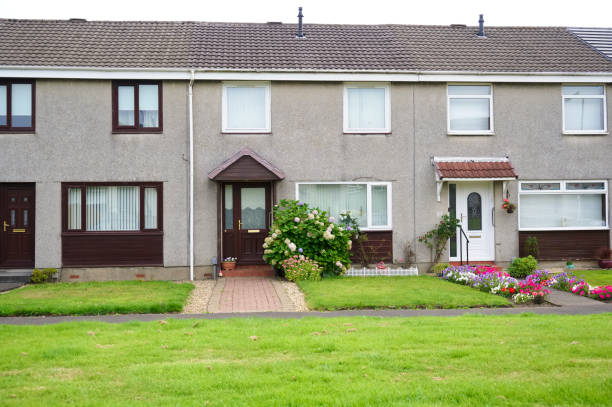
Right to Buy Council House UK - How to Buy Your Council Home
The Right to Buy scheme allows eligible council tenants in England to purchase their council home at a discount to its market value. For long-term tenants, it can provide a route from renting social housing to becoming a homeowner, but eligibility, discount limits, financing and future resale restrictions all need to be considered carefully.
Right to Buy is an England-only scheme. Scotland, Wales and Northern Ireland operate different housing arrangements.
Who Can Buy Their Council House?
You may qualify for Right to Buy if:
-
You are a secure council tenant
-
The property is your only or main home
-
The property is self-contained
-
You have been a public sector tenant for at least three years
-
You meet the other scheme conditions and your property is not excluded
The three-year qualifying period does not necessarily have to be continuous. Previous periods with eligible public sector landlords can potentially count towards your qualifying tenancy period.
Some properties are excluded, including certain sheltered accommodation and homes due for demolition.
How Much Discount Can You Get?
The discount depends on the type of property, your qualifying tenancy history, the property's value and where it is located.
For houses, the discount currently starts at 35% after three years of qualifying public sector tenancy and can increase by 1% for each additional year after five years.
For flats, the discount starts at 50% after three years and can increase by 2% for each additional year after five years.
The discount is subject to a regional cash maximum and cannot exceed 70% of the property's value. Current maximum discounts range from £16,000 to £38,000 depending on location, with London generally subject to a £16,000 maximum except Barking and Dagenham and Havering, where the maximum is £38,000.
Example of Buying a Council House
Suppose your council house has a market value of £300,000 and you qualify for a 40% discount.
A 40% discount would theoretically be £120,000. However, if the applicable regional maximum is £26,000, your actual discount would be capped at £26,000.
Your purchase price would therefore be £274,000.
The actual discount calculation can be affected by the property's location, your tenancy history, previous Right to Buy discounts and the cost floor.
What Is the Cost Floor?
The cost floor can reduce the discount available if your council has spent significant amounts building, buying, repairing or improving the property.
For applications made after 21 November 2024, the relevant expenditure period can extend over the previous 30 years.
This means a tenant should not assume that their theoretical percentage discount is necessarily the amount they will receive.
How Do You Apply for Right to Buy?
The process normally begins with the RTB1 application form.
You submit the application to your landlord, who must normally confirm whether you have the Right to Buy within four weeks. If the landlord has been your landlord for less than three years, the response period can be eight weeks.
If your application is accepted, the landlord then provides an offer explaining the property's valuation, purchase price, discount and other relevant information. For leasehold properties, the offer should also provide information about estimated service charges.
Buying a Council Flat
Buying a council flat is different from buying a typical freehold council house.
You will generally become a leaseholder rather than owning the building outright. This means you may have to pay service charges towards communal maintenance, major works, building insurance and other costs.
Before purchasing, carefully examine the estimated service charges and any planned major works. A discounted purchase price can become considerably less attractive if the building requires expensive roof, lift, cladding or structural work.
Can You Get a Mortgage?
Yes, many Right to Buy purchasers use a mortgage to finance the purchase.
However, the discount does not mean that buying is automatically affordable. You should calculate the complete monthly cost, including:
-
Mortgage payments
-
Service charges
-
Council Tax
-
Buildings and contents insurance
-
Repairs and maintenance
-
Utilities
-
Legal and conveyancing costs
-
Mortgage and valuation fees
It is particularly important for a council tenant to consider the ongoing costs they will become responsible for after leaving the social rental system.
Can You Sell a Right to Buy Property?
You can normally sell your Right to Buy property, but restrictions apply.
If you sell within five years, you will generally have to repay some or all of the discount. The amount decreases over the five-year period, starting at 100% of the relevant discount during the first year and reducing each year afterwards.
There can also be an obligation to offer the property back to your former landlord or another social landlord in the area if you sell within ten years of buying.
This makes it important to understand the resale conditions before treating the property as a short-term investment.
Right to Buy and Housing Association Properties
Not every housing association tenant has the Right to Buy.
If your home was transferred from a council to a housing association while you were living there, you may have a Preserved Right to Buy.
Other eligible housing association tenants may instead qualify for Right to Acquire, which is a separate scheme with different property and eligibility requirements and discounts generally between £9,000 and £16,000.
Right to Buy Changes in 2026
The government confirmed in April 2026 that it intends to introduce further reforms to Right to Buy, including proposals to increase the minimum eligibility period from three years to ten years.
However, proposals and confirmed future reforms should not be confused with rules that are already in force. Tenants should check the current requirements before making an application.
Is Right to Buy a Good Idea?
Right to Buy can be attractive where the discount creates a realistic route into home ownership and the buyer can comfortably afford the mortgage and ongoing property costs.
However, it is not simply a discounted purchase price. Buyers should consider the property's condition, future maintenance, lease terms, service charges, mortgage affordability and resale restrictions.
For a council flat, particular attention should be paid to planned major works and service charge liabilities.
How Fraser Bond Can Help
Fraser Bond provides property consultancy, sales, lettings, property management, investment advice and refurbishment support across London and the wider UK.
For Right to Buy purchasers, professional property support can be useful when assessing the condition, future maintenance requirements and wider financial implications of a property before or after purchase.
If you are considering buying your council home and want help understanding the property's investment, management or refurbishment considerations, Fraser Bond can provide practical property guidance.