


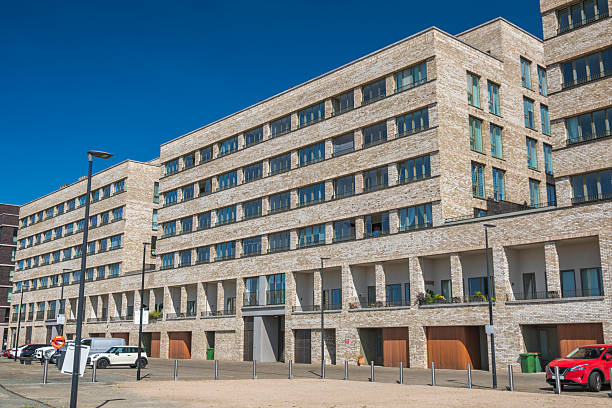
Royal Docks Development – Regeneration & Investment Guide 2026
Royal Docks development represents one of the largest concentrations of regeneration and property-development activity in London. Located in Newham, East London, the Royal Docks combines extensive waterfront land with major residential schemes, commercial development, infrastructure investment and large areas of publicly owned land.
The wider Royal Docks and Beckton Riverside Opportunity Area has capacity for more than 35,000 new homes and 55,000 new jobs. Since 2016, more than 8,000 homes have already been completed across the Royal Docks, while major projects at Silvertown, Thameside West and Royal Albert Dock are progressing through different stages of delivery.
For developers, investors and landowners, FraserBond.com can assist with Royal Docks and East London development opportunities, acquisitions, development appraisal, joint ventures, property finance advisory and arranging, and asset management.
Where Are the Royal Docks?
The Royal Docks are in East London within the London Borough of Newham.
The area centres around three historic docks:
- Royal Victoria Dock
- Royal Albert Dock
- King George V Dock
The wider regeneration area extends towards Silvertown, North Woolwich, Custom House and Beckton.
The Royal Docks Team is a joint initiative involving the Mayor of London and Mayor of Newham, established to coordinate the area's long-term transformation.
Royal Docks Regeneration
The scale of regeneration is unusual for London.
The wider Opportunity Area framework envisages more than:
35,000 Homes + 55,000 Jobs
City Hall stated in early 2026 that around half of the area's housing ambition is expected to be delivered on GLA-owned land. Over the next decade, up to 14,000 homes are expected to start across the Royal Docks, including up to 6,000 on GLA land.
Development is spread across numerous projects rather than one master development.
Major schemes include:
Silvertown + Thameside West + Royal Albert Dock + Thames Road + Knights Road + Other Royal Docks Sites
This creates opportunities across residential, commercial, industrial and mixed-use development.
Silvertown Development
Silvertown is one of the most significant projects in the Royal Docks.
In June 2026, City Hall announced a £100 million investment to join the Silvertown Partnership and support delivery of 7,000 homes. Around 1,000 of those homes are expected to be under construction by 2028.
The project is particularly significant because it is the first development being taken forward through the Mayor's City Hall Developer initiative.
The GLA is becoming a shareholder in the development partnership alongside private-sector partners, marking a more direct public-sector role in housing delivery.
For property investors, this means Silvertown should be viewed as a long-term new-neighbourhood project rather than simply an individual apartment development.
Silvertown Funding
The financing structure also demonstrates the institutional scale of the project.
City Hall documentation published in June 2026 refers to a £233 million Homes England infrastructure loan facility and a proposed £27.1 million Homes England Brownfield Investment grant supporting Silvertown.
Combined with GLA participation, this illustrates the mixture of:
Public Capital + Infrastructure Funding + Private Development Capital
that can be required to unlock very large London regeneration sites.
Thameside West
Another major Royal Docks project is Thameside West.
In July 2026, developer Arada announced acceleration of the approximately £2.5 billion scheme, which has existing planning permission for at least 5,000 homes, including 35% affordable housing.
The site covers approximately 47 acres of riverside land opposite the O2 and close to City Hall.
The first stage is expected to comprise around 1,500 homes, and the developer has also confirmed plans for a new DLR station alongside the first stage.
Transport infrastructure of this kind can be particularly important when appraising large development sites because it can materially change accessibility and development capacity.
Thames Road Development
The Thames Road site, also known as UNEX, is another major consented project.
Planning consent was announced in January 2026 for:
- 1,685 homes
- 173 social-rent homes
- 359 co-living suites
- A new primary school
- More than 13,500 sq m of workspace
- Riverside park
- Retail and community space
The project will redevelop an industrial brownfield site east of Thames Barrier Park.
This is a good example of the development model emerging across the Royal Docks: higher-density residential development combined with retained or replacement employment space and new infrastructure.
Knights Road Development
A further major project was approved at Knights Road, close to West Silvertown DLR.
The consented proposals provide 1,667 homes, including affordable and family housing, alongside more than 11,000 sq m of light-industrial and flexible workspace.
Again, the scheme illustrates the importance of mixed-use development within the Royal Docks.
Existing industrial land cannot necessarily be appraised simply as future residential land.
Planning strategy may require employment uses to be retained, replaced or intensified alongside housing.
Royal Albert Dock Development
Royal Albert Dock remains another strategically important GLA-owned development location.
City Hall stated in January 2026 that it intended to appoint a development partner for a Royal Albert Dock site with capacity for approximately 2,000 homes.
For investors and developers, sites of this scale can generate opportunities beyond direct land acquisition.
They can create demand for:
- Development capital
- Construction
- Affordable-housing partnerships
- Commercial occupiers
- Property management
- Build-to-rent
- Forward funding
- Joint ventures
- Infrastructure
- Retail and leisure operators
The opportunity created by regeneration is therefore considerably broader than purchasing apartments within completed schemes.
Royal Victoria Dock
Royal Victoria Dock is also evolving as a destination in its own right.
In February 2026, Royal Docks Waterways announced a vision for Royal Victoria Dock West, covering approximately 12 hectares of water.
Plans envisage a major floating destination and public space, including London's first large-scale floating park, with early phases anticipated before 2030. The Royal Docks programme describes the wider regeneration as being supported by approximately £5 billion of investment over the next 20 years.
The proposal demonstrates that regeneration is not limited to constructing buildings.
Public realm, waterfront access, leisure, culture and destination-making can influence the attractiveness and eventual value of surrounding real estate.
Royal Docks Development Pipeline
The scale of the current pipeline becomes clearer when several major schemes are considered together.
| Development | Indicative/consented scale |
|---|---|
| Silvertown | 7,000 homes |
| Thameside West | At least 5,000 homes |
| Royal Albert Dock | Around 2,000-home capacity |
| Thames Road / UNEX | 1,685 homes |
| Knights Road | 1,667 homes |
These figures represent different stages of development and should not simply be added together and treated as homes under construction. Some are consented schemes, some represent site capacity and others are longer-term programmes.
That distinction is important for investment appraisal.
Royal Docks Development Opportunities
Development opportunities can potentially include:
Residential Development
New apartments, family housing and affordable housing.
Build-to-Rent
Large-scale rental communities retained as institutional investments.
Mixed-Use Development
Residential combined with employment, retail, leisure and community space.
Commercial Development
Offices, flexible workspace and other employment uses.
Industrial Development
Modernised or intensified industrial accommodation.
Waterfront Development
Residential, commercial, leisure and public-realm development around the docks and Thames.
Joint Ventures
Partnerships between landowners, developers, investors and public bodies.
Brownfield Regeneration
Redevelopment of former or underused industrial sites.
Each strategy requires different planning, financing and exit assumptions.
Brownfield Development
Brownfield land is central to the Royal Docks development story.
<p dir="autoThere is probably a Fraser Bond team for it.
Lettings & management
Finding tenants, running tenancies, and holding the compliance paperwork so you never have to look for it.
Investment & portfolio
Buying well, holding sensibly, and knowing when a property has stopped earning its place.
Commercial property
Offices, retail and mixed use — acquisition, lettings, lease advice and building management.
Professional services
Valuation, lease consultancy, building consultancy and expert advice when a decision needs evidence behind it.
You are one message away from an answer.
Send it to us and get a straight answer.
Describe the property and the problem. We will tell you what we would do, what it should cost, and if we are not the right people, who is.
- Replies the same working day
- The person who answers is the person who handles it
- No fee, and no obligation to instruct us
See everything we are instructed on.
Sales and lettings across Prime Central London and the wider UK, with the same team behind every listing.
- Residential and commercial in one search
- Filter by borough, budget and size
- Register once and we will send matches first
Other insights you may find useful.
 Property & Real Estate Services
Best UK Property Hotspots for Capital Growth 2026
Read → Property & Real Estate Services
Buy, Rent, or Invest in North Finchley | Fraser Bond Property Experts
Read → Property & Real Estate Services
Properties to Rent in 3 Mandeville Place - London W1U
Read → Property & Real Estate Services
London Luxury Property Investments for Ghanaians - Prime Market Insights
Read → Property & Real Estate Services
House Repossession List – How to Find Repossessed Properties
Read → Property & Real Estate Services