


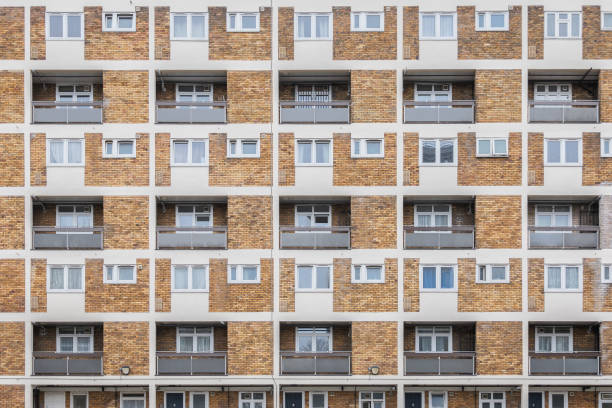
Tricks to Get a Council House UK - How to Improve Your Chances in 2026
Understand how to get a council house faster, who receives priority for social housing, how council waiting lists work and the legitimate steps that may improve your chances of securing an affordable home.
Getting a council house in the UK can be challenging, particularly in London and other areas where demand for affordable housing is significantly higher than the number of available properties.
Many applicants spend years on housing waiting lists, while others receive accommodation sooner because their circumstances meet the local authority's priority criteria.
People searching for tricks to get a council house are often looking for practical ways to improve their housing application, understand council allocation rules and avoid unnecessary delays.
Although there are no guaranteed shortcuts to obtaining council housing, several legitimate strategies may improve an applicant's position.
These include providing accurate evidence of housing need, reporting changes in circumstances, understanding priority bands and considering a wider range of available properties.
Fraser Bond, a UK property agency and real estate consultancy, supports buyers, sellers, landlords and investors with residential property sales, lettings and property management across London and the wider UK.
This guide explains how council housing applications work, who receives priority and the steps applicants can take to improve their chances of securing social housing.
What Is a Council House?
A council house is a residential property provided by a local authority at a social or affordable rent.
Council housing is intended to help eligible households access accommodation that meets their housing needs.
Social housing can also be provided by housing associations, which are separate organisations from local councils.
Council properties are usually allocated according to published housing allocation policies.
These policies consider factors such as homelessness, overcrowding, medical needs, household circumstances and local connection.
Is There a Trick to Getting a Council House Quickly?
There is no lawful method that guarantees a council house immediately.
However, applicants can improve their chances by ensuring the council has complete and accurate information about their housing circumstances.
The most effective approaches involve understanding how the local allocation scheme works, applying for all suitable housing options and ensuring that qualifying priority needs are properly assessed.
Misrepresenting your circumstances, exaggerating medical conditions or deliberately making yourself homeless can have serious consequences and may damage your application.
12 Legitimate Ways to Improve Your Chances of Getting a Council House
1. Apply to the Correct Council Housing Register
The first step is to register for social housing with the appropriate local authority.
Each council operates its own allocation policy, eligibility criteria and waiting list.
Some councils require applicants to demonstrate a local connection through residence, employment, family or other qualifying circumstances.
Check the local requirements before submitting an application.
2. Understand Your Housing Priority Band
Most councils in England use a banding or points system to prioritise applicants.
Although the precise categories vary, applicants with urgent housing needs generally receive greater priority.
|
Housing circumstances |
Possible effect on priority |
|---|---|
|
Homelessness or threatened homelessness |
May qualify for statutory priority |
|
Severe overcrowding |
May increase housing priority |
|
Medical condition affected by current accommodation |
May qualify for medical priority |
|
Disability requiring accessible accommodation |
May support higher priority |
|
Serious housing hazards |
May support increased priority |
|
Domestic abuse or threats of violence |
May qualify for urgent priority |
|
No identified urgent housing need |
Often lower priority |
There is no universal Band A, B or C definition across every council. Applicants should consult their council's allocation policy.
3. Provide Evidence of Genuine Medical Needs
Medical circumstances may increase priority where the current home adversely affects someone's health or is unsuitable because of a disability.
For example, someone with serious mobility difficulties living in an upper-floor flat without a lift may need more suitable accommodation.
Supporting evidence can include medical letters, occupational therapy assessments and care plans.
The evidence should explain why the current accommodation is unsuitable, not simply confirm a diagnosis.
4. Report Overcrowding
Overcrowding is an important factor in social housing allocation.
For example, a family living in accommodation with insufficient bedrooms may qualify for additional priority.
Councils assess overcrowding according to their allocation schemes and relevant housing standards.
Provide accurate details about household members, ages, sleeping arrangements and available rooms.
5. Report Dangerous or Unsuitable Housing Conditions
Serious damp, mould, structural hazards, unsafe electrical installations or inadequate sanitation may affect housing priority.
If your home presents significant health or safety risks, report the problems to the landlord and appropriate local housing authority.
An environmental health inspection or other professional evidence may support your housing application.
Not every repair problem qualifies someone for additional priority, and councils may consider whether the existing property can be made safe.
6. Apply for Homelessness Assistance When Necessary
If you are homeless or threatened with homelessness within 56 days in England, contact your council's homelessness service.
This is separate from simply joining the housing register.
The council may owe duties to assess your circumstances and help prevent or relieve homelessness.
A homelessness application does not guarantee a permanent council house. Assistance may include support to obtain suitable private rented accommodation or, in qualifying cases, temporary accommodation.
7. Keep Your Housing Application Updated
An important way to avoid losing potential priority is to report genuine changes promptly.
These may include the birth of a child, a change in household size, deterioration in a health condition, domestic abuse or receiving an eviction notice.
Provide updated documents when requested.
A council cannot properly assess needs it does not know about.
8. Bid Regularly on Suitable Properties
Many councils use choice-based lettings systems.
Applicants express interest in advertised properties by placing a bid, which does not involve offering money.
Check the available listings regularly and bid on properties for which you are eligible.
Some councils restrict how many bids applicants can place during each cycle.
Failing to bid may mean missing opportunities, even if your priority band is relatively high.
9. Consider a Wider Range of Areas
Some locations have substantially more demand than others.
Being flexible about neighbourhoods may increase the number of suitable properties available to you.
For example, applicants seeking social housing in central London may face particularly limited availability.
However, consider employment, schools, medical services, transport and support networks before widening your search.
You should not accept accommodation that is unsuitable for your household's genuine needs.
10. Consider Housing Association Properties
Council housing is not the only form of social housing.
Housing associations also provide social and affordable rented accommodation.
Some properties are allocated through local authority registers, while certain housing associations operate separate application arrangements.
Ask the council whether you can be considered for both council-owned and housing association homes.
11. Request a Review If Your Priority Is Incorrect
If you believe your application has been assessed incorrectly, you may be able to request a review.
For example, the council may not have considered relevant medical evidence or may have recorded your household circumstances incorrectly.
Explain the decision you disagree with and provide supporting documents.
Check the decision letter for the review procedure and deadline.
12. Investigate Other Eligible Housing Registers
In some circumstances, applicants can register with more than one council.
However, local connection and eligibility requirements may restrict where you can apply.
Where multiple applications are permitted, this may increase the range of housing opportunities available.
Who Gets Priority for a Council House in the UK?
In England, councils must give reasonable preference to certain categories of housing applicants under the Housing Act 1996.
These include people who are homeless, people living in overcrowded or unsatisfactory housing, people who need to move on medical or welfare grounds and people who need to move to a particular locality to avoid hardship.
Reasonable preference does not mean an automatic entitlement to immediate accommodation.
Councils can distinguish between different levels of need within their allocation schemes.
Can You Get a Council House Faster If You Have Children?
Having children does not automatically guarantee a council house.
However, household size, overcrowding, homelessness and children's welfare needs may affect priority.
For example, a family with dependent children who is homeless may qualify for additional homelessness assistance.
The council must assess the household's circumstances under the relevant legislation.
Can You Get a Council House Faster If You Are Pregnant?
Pregnancy may be relevant to homelessness assistance and housing suitability.
In England, a pregnant applicant who is eligible for homelessness assistance has a priority need for accommodation under homelessness legislation.
However, pregnancy does not automatically guarantee an immediate permanent council tenancy.
The housing register and homelessness system have different rules.
Can You Get a Council House Faster With a Disability?
A disability may support higher priority where the existing accommodation is unsuitable.
For example, someone who cannot safely use stairs may require accessible accommodation.
Medical evidence and an occupational therapy assessment may help establish the housing need.
The council must consider the relevant circumstances and its legal obligations.
Can You Get a Council House Because of Mental Health Problems?
Mental health conditions may support an application where the current housing situation worsens the condition or creates a genuine need to move.
The council may consider evidence from healthcare professionals or support workers.
A diagnosis alone does not guarantee priority.
The relationship between the condition and the housing need is particularly important.
Can You Get a Council House If You Are Homeless?
Yes, homeless applicants may qualify for priority on the housing register.
However, the council's homelessness duties and its allocation of permanent social housing are separate processes.
Some homeless households may receive temporary accommodation or assistance to secure a private tenancy rather than an immediate council house.
Can You Get a Council House If You Work?
Yes.
Being employed does not automatically prevent someone from qualifying for social housing.
However, councils may apply income, savings or other qualification rules.
Some allocation schemes also recognise employment or community contribution when determining priority between applicants.
Can You Get a Council House on Universal Credit?
Yes.
Receiving Universal Credit does not automatically prevent someone from applying for council housing.
However, Universal Credit alone does not guarantee eligibility or priority.
The council will assess the applicant's housing needs and relevant circumstances.
Can You Get a Council House Without a Local Connection?
Sometimes.
Some councils accept applicants without a local connection, while others apply residency requirements.
Exceptions and protections may apply to certain groups, including people escaping domestic abuse and qualifying members of the armed forces.
The exact rules depend on the council and applicable legislation.
How Long Does It Take to Get a Council House?
There is no fixed waiting period.
Some applicants with urgent housing needs may receive offers sooner, while others may remain on waiting lists for years.
Waiting times depend on:
-
The local supply of social housing.
-
The applicant's priority band.
-
Household size and bedroom requirements.
-
The type of property needed.
-
The number of other eligible applicants.
-
Whether suitable properties become available.
Being on a waiting list does not guarantee an offer.
Can You Get a Council House in London?
Yes, eligible applicants can apply for council or housing association accommodation in London.
However, demand is high in many London boroughs.
Applicants should investigate the allocation policy of the relevant borough and understand its local connection requirements.
Some boroughs may have very limited availability of larger family homes or accessible properties.
What Should You Avoid When Applying for Council Housing?
Applicants should avoid providing false information, exaggerating medical needs, concealing household income or deliberately creating a housing crisis.
Leaving suitable accommodation without good reason can affect homelessness assistance if the council determines that you became homeless intentionally.
A finding of intentional homelessness does not automatically eliminate every possible form of assistance, but it can reduce the duties the council owes you.
You should also avoid paying anyone who claims they can secretly move you to the top of a council housing list.
Council Housing Application Checklist
Use this checklist to review your application.
0 of 9 completed
ResetFrequently Asked Questions About Getting a Council House
What is the quickest way to get a council house?
There is no guaranteed quickest method. Applicants with urgent qualifying housing needs may receive higher priority.
How can I move up the council housing waiting list?
Report genuine changes in your circumstances, provide relevant evidence and request a review if you believe your priority has been assessed incorrectly.
What makes you high priority for council housing?
Homelessness, severe overcrowding, serious housing hazards and certain medical or welfare needs may qualify for higher priority.
Can I get a council house if I have children?
Yes, if you meet the relevant eligibility requirements. Children may affect household housing needs but do not automatically guarantee priority.
Does being pregnant give you priority?
Pregnancy is relevant to priority need under homelessness legislation in England, but it does not automatically secure a permanent council house.
Can a doctor's letter help me get a council house?
Yes, if it provides relevant evidence of how your current accommodation affects your health or disability-related needs.
Can I apply to more than one council?
Sometimes. You must meet the relevant eligibility requirements for each housing register.
Can I get a council house without being homeless?
Yes. Other qualifying needs, including overcrowding and medical circumstances, may provide grounds for priority.
Does Universal Credit help you get a council house?
Universal Credit may be relevant to affordability, but receiving it does not automatically provide housing priority.
Can I refuse a council house offer?
You may be able to refuse an offer, but doing so can affect your position under the council's allocation policy. Seek advice promptly if the property is unsuitable.
Are housing association properties easier to get?
Not necessarily. Availability and allocation rules vary, but considering housing association properties can expand your options.
Can I get a council house immediately?
An immediate permanent council tenancy is uncommon. People facing homelessness ma
There is probably a Fraser Bond team for it.
Lettings & management
Finding tenants, running tenancies, and holding the compliance paperwork so you never have to look for it.
Investment & portfolio
Buying well, holding sensibly, and knowing when a property has stopped earning its place.
Commercial property
Offices, retail and mixed use — acquisition, lettings, lease advice and building management.
Professional services
Valuation, lease consultancy, building consultancy and expert advice when a decision needs evidence behind it.
You are one message away from an answer.
Send it to us and get a straight answer.
Describe the property and the problem. We will tell you what we would do, what it should cost, and if we are not the right people, who is.
- Replies the same working day
- The person who answers is the person who handles it
- No fee, and no obligation to instruct us
See everything we are instructed on.
Sales and lettings across Prime Central London and the wider UK, with the same team behind every listing.
- Residential and commercial in one search
- Filter by borough, budget and size
- Register once and we will send matches first
Other insights you may find useful.
 DSS Housing & Benefit-Friendly Rentals
DSS Accepted 1 Bedroom Flats in London – No Deposit Options Available
Read → Affordable Housing & Social Housing
Renting Without a Guarantor on Benefits
Read → Residential Property Services in London
Finding Property Owners in the UK
Read → Property Legal, Risk & Compliance
Next of Kin and Property: Rights and Responsibilities in England
Read → Property Legal, Risk & Compliance
How Many People Can Live in a 3-Bedroom House?
Read → Residential Property Services in London