Mixed Use Development Opportunities UK - How to Find and Assess Development Sites
Explore mixed use development opportunities UK investors, developers and landowners can consider, including residential, commercial and community uses, planning potential, development appraisal and practical due diligence with Fraser Bond.
What Are Mixed Use Development Opportunities in the UK?
Mixed use development combines two or more complementary uses within the same development or closely connected site.
A typical scheme might combine:
-
Residential apartments
-
Retail units
-
Offices
-
Restaurants or cafés
-
Community facilities
-
Leisure space
-
Flexible commercial floorspace
-
Public realm
-
Parking and servicing areas
Mixed use development is particularly common in town centres, regeneration areas, transport corridors and larger urban development schemes.
Government design guidance describes mixed use development as a combination of complementary uses such as residential, community and leisure uses, and notes that it is typically appropriate in urban locations and larger development centres.
For investors and developers, the attraction can be the ability to combine different income streams and make more effective use of a site.
However, mixed use projects can also be more complicated than single-use developments because different uses create different planning, construction, finance, management and market requirements.
Why Consider Mixed Use Development Opportunities UK?
A well-designed mixed use scheme can make use of land for several purposes rather than relying on a single property type.
For example, a redevelopment could provide apartments above ground-floor commercial units.
Another project could combine:
-
Housing
-
Shops
-
Offices
-
Public spaces
-
Community facilities
This can create a development that serves several local needs while providing different potential revenue streams.
Potential opportunities include:
-
Redeveloping underused town-centre buildings
-
Converting outdated commercial property
-
Regenerating brownfield sites
-
Developing around transport hubs
-
Replacing obsolete retail premises
-
Creating residential accommodation above commercial space
-
Redeveloping former industrial sites
-
Combining neighbouring plots
The commercial case still needs to be tested carefully because the presence of multiple uses does not automatically make a project more valuable.
Types of Mixed Use Development Opportunities
Residential and Retail Development
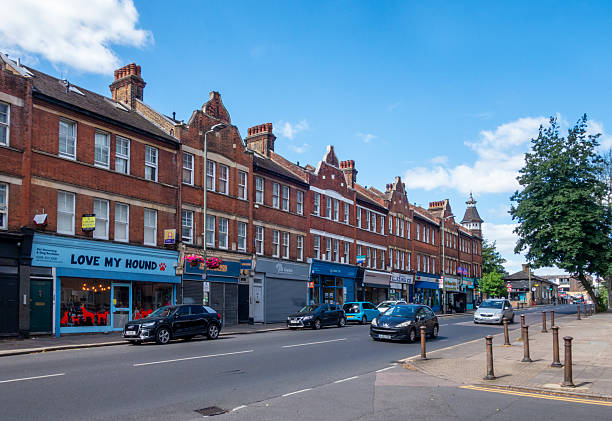
One of the most recognisable mixed use formats is residential accommodation above or alongside shops.
A scheme could include:
-
Ground-floor retail
-
Cafés
-
Restaurants
-
Residential apartments
-
Communal space
-
Parking or servicing
The design needs to manage the relationship between residents and commercial occupiers, particularly noise, deliveries, ventilation, refuse storage and opening hours.
Residential and Office Development
A building may combine apartments with office or flexible workspace.
This can work particularly well in urban locations where employment uses and housing are both supported by the local planning framework.
The development appraisal should consider the different values, leasing assumptions and fit-out requirements associated with each use.
Residential and Community Uses
Larger schemes may include:
-
Community centres
-
Healthcare facilities
-
Nurseries
-
Education uses
-
Public spaces
-
Leisure facilities
The National Design Guide identifies community and commercial uses as important components of successful mixed-use places.
Mixed Use Regeneration
Larger regeneration schemes can combine:
-
Housing
-
Retail
-
Offices
-
Leisure
-
Public realm
-
Community infrastructure
These developments can require extensive planning coordination, infrastructure investment and phased delivery.
Where to Find Mixed Use Development Opportunities UK
Mixed use opportunities can be found through several sources.
Town and City Centres
Changing retail patterns have left some town-centre buildings underused or in need of redevelopment.
Potential opportunities include:
-
Former department stores
-
Shopping parades
-
Vacant retail units
-
Upper-floor commercial space
-
Outdated office buildings
-
Underused car parks
A redevelopment could potentially introduce residential accommodation while retaining appropriate commercial or community uses.
Brownfield Sites
Previously developed land can provide opportunities for mixed use schemes.
Potential examples include:
-
Former industrial sites
-
Warehouses
-
Employment land
-
Former commercial premises
-
Underused service yards
-
Large vacant urban plots
The current National Planning Policy Framework for England, published on 17 August 2026, sets out the national planning framework for plan-making and decisions on development proposals.
The current planning framework supports making effective use of suitable land, but brownfield status does not guarantee permission for a particular mixed use scheme.
Transport-Connected Sites
Sites around well-connected railway stations and other transport locations can sometimes provide opportunities for higher-density development.
The government's 2026 planning reforms specifically identify housing and mixed-use development around well-connected stations as an area where appropriately located development can be supported, subject to the relevant planning requirements.
This does not mean that every site near a station is suitable.
Developers still need to consider:
-
Site capacity
-
Local planning policy
-
Transport impacts
-
Infrastructure
-
Design
-
Heritage
-
Amenity
-
Viability
Commercial Properties
Existing commercial buildings can provide opportunities for redevelopment or intensification.
Potential targets include:
-
Offices
-
Retail units
-
Industrial buildings
-
Warehouses
-
Hotels
-
Former public buildings
-
Mixed-use properties requiring refurbishment
Small Mixed Use Development Opportunities
Mixed use development does not always mean a major regeneration project.
A small site might combine:
-
Two flats above a shop
-
Residential accommodation with a café
-
Offices and apartments
-
Retail and residential units
-
A small commercial unit with several homes
Small sites can be particularly relevant to SME developers.
Government site-identification guidance specifically recognises the importance of identifying a range of site sizes, from small-scale opportunities to larger development locations.
The challenge is ensuring that the commercial and residential elements work together without creating excessive construction or management complexity.
Mixed Use Development and Planning Permission
Planning is one of the most important considerations.
Where a development involves multiple uses, the planning authority will consider the proposed combination and its impact on the surrounding area.
Government planning guidance states that where land or buildings are used for different uses falling into more than one use class, the overall use may be treated as mixed use and normally requires local planning consideration unless one use is clearly primary and the others are ancillary.
The planning assessment should consider:
-
Existing lawful use
-
Proposed uses
-
Local plan policies
-
Site allocation
-
Planning history
-
Development density
-
Building height
-
Transport
-
Parking
-
Servicing
-
Design
-
Noise
-
Environmental impact
-
Residential amenity
Planning Potential vs Planning Permission
A property marketed as having "mixed use potential" does not necessarily have permission for a mixed use scheme.
Developers should distinguish between:
Development potential - an initial indication that a site could potentially accommodate a particular scheme.
Planning application - a formal proposal submitted to the local planning authority.
Planning permission - formal approval for a defined development.
Implemented permission - permission that has been lawfully commenced or progressed according to its terms.
This distinction is particularly important when negotiating the acquisition price.
Existing Mixed Use Buildings
Some opportunities already contain multiple uses.
For example, a property could have:
-
Retail at ground level
-
Offices on the first floor
-
Residential accommodation above
Potential strategies could include:
-
Refurbishing the existing building
-
Increasing residential accommodation
-
Converting vacant floors
-
Reconfiguring commercial space
-
Redeveloping the entire property
-
Improving the energy performance
Before changing the use, the existing lawful use and planning history should be established.
Converting Commercial Property Into Mixed Use
A developer may purchase a commercial property and explore whether part of the building can be converted to residential use while retaining commercial space.
For example:
-
Ground-floor shop
-
First-floor offices
-
Upper-floor apartments
The feasibility assessment should cover:
-
Existing use
-
Proposed use
-
Planning route
-
Permitted development rights where relevant
-
Article 4 restrictions
-
Building Regulations
-
Fire safety
-
Access
-
Natural light
-
Refuse storage
-
Parking
-
Servicing
-
Energy performance
A conversion that looks straightforward at first can become more complicated when the different uses have to operate alongside each other.
Mixed Use Development Around High Streets
High streets can provide opportunities for combining residential and commercial uses.
Potential projects include:
-
Redeveloping vacant shops
-
Adding residential accommodation above retail
-
Converting upper floors
-
Replacing outdated buildings
-
Creating small mixed use blocks
-
Introducing flexible commercial units
The objective should not simply be to maximise the number of residential units.
The commercial element needs to have a realistic market and appropriate access, servicing and configuration.
Mixed Use Development on Brownfield Land
Brownfield sites can provide larger development opportunities where existing urban land is underused.
A scheme might combine:
-
New housing
-
Commercial space
-
Employment uses
-
Community facilities
-
Public open space
However, brownfield sites can also involve substantial costs.
Potential issues include:
-
Contamination
-
Demolition
-
Ground conditions
-
Infrastructure
-
Utilities
-
Access
-
Remediation
-
Flood risk
-
Ecology
The development appraisal should reflect these costs before the land value is established.
How to Assess a Mixed Use Development Site
A mixed use development requires a more detailed assessment than simply estimating the value of the completed residential units.
Planning Assessment
Review:
-
Local plan
-
Site allocation
-
Planning history
-
Existing permissions
-
Use classes
-
Development restrictions
-
Conservation areas
-
Listed buildings
-
Article 4 directions
-
Design policies
Physical Assessment
Investigate:
-
Site access
-
Ground conditions
-
Contamination
-
Flood risk
-
Drainage
-
Utilities
-
Ecology
-
Trees
-
Topography
-
Existing structures
Market Assessment
Research demand for each proposed use.
For residential space, consider:
-
Comparable sales
-
Rental values
-
Unit sizes
-
Buyer demand
-
Tenant demand
For commercial space, consider:
-
Local occupier demand
-
Rents
-
Yields
-
Vacancy rates
-
Comparable transactions
-
Likely tenant types
Operational Assessment
Consider how the different uses will interact.
For example:
-
Where will deliveries take place?
-
How will residents access the building?
-
Where will commercial waste be stored?
-
Will commercial activities create noise?
-
Is there sufficient parking?
-
How will servicing work?
-
Can residential and commercial entrances be separated?
Mixed Use Development Appraisal
A mixed use scheme should be appraised by separating the different components.
For example, a hypothetical scheme could have:
-
20 apartments
-
4,000 sq ft of commercial space
Suppose the apartments have an estimated combined value of £6 million and the commercial element has an estimated value of £1 million.
The hypothetical Gross Development Value would therefore be £7 million.
The appraisal would then deduct:
-
Land acquisition
-
Construction
-
Professional fees
-
Planning costs
-
Finance
-
Infrastructure
-
CIL where applicable
-
Section 106 obligations
-
Marketing
-
Sales costs
-
Contingency
-
Developer return
The remaining amount helps establish the residual value available for the land.
This is purely illustrative. Actual values depend on location, specification, market conditions, planning obligations and development costs.
Mixed Use Development and Section 106
Section 106 obligations can affect the economics of mixed use development.
Depending on the scheme and local planning requirements, obligations can relate to matters such as:
-
Affordable housing
-
Highways
-
Public realm
-
Education
-
Community infrastructure
-
Other site-specific mitigation
The government's 2026 policy statement confirms that Section 106 agreements remain an important mechanism for securing social and affordable housing and other development-related obligations.
The potential obligations should therefore be considered during the appraisal rather than after the purchase price has been agreed.
Mixed Use Development and Community Infrastructure Levy
Community Infrastructure Levy may also apply depending on the local authority, development type and circumstances.
CIL rates and charging schedules vary between authorities.
A developer should establish whether CIL applies and how the proposed development would be treated before finalising the development appraisal.
Mixed Use Development and Development Finance
Financing a mixed use project can be more complicated than financing a single-use development.
Funding requirements may cover:
-
Land acquisition
-
Planning
-
Professional fees
-
Demolition
-
Construction
-
Infrastructure
-
Commercial fit-out
-
Residential fit-out
-
Finance costs
-
Marketing
-
Sales
The lender may assess the residential and commercial components separately.
The developer should therefore have realistic assumptions for both the completed residential values and the commercial element.
Mixed Use Development in London
London offers a wide range of potential mixed use development opportunities.
Potential locations and strategies include:
-
Town-centre redevelopment
-
Commercial-to-residential projects
-
Mixed-use regeneration
-
Transport-led development
-
Office redevelopment
-
Retail redevelopment
-
Brownfield sites
-
Small infill schemes
Areas such as Stratford, Greenwich, Croydon, Bre