


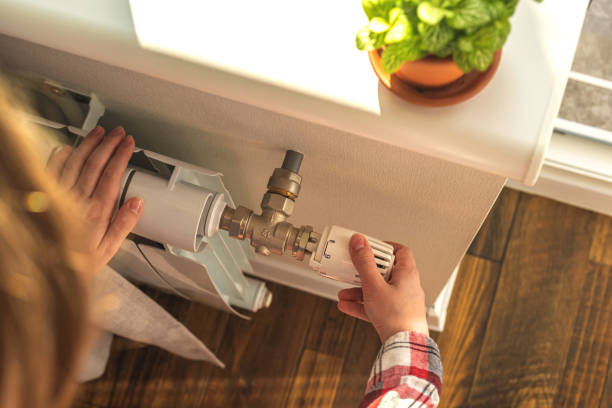
Boiler Not Firing Up for Central Heating but Is for Hot Water – Causes & Fixes
If your boiler is not firing up for central heating but is working for hot water, the good news is that the boiler can still produce heat. The fault is more likely to involve the central heating controls, thermostat, programmer, motorised valve, diverter valve, circulation system or another heating-specific component.
The precise cause depends on whether you have a combi boiler, system boiler or conventional boiler, so diagnosis should begin with the controls before internal boiler components are investigated.
Through FraserBond.com, homeowners, landlords and property managers can explore boiler repair and central heating services.
Why Does My Boiler Work for Hot Water but Not Heating?
Common causes include:
- Thermostat not calling for heat
- Programmer or timer incorrectly set
- Wireless thermostat communication failure
- Low thermostat batteries
- Motorised zone valve fault
- Diverter valve problem
- Circulation pump fault
- Central heating sensor problem
- Boiler control or PCB fault
- System pressure problem
- Heating isolation or valve issue
Because hot water still works, a total loss of gas or electrical supply to the boiler is less likely.
Check the Thermostat First
Start with the room thermostat.
Set the desired temperature several degrees above the current room temperature and see whether the boiler responds.
Check:
- Thermostat is switched on
- Heating temperature is set high enough
- Batteries aren't flat
- Correct operating mode is selected
- Wireless thermostat hasn't lost connection
If the thermostat isn't requesting heat, the boiler may have no reason to start the central heating.
Check the Boiler Programmer or Timer
A programmer can prevent the heating from operating even while hot water remains available.
Check whether central heating is:
- Switched on
- Scheduled for the current time
- Accidentally set to off
- In holiday mode
- Using an incorrect time or date
Try selecting a manual heating on or override function where your controls provide one.
Wireless Thermostat Not Connecting to Boiler
Wireless heating controls typically communicate with a receiver connected to the heating system.
If communication is lost, the thermostat may appear to be requesting heat without that demand reaching the boiler.
Possible causes include:
- Flat thermostat batteries
- Lost pairing
- Receiver fault
- Thermostat fault
- Electrical/control issue
Follow the manufacturer's instructions for your particular thermostat before attempting to reset or re-pair it.
Boiler Doesn't Respond When Thermostat Is Turned Up
This symptom can help narrow down the fault.
If increasing the thermostat produces absolutely no response, the problem may lie somewhere in the control chain:
Thermostat → Receiver/Programmer → Heating Controls → Boiler
A heating engineer can test whether the boiler is actually receiving a central-heating demand.
Check the Boiler Pressure
If you have a sealed central heating system, check the pressure displayed by the boiler.
Low system pressure can prevent normal operation on some boilers.
Consult the instructions for your specific model for the correct operating pressure and repressurising procedure.
If pressure repeatedly falls after being restored, arrange an investigation. Continually topping up a system without identifying why pressure is being lost is not a long-term solution.
Combi Boiler Hot Water Works but No Heating
A combi boiler provides both domestic hot water and central heating from the same appliance.
If hot water works normally but radiators remain cold, possible causes include:
- Thermostat or programmer fault
- Diverter valve problem
- Heating sensor fault
- Pump or circulation problem
- Boiler control fault
The exact diagnosis depends on whether the boiler attempts to start when heating is requested.
Could It Be the Diverter Valve?
A diverter valve controls where heated water is directed in relevant boiler designs.
A faulty or sticking valve can result in problems switching between domestic hot water and central heating.
Potential symptoms include:
- Hot water works but radiators don't
- Heating behaves intermittently
- Boiler struggles to switch operating modes
Diverter-valve diagnosis and replacement involve internal boiler work and should be handled by a suitably qualified engineer.
System Boiler Hot Water Works but Radiators Don't
With a system or conventional arrangement, the fault may be outside the boiler itself.
Heating systems can use motorised zone valves to control water flow to different circuits.
A failed actuator or valve can potentially leave one circuit operating while preventing another from receiving heat.
This is particularly relevant where hot water and central heating are controlled independently.
Motorised Valve Fault
A motorised valve may open when the programmer and thermostat request central heating.
If it fails, the heating circuit may not operate correctly.
Possible symptoms include:
- Hot water available normally
- Radiators remain cold
- Boiler doesn't respond to heating demand
- Heating works intermittently
An engineer can test the electrical controls and valve operation before replacing components.
Could the Circulation Pump Be Faulty?
The central heating pump circulates heated water through the system.
A pump or circulation problem can contribute to:
- Radiators remaining cold
- Poor heating circulation
- Boiler starting and stopping
- Unusual noises
- Some areas heating while others remain cold
Pump problems require proper diagnosis because similar symptoms can result from air, sludge, valves and other restrictions.
Boiler Fires but Radiators Stay Cold
This is slightly different from a boiler that doesn't fire at all.
If the boiler starts when heating is requested but the radiators don't warm up, investigate circulation-related possibilities such as:
- Closed radiator valves
- Air in radiators
- Stuck thermostatic radiator valves
- Pump problems
- Motorised valves
- Sludge or restrictions
- Poor system balancing
Determining whether the boiler actually fires is therefore useful diagnostic information.
Could a Power Flush Fix It?
Not automatically.
A central heating power flush can be useful where sludge or contamination is restricting circulation, but it won't repair a faulty thermostat, programmer, motorised valve, diverter valve or electrical control.
Power flushing should be recommended because there is evidence of system contamination, not simply because the radiators aren't heating.
Check for Boiler Fault Codes
Look at the boiler display when central heating is requested.
Record any:
- Error code
- Warning symbol
- Pressure warning
- Flashing indicator
- Unusual display message
Provide the exact code and boiler model to the engineer.
Fault codes vary considerably between manufacturers and models, so avoid assuming a code from another boiler means the same thing on yours.
Try Resetting the Boiler
If the manufacturer's instructions recommend a reset for the displayed condition, you can follow the specified reset procedure.
Avoid repeatedly resetting a boiler that immediately locks out again.
Repeated lockouts indicate an underlying fault that should be diagnosed.
Boiler Heating Temperature Setting
Some boilers allow the central heating flow temperature to be adjusted independently from domestic hot water.
Check that the central heating setting hasn't accidentally been turned down or disabled.
Again, use the operating instructions for the particular boiler because controls vary by model.
Smart Thermostat Not Turning Heating On
If you use controls such as a smart thermostat, the boiler may be functioning correctly while the control system is failing to send a heating request.
Check:
- Thermostat temperature
- Heating schedule
- Receiver status
- Batteries
- Power supply
- Connection status
- Manual heating override
If the boiler works when manually overridden but not through the thermostat, the control system becomes a stronger suspect.
Safe Checks You Can Make
Without opening the boiler casing, you can gather useful information:
- Turn the thermostat above room temperature.
- Confirm the programmer says heating is on.
- Check thermostat batteries.
- Check boiler pressure.
- Look for fault codes.
- Check the central heating temperature setting.
- Determine whether the boiler makes any attempt to fire.
- Check whether any radiators become warm.
There is probably a Fraser Bond team for it.
Lettings & management
Finding tenants, running tenancies, and holding the compliance paperwork so you never have to look for it.
Investment & portfolio
Buying well, holding sensibly, and knowing when a property has stopped earning its place.
Commercial property
Offices, retail and mixed use — acquisition, lettings, lease advice and building management.
Professional services
Valuation, lease consultancy, building consultancy and expert advice when a decision needs evidence behind it.
You are one message away from an answer.
Send it to us and get a straight answer.
Describe the property and the problem. We will tell you what we would do, what it should cost, and if we are not the right people, who is.
- Replies the same working day
- The person who answers is the person who handles it
- No fee, and no obligation to instruct us
See everything we are instructed on.
Sales and lettings across Prime Central London and the wider UK, with the same team behind every listing.
- Residential and commercial in one search
- Filter by borough, budget and size
- Register once and we will send matches first
Other insights you may find useful.
 Property & Real Estate Services
Properties to Rent in Royal Albert Wharf - London E16
Read → Property & Real Estate Services
Short-Term Rentals in Seattle – Find a Month-to-Month Lease Today
Read → Property & Real Estate Services
Understanding a Court Order for Possession of Property in the UK
Read →
Property & Real Estate Services
Properties to Rent in Lost Property Curio Collection by Hilton - London EC4M
Read → Property & Real Estate Services
Properties to Rent in 27-35 Mortimer Street - London W1T
Read → Property & Real Estate Services