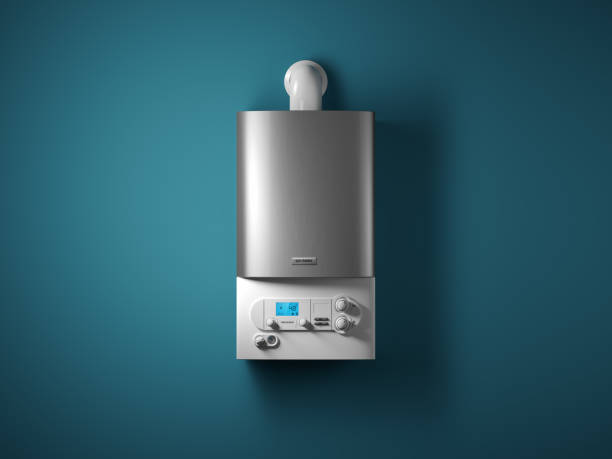
Vaillant Boiler Heating Not Working but Hot Water Is – Causes & What to Check
If your Vaillant boiler has hot water but the central heating is not working, the fact that hot water is still available is an important diagnostic clue. It usually means the boiler has power and can produce heat, while the problem is more likely associated with the central-heating demand, controls, circulation or a component that directs heat to the radiators.
Vaillant itself lists “hot water but no heating” as a common boiler problem. Depending on the boiler and heating-system type, causes can range from a summer-mode setting or thermostat problem to trapped air, circulation faults or a faulty diverter valve.
Through FraserBond.com, homeowners, landlords and property managers can explore boiler repairs, heating engineers and wider property-maintenance services.
Why Does My Vaillant Boiler Have Hot Water but No Heating?
The most common possibilities include:
- Heating switched off at the boiler
- Summer mode activated
- Thermostat not requesting heat
- Programmer or timer problem
- Wireless thermostat communication problem
- Low system pressure
- Radiator valves closed
- Air trapped in the heating system
- Circulation problem
- Pump problem
- Motorised valve problem on some systems
- Faulty diverter valve on a combi boiler
- Temperature sensor or control fault
- Boiler fault requiring professional diagnosis
Because the hot water works, a complete loss of gas, electricity or boiler operation is generally less likely.
Check Whether the Heating Is Actually Switched On
Start with the simplest possibility.
Vaillant specifically recommends checking whether a combi boiler has been set to provide hot water only rather than central heating, something that can happen when heating has been switched off for summer.
Check the boiler's normal user controls and make sure central heating is enabled.
If you're unfamiliar with the symbols or controls, use the instructions for your exact Vaillant model rather than changing unfamiliar settings.
Check the Room Thermostat
Turn the room thermostat several degrees above the current room temperature.
For example, if the room is 19°C, temporarily request around 23°C.
Then observe what happens.
Boiler Starts
If the boiler responds and radiators begin warming, the system may simply have been below the thermostat's set temperature.
Boiler Does Nothing
If there is no response at all, the problem could involve:
- Thermostat
- Batteries
- Wireless receiver
- Programmer
- Wiring
- Heating controls
- Boiler controls
A thermostat that isn't communicating with the boiler can leave you with perfectly functioning hot water but no central heating.
Check the Heating Programmer or Timer
Make sure the heating schedule hasn't been changed.
This is particularly worth checking after:
- Power cut
- Clock change
- Battery replacement
- Long period with heating switched off
- Changes to smart-heating controls
Vaillant recommends checking timer settings when troubleshooting boiler operation because settings can be changed accidentally or reset following a power interruption.
As a test, use the normal user controls to request heating immediately rather than waiting for the next programmed period.
Check the Boiler Pressure
Look at the pressure reading on the boiler display or pressure gauge.
Vaillant states that system pressure needs to be sufficient for the boiler to operate correctly and identifies low pressure as a common source of heating problems. Some Vaillant fault guidance references a normal system-pressure range around 1–1.5 bar, although the correct pressure should always be checked against the instructions for your particular model and system.
If pressure is significantly below the level specified in your manual, this could contribute to the problem.
Don't repeatedly repressurise a boiler that keeps losing pressure. Recurring pressure loss can indicate a leak or another fault requiring investigation.
Check for a Vaillant Fault Code
Look carefully at the boiler display.
You may see something such as:
- F.22
- F.24
- F.28
- F.32
- F.75
or another code depending on the Vaillant model.
Don't assume the meaning of a code from a different boiler model. Vaillant maintains model-specific fault information and recommends checking the displayed code against the appropriate boiler documentation.
A fault code can significantly narrow down the diagnosis for an engineer.
Hot Water Works but All Radiators Are Cold
If every radiator is completely cold, first establish whether the boiler is responding to a heating request.
Turn the thermostat up and listen or look at the boiler.
There are two useful scenarios.
Boiler Doesn't Respond
Think first about:
Thermostat → Programmer → Receiver → Heating Demand → Controls
The boiler may simply not be receiving an instruction to provide central heating.
Boiler Fires but Radiators Stay Cold
This points more towards:
Circulation → Pump → Valves → Air → Blockage → Heating Circuit
Vaillant's fault guidance identifies circulation problems involving pumps, valves and blockages among potential causes of several heating-related faults.
Vaillant Combi Boiler Hot Water but No Heating
If yours is a Vaillant combi boiler, a faulty diverter valve becomes one possible cause.
The diverter valve directs heated water either towards the domestic hot-water requirement or towards the central-heating circuit.
Vaillant specifically identifies this symptom:
Hot showers/taps work, but radiators remain cold.
According to Vaillant, that can indicate a faulty diverter valve.
It isn't proof that the diverter valve has failed, however. Thermostat, control and circulation problems can produce similar symptoms.
Faulty Vaillant Diverter Valve
A diverter-valve problem can sometimes produce symptoms including:
- Hot water works
- Radiators remain cold
- Heating performance is inconsistent
- Hot water becomes lukewarm in some fault conditions
- Heating and hot-water behaviour becomes interconnected unexpectedly
Vaillant explains that a combi boiler's diverter valve directs water to either the radiators or hot-water outlets according to demand. If it sticks or fails, heat may not reach the required circuit correctly.
This is not a DIY repair.
The boiler casing shouldn't be removed to inspect or repair the valve.
Does Every Vaillant Boiler Have a Diverter Valve?
No.
This distinction matters.
A combi boiler manages domestic hot water differently from a system or conventional boiler connected to a separate cylinder.
With a system incorporating a hot-water cylinder, the problem could instead involve an external motorised zone valve or heating controls.
That's why identifying your Vaillant boiler model and heating-system configuration is useful before assuming that a diverter valve needs replacing.
Motorised Valve Problem
Some heating systems use external motorised valves to control water flowing towards:
- Central heating
- Hot-water cylinder
- Different heating zones
If hot water is working but heating isn't, a valve controlling the heating circuit could potentially be stuck or failing.
This is especially relevant to properties with a separate hot-water cylinder rather than an ordinary combi setup.
An engineer can determine whether the boiler is receiving a heating demand and whether the appropriate valve is operating.
Central Heating Pump Problem
The pump circulates heated water through the central-heating system.
A circulation problem can potentially result in the boiler producing heat without distributing it effectively through the radiators.
Vaillant's current fault guidance identifies pump, valve and blockage problems among possible causes of circulation faults.
Possible symptoms include:
- Boiler appears to start
- Radiators don't warm properly
- Heating shuts down
- Unusual heating-system noises
- Certain circulation-related fault codes appear
Pump diagnosis should be left to an appropriately qualified heating engineer.
Air in the Radiators
If only certain radiators are cold—particularly at the top—trapped air could be responsible.
Vaillant recommends bleeding radiators as one possible response where hot water works but heating performance is affected by trapped air.
Air can cause:
- Cold radiator tops
- Gurgling
- Poor circulation
- Uneven heating
Vaillant also notes that airlocks can cause poor or lost radiator performance and tapping or banging noises.
Check the boiler pressure afterwards because bleeding radiators can reduce system pressure.
Radiators Cold at the Bottom
Radiators that are hot at the top but persistently cold across the bottom can indicate restricted circulation or deposits within the system.
Possible remedies depend on the diagnosis and might include:
- System balancing
- Valve work
- Chemical cleaning
- Flushing
- Power flushing
Don't assume a power flush is automatic