


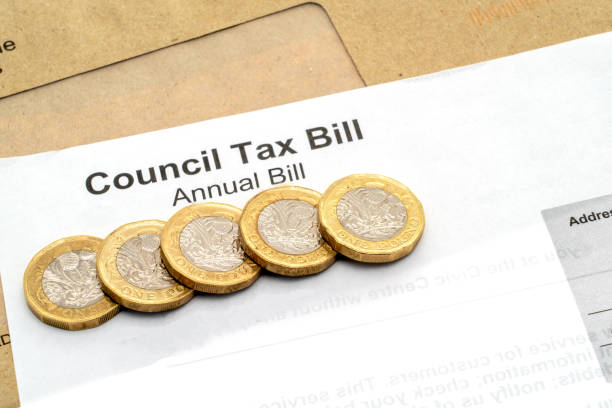
Council Tax Arrears UK - How to Deal With Debt, Bailiffs and Legal Action
Understanding council tax arrears in the UK, how unpaid bills are recovered, whether bailiffs can visit your home, how to arrange affordable repayments and what financial support is available.
Council tax arrears occur when a household fails to pay the council tax charged by its local authority. Missing payments can lead to reminder notices, court proceedings, liability orders and enforcement action.
If you are struggling to pay your council tax, it is important to understand your rights and the options available before the debt increases.
You do not automatically lose your home or go to prison because you owe council tax. However, local authorities have significant legal powers to recover unpaid council tax, including deductions from certain benefits, attachment of earnings and enforcement through bailiffs.
In England, councils must follow the statutory recovery process before using these enforcement powers.
Fraser Bond provides residential lettings, property management and real estate consultancy services across London. Understanding council tax arrears is particularly important for tenants, homeowners and landlords managing household expenses and property-related financial commitments.
What Are Council Tax Arrears?
Council tax arrears are unpaid amounts owed to a local authority for residential property taxation.
Council tax is normally payable through monthly instalments, although councils can offer different payment arrangements.
Arrears may arise because of:
-
Unemployment or reduced income.
-
Illness or disability.
-
Delayed benefit payments.
-
Relationship breakdown.
-
Unexpected household expenses.
-
Incorrect council tax calculations.
-
Failure to report a change of address.
-
Missed monthly instalments.
-
Financial hardship.
Once an instalment is missed, the council can begin recovery procedures in accordance with the relevant regulations.
What Happens If You Do Not Pay Council Tax?
In England, councils generally follow a statutory recovery process when council tax remains unpaid.
|
Stage |
What happens |
|---|---|
|
Missed instalment |
Your account becomes overdue |
|
Reminder notice |
The council requests payment |
|
Final notice |
You may be required to pay the remaining annual balance |
|
Court summons |
The council applies for a liability order |
|
Liability order |
The magistrates' court grants legal authority for further recovery |
|
Enforcement |
The council may use bailiffs, deductions or other permitted methods |
The precise sequence depends on your payment history and the notices already issued.
A council should not simply send bailiffs without first obtaining the necessary legal authority.
How Much Council Tax Debt Can You Owe Before Enforcement?
There is no minimum amount of council tax arrears that automatically prevents a council from taking recovery action.
Even relatively small unpaid balances can lead to a court summons and a liability order if the statutory requirements are met.
The amount owed may increase through court costs and enforcement fees.
Council tax is considered a priority debt because councils have legal powers to recover outstanding payments. Citizens Advice recommends contacting the council as soon as you realise you cannot pay.
How Long Before Council Tax Arrears Go to Court?
There is no single fixed period applying to every council tax account.
In England, the process commonly begins with a reminder notice approximately two weeks after a missed instalment.
If you do not bring the account up to date within the period specified, the council may demand the remaining annual balance and eventually issue a court summons.
The council can then apply for a liability order at the magistrates' court.
Important 2027 changes: Government reforms announced in October 2026 are due to change the collection process from April 2027. These include requiring councils to issue both reminder and final notices, providing 21 days after a final notice to bring the account up to date and limiting how early a final notice can be issued. These changes are not yet in force in November 2026.
What Is a Council Tax Liability Order?
A liability order is a legal order granted by a magistrates' court that allows a local authority to pursue unpaid council tax through additional recovery methods.
Once a liability order has been granted, the council may:
-
Instruct enforcement agents.
-
Deduct money from your wages.
-
Request deductions from certain benefits.
-
Apply for a charging order against qualifying property.
-
Consider bankruptcy proceedings where legally permitted.
A liability order is not the same as a County Court Judgment (CCJ), and it does not automatically appear on your credit report.
If you believe the council has calculated your bill incorrectly or you are not legally responsible, seek advice about challenging the liability.
Can Council Tax Arrears Lead to Bailiffs?
Yes. Once the council has obtained a liability order, it can instruct enforcement agents to recover the outstanding amount.
Before taking control of goods, enforcement agents must normally issue a Notice of Enforcement.
In England and Wales, the minimum notice period increased from seven clear days to 14 clear days from 1 May 2026.
The notice gives you an opportunity to pay, dispute the debt or seek advice before an enforcement visit.
What Can Council Tax Bailiffs Take?
Enforcement agents may take control of certain goods belonging to the debtor, but legal exemptions apply.
They generally cannot take:
-
Essential clothing and bedding.
-
Basic household furniture and essential domestic appliances.
-
Items belonging exclusively to another person.
-
Essential medical equipment.
-
Certain tools and equipment needed for employment or education, subject to the statutory value limit.
-
Qualifying vehicles displaying a valid disabled person's badge.
Bailiffs generally cannot force entry into your home on their first visit for ordinary council tax enforcement.
Different rules can apply if they have previously taken control of goods inside the property under a controlled goods agreement.
How Much Are Council Tax Bailiff Fees in 2026?
For standard enforcement cases received on or after 1 May 2026, the principal statutory fees are:
|
Enforcement stage |
Fee |
|---|---|
|
Compliance stage |
£79 |
|
Enforcement stage |
£247 |
|
Sale or disposal stage |
£116 |
Additional percentage-based charges may apply to debts exceeding £1,900 at the relevant stages.
For example, a council tax debt of £1,000 could increase to £1,326 after the compliance and enforcement fees, excluding court costs and other permitted expenses.
Cases referred before 1 May 2026 may remain subject to the previous fee structure.
Can You Stop Council Tax Bailiffs?
There are several ways to try to prevent enforcement from progressing.
Contact the Council
Explain why you have fallen behind and ask whether the council will accept an affordable repayment arrangement.
If enforcement has already started, request that the council recall the account from its enforcement agents.
Request a Temporary Hold
If you are experiencing financial hardship, explain your circumstances and ask for enforcement to be paused while your situation is reviewed.
A suspension is not automatic, but councils should consider relevant vulnerability and financial circumstances.
Challenge an Incorrect Debt
If the arrears relate to a property you did not occupy or a period when you were not liable, request a review.
Provide tenancy agreements, council tax bills, bank statements or other relevant evidence.
Apply for Financial Assistance
Check whether you qualify for Council Tax Reduction, a discount or an exemption.
These could reduce your outstanding liability if applied to the relevant period.
Can Council Tax Arrears Be Deducted From Universal Credit?
Yes. Following a liability order, a council may arrange deductions from qualifying Universal Credit payments.
The deduction is taken from your benefit rather than collected separately by a bailiff.
If deductions leave you unable to afford essential expenses, contact the DWP and seek independent debt advice.
You should also check whether you qualify for Council Tax Reduction.
Can You Go to Prison for Council Tax Arrears?
In England, imprisonment is possible in exceptional circumstances, but it is not an automatic consequence of owing council tax.
A magistrates' court must conduct further proceedings and consider whether non-payment resulted from wilful refusal or culpable neglect.
Imprisonment should not be imposed simply because someone genuinely cannot afford their council tax.
In Wales, imprisonment for council tax non-payment has been abolished.
Can Council Tax Arrears Affect Your Credit Score?
Council tax arrears do not normally appear on your credit report in the same way as missed credit card or loan payments.
A liability order is also different from a CCJ.
However, unpaid council tax can create serious financial consequences through enforcement fees, deductions and legal action.
You should therefore address the debt even if it does not directly reduce your credit score.
Can You Get Council Tax Arrears Written Off?
In certain circumstances, councils may reduce or cancel council tax arrears.
Possible reasons include:
-
You were incorrectly charged.
-
You qualified for a discount or exemption that was not applied.
-
The council made an administrative error.
-
You were not legally responsible for the property.
-
A successful appeal changes your council tax liability.
-
The council agrees to discretionary assistance in exceptional circumstances.
However, financial hardship alone does not automatically cancel council tax debt.
If you cannot afford repayment, ask the council about affordable arrangements and available support.
Can You Get a Council Tax Reduction if You Are on Benefits?
Yes. People receiving certain benefits may qualify for Council Tax Reduction.
Depending on your circumstances and local authority scheme, this may significantly reduce your council tax bill.
You may qualify if you receive:
-
Universal Credit.
-
Pension Credit.
-
Income Support.
-
Income-related Employment and Support Allowance.
-
Income-based Jobseeker's Allowance.
Other circumstances, including household income, savings, disability and family responsibilities, may also affect eligibility.
Pension-age and working-age applicants are assessed under different rules.
Can Council Tax Arrears Be Included in a Debt Relief Order?
Yes. Qualifying council tax arrears can generally be included in a Debt Relief Order (DRO).
A DRO may be suitable for people with relatively low income, limited assets and qualifying debts within the statutory limits.
If the DRO is approved, creditors are generally prevented from pursuing included debts during the moratorium period.
At the end of the normal 12-month period, qualifying included council tax arrears are generally discharged.
However, new council tax liabilities arising after the DRO begins remain payable.
Can You Use Breathing Space to Stop Council Tax Enforcement?
Yes. The Breathing Space scheme in England and Wales can provide temporary protection for eligible people experiencing serious debt problems.
A standard Breathing Space arrangement generally lasts up to 60 days.
During this period, creditors are normally restricted from pursuing certain enforcement action, adding interest or charges to included debts and contacting debtors about repayment.
A separate Mental Health Crisis Breathing Space is available to eligible individuals receiving qualifying crisis treatment.
Breathing Space does not cancel council tax arrears, and you must obtain assistance from an authorised debt adviser to enter the scheme.
What Happens if You Cannot Afford Council Tax Arrears?
If you cannot afford the outstanding amount, do not ignore letters from the council.
Consider these steps:
-
Contact your local authority's council tax department.
-
Explain your financial difficulties.
-
Request an affordable repayment arrangement.
-
Apply for Council Tax Reduction if eligible.
-
Check whether you qualify for discounts or exemptions.
-
Seek free debt advice.
-
Inform the council if illness, disability or mental health difficulties affect your ability to manage payments.
An affordable repayment proposal should account for rent, mortgage payments, food, energy and other essential expenses.
Where Can You Get Free Help With Council Tax Arrears?
Several organisations provide free and independent debt advice.
|
Organisation |
Assistance available |
|---|---|
|
Citizens Advice |
Council tax disputes, benefits and debt advice |
|
StepChange |
Debt assessments and repayment solutions |
|
National Debtline |
Free debt guidance and enforcement advice |
|
MoneyHelper |
Financial guidance and debt adviser referrals |
|
Local council |
Council Tax Reduction and repayment arrangements |
If bailiffs have already contacted you, explain this when seeking advice so that the urgency of your situation can be assessed.
Council Tax Arrears for Tenants and Landlords
Responsibility for council tax depends on the property and occupation arrangements.
In many ordinary residential tenancies, the tenant is responsible for paying council tax.
However, landlords may be legally responsible in certain circumstances, including some houses in multiple occupation and periods when a property is empty.
Landlords should maintain accurate records of tenancy dates and property occupancy.
Tenants should check their tenancy agreements and council tax bills to establish who is legally liable.
Council Tax Arrears in London
London residents who fall behind with council tax should contact the borough responsible for their property.
Different boroughs may offer different repayment arrangements and discretionary support.
Residents in Westminster, Camden, Hackney, Lambeth, Newham and other London boroughs should check their local Council Tax Reduction schemes and financial assistance arrangements.
For landlords and property investors, council tax liability should also be considered during vacant periods and changes in tenancy.
How Fraser Bond Supports London Property Owners and Tenants
Fraser Bond provides residential lettings, property management, property sales and investment advisory services across London.
Effective property management includes maintaining accurate occupancy records, clarifying council tax responsibilities and monitoring tenancy changes.
For tenants, understanding housing costs and financial obligations can help prevent avoidable disputes with landlords and local authorities.
Fraser Bond provides property consultancy rather than regulated debt advice or council tax administration.
Understanding Your Rights When Dealing With Council Tax Arrears
Council tax arrears can escalate from a missed payment to court proceedings and enforcement action.
However, you have options to challenge incorrect bills, request affordable repayments, apply for reductions and obtain independent debt advice.
The most important step is to contact your council early rather than allowing the outstand
There is probably a Fraser Bond team for it.
Lettings & management
Finding tenants, running tenancies, and holding the compliance paperwork so you never have to look for it.
Investment & portfolio
Buying well, holding sensibly, and knowing when a property has stopped earning its place.
Commercial property
Offices, retail and mixed use — acquisition, lettings, lease advice and building management.
Professional services
Valuation, lease consultancy, building consultancy and expert advice when a decision needs evidence behind it.
You are one message away from an answer.
Send it to us and get a straight answer.
Describe the property and the problem. We will tell you what we would do, what it should cost, and if we are not the right people, who is.
- Replies the same working day
- The person who answers is the person who handles it
- No fee, and no obligation to instruct us
See everything we are instructed on.
Sales and lettings across Prime Central London and the wider UK, with the same team behind every listing.
- Residential and commercial in one search
- Filter by borough, budget and size
- Register once and we will send matches first
Other insights you may find useful.
 Property Tax & Council Tax
Council Tax Bailiffs UK - Your Rights, Enforcement Powers and How to Stop Bailiff Action
Read → Lease Consultancy & Tenant Representation
Letter Before Action UK - Legal Requirements, Templates and Debt Recovery Guide 2026
Read → Property Law & Dispute Resolution
Letter Before Action Template UK - Legal Notice and Debt Recovery Guide 2026
Read → Personal , Property Finance, Debt Management
Debt Pay Off UK - How to Pay Off Debt Faster and Become Debt-Free
Read → Property & Real Estate Services
Council Tax Bailiffs – Your Rights & How to Stop Enforcement
Read → Property Legal, Risk & Compliance