Houses to Convert Into Flats UK - How to Find and Assess Conversion Opportunities
Explore houses to convert into flats UK investors can consider, including Victorian, Edwardian and large detached properties, with practical guidance on planning, layouts, refurbishment costs, development potential and investment appraisal from Fraser Bond.
What Houses Are Suitable for Conversion Into Flats?
Houses to convert into flats UK investors can consider are usually larger properties with enough floor space to create separate, practical residential units.
Potential characteristics include:
-
Large Victorian houses
-
Edwardian houses
-
Georgian townhouses
-
Large detached houses
-
Large semi-detached properties
-
Former guest houses
-
Former care properties
-
Houses with multiple existing bedrooms
-
Properties with several floors
-
Houses with large gardens
-
Buildings with side or rear access
-
Properties requiring substantial refurbishment
The strongest conversion candidates are not necessarily the largest houses. The layout, natural light, access, ceiling heights, structural condition and local planning policy can be more important than headline floor area.
In England, subdividing a house into multiple flats requires planning permission. Planning Portal specifically states that converting a house into a number of flats, bedsits or other forms of subdivision requires planning permission.
Why Investors Look for Houses to Convert Into Flats
Converting one large house into several flats can create a different investment strategy from retaining the property as a single dwelling.
Potential strategies include:
-
Creating multiple rental units
-
Selling individual flats
-
Retaining the flats as a rental portfolio
-
Creating a multi-unit freehold block
-
Refurbishing an underused property
-
Increasing the property's development value
-
Combining conversion with extension potential
-
Separating residential units for future disposal
For example, a large house that is difficult to sell as a single high-value property may appeal to a wider market when converted into several well-designed flats.
However, the additional value needs to justify the cost of planning, professional services, construction, finance, compliance and eventual sale or management.
Victorian Houses to Convert Into Flats
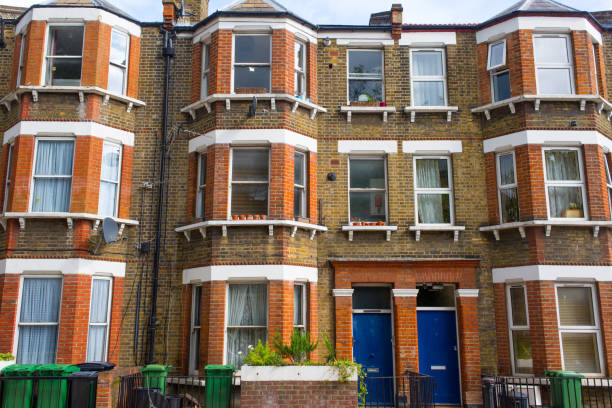
Victorian houses are among the most commonly considered properties for flat conversion.
They can offer:
-
High ceilings
-
Large rooms
-
Multiple floors
-
Large windows
-
Original reception rooms
-
Spacious staircases
-
Gardens
-
Side access
-
Existing bathroom and kitchen areas
Some Victorian houses were originally designed as large family homes and therefore provide useful floor plates for subdivision.
However, older construction can also introduce additional costs.
Before purchasing, investigate:
-
Roof condition
-
Damp
-
Timber
-
Foundations
-
Windows
-
Drainage
-
Electrical systems
-
Plumbing
-
Heating
-
Asbestos
-
Previous alterations
Edwardian Houses to Convert Into Flats
Edwardian houses can also provide attractive conversion opportunities.
Their layouts may include several bedrooms and reception rooms that can be reorganised into separate apartments.
Potential configurations could include:
-
One flat per floor
-
Ground-floor and upper-floor flats
-
Duplex apartments
-
Two flats on a larger floor
-
A mixture of one-bedroom and two-bedroom units
The final layout should be designed around the building rather than forcing an arbitrary number of flats into the available space.
Georgian Houses and Townhouses
Georgian properties can provide substantial floor space, but their historic character can introduce additional planning considerations.
If the property is listed, alterations affecting its special architectural or historic interest can require listed building consent. Planning Portal advises owners to establish whether listed building consent is required before undertaking works.
Conservation area controls can also affect demolition and external alterations.
A historic building should therefore be assessed by professionals familiar with the relevant planning and heritage requirements.
Large Detached Houses
Large detached houses can provide flexibility because they may have:
-
Larger gardens
-
Side access
-
Off-street parking
-
More external space
-
Larger rooms
-
Additional roof space
They can potentially be suitable for creating several flats or combining a flat conversion with an extension.
However, the additional development potential needs to be supported by planning and technical evidence.
Large Semi-Detached Houses
Large semi-detached houses can also provide opportunities, particularly where the property has a substantial side or rear garden.
Potential strategies may include:
-
Internal subdivision
-
Rear extension
-
Side extension
-
Loft conversion
-
Garden development
-
Additional parking
The impact on neighbouring properties, privacy, daylight and local character should be considered during the planning appraisal.
Houses With Multiple Existing Bedrooms
A property with many bedrooms can initially appear attractive for conversion.
However, bedroom numbers should not be used as a substitute for a proper floorplan assessment.
Each proposed flat needs appropriate:
-
Living space
-
Kitchen facilities
-
Bathroom facilities
-
Natural light
-
Storage
-
Circulation
-
Fire separation
-
Access
A house with twelve small bedrooms may be less suitable than a house with eight larger rooms and a more efficient layout.
Houses With Separate Entrances
Separate entrances can make a conversion more practical.
For example, a large property might already have:
-
Front entrance
-
Side entrance
-
Rear access
-
Separate floors
-
Existing external stairs
These features can reduce some design complications.
However, separate entrances do not automatically create separate planning units or legal titles.
The planning and legal position still needs to be established.
Houses With Large Gardens
Large gardens can add another layer of development potential.
An investor might investigate whether the property could support:
-
Flat conversion
-
Rear extension
-
Side extension
-
Additional dwelling
-
Separate development plot
However, garden development is highly location-specific.
Planning policy, access, neighbouring properties, density, trees, ecology and local character can all affect the outcome.
A large garden should therefore be treated as potential rather than guaranteed development value.
Houses With Loft Conversion Potential
Loft space can sometimes improve the economics of a conversion.
Potential uses include:
-
Additional bedroom
-
Additional living space
-
Part of an upper-floor flat
-
New duplex accommodation
Planning Portal notes that loft conversions to houses can benefit from permitted development rights subject to specific limits and conditions, although those rights do not automatically apply once a building contains flats.
Building Regulations approval will also be relevant when converting a loft into habitable accommodation.
Houses With Basement Space
Basements can potentially provide additional accommodation or communal space.
Before including basement space in a development appraisal, investigate:
-
Ceiling height
-
Natural light
-
Damp
-
Waterproofing
-
Ventilation
-
Drainage
-
Flood risk
-
Structural condition
-
Fire escape
-
Means of escape
Basement conversion can be significantly more expensive than a straightforward internal refurbishment.
Planning Permission for Converting a House Into Flats
This is one of the most important issues for investors.
GOV.UK identifies subdivision of a building used as a dwellinghouse into two or more separate dwellinghouses as development that can require planning permission.
Planning Portal is more direct for this specific project and states that a house being subdivided into multiple flats requires planning permission.
A flat conversion is therefore different from an ordinary householder extension.
Planning Portal confirms that applications changing the number of dwellings, including flat conversions, are normally dealt with through full planning consent rather than a standard householder application.
The relevant local planning authority should be consulted because local policies can materially affect the feasibility of the scheme.
Planning Potential vs Planning Permission
Investors should distinguish between:
Conversion potential
The property appears physically capable of being converted.
Planning potential
There is evidence that planning policy and the site's characteristics may support the proposed conversion.
Planning application
A formal proposal has been submitted to the local authority.
Planning permission
The authority has granted the required permission.
These are not interchangeable.
A house should not be valued as though it already contains four flats simply because an investor believes four flats could be created.
Building Regulations for Flat Conversions
Planning permission is only one part of the process.
Building Regulations approval is separate and may be required for conversion works. GOV.UK explicitly states that building regulations approval is different from planning permission and that both may be needed.
Depending on the scheme, Building Regulations can address:
-
Structural safety
-
Fire safety
-
Sound insulation
-
Ventilation
-
Drainage
-
Energy efficiency
-
Accessibility
-
Thermal performance
The cost of meeting these requirements should be included in the original appraisal.
Fire Safety in Converted Houses
Dividing a single house into several independent flats changes the building's fire-safety requirements.
Potential works can include:
-
Fire doors
-
Compartmentation
-
Fire stopping
-
Protected escape routes
-
Alarm systems
-
Emergency lighting
-
Protected staircases
-
Flat entrance doors
Planning Portal notes that property conversions require Building Regulations approval and that fire-escape issues may require consultation with the fire service.
Older houses can require substantial upgrades because the original construction was not designed for several independent households.
Flat Layouts and Natural Light
Good conversion opportunities usually have floorplans that can accommodate separate flats without creating awkward or poorly lit rooms.
Assess:
-
Window positions
-
Room dimensions
-
Floor-to-ceiling height
-
Existing staircases
-
Internal circulation
-
Kitchen locations
-
Bathroom locations
-
External walls
-
Potential new openings
A building can have substantial total floor area but still produce poor-quality flats if the floorplan is inefficient.
Parking and Access
Parking can become an important planning issue when one dwelling becomes several.
Assess:
-
Existing driveway
-
Off-street parking
-
On-street parking pressure
-
Vehicle access
-
Cycle storage
-
Bin storage
-
Pedestrian access
-
Emergency access where relevant
The effect of increased residential occupancy should be considered as part of the planning appraisal.
HMO or Flats?
Investors should also distinguish between a flat conversion and an HMO strategy.
A flat conversion creates separate self-contained dwellings.
An HMO involves multiple unrelated occupants sharing accommodation and facilities.
The planning, licensing and management requirements can therefore be different.
If the objective is to create self-contained flats, the development appraisal should be based on the proposed flats rather than HMO room numbers.
Houses to Convert Into Flats and Lease Structure
Once a house has been converted into multiple flats, the ownership structure becomes important.
An investor may retain the entire building as a freehold block or potentially create separate legal interests for individual units.
Before assuming that flats can simply be sold separately, investigate:
-
Freehold title
-
Lease structure
-
Long leases
-
Ground rents
-
Service charges
-
Rights of access
-
Repair obligations
-
Shared areas
-
Insurance arrangements
Title restructuring should be handled alongside specialist conveyancing advice.
How to Find Houses to Convert Into Flats UK
Estate Agents
Tell local agents specifically that you are looking for:
-
Large houses
-
Former guest houses
-
Period properties
-
Multi-bedroom properties
-
Houses requiring refurbishment
-
Properties with development potential
Some suitable opportunities may be marketed simply as large houses rather than conversion properties.
Property Auctions
Auctions can provide access to:
-
Vacant properties
-
Repossessions
-
Probate sales
-
Houses requiring refurbishment
-
Former guest houses
-
Development properties
The legal pack and planning history should be reviewed before bidding.
Planning Portals
Local planning portals can reveal previous applications involving:
-
Flat conversions
-
Additional dwellings
-
Extensions
-
Loft conversions
-
HMO conversions
-
Redevelopment
Previous planning decisions can provide useful information about local policy and potential objections.
Off-Market Opportunities
Potential opportunities can also come from:
-
Private landlords
-
Portfolio owners
-
Developers
-
Property companies
-
Estates
-
Direct approaches to owners
An off-market property still requires the same level of technical, legal and planning due diligence.
Houses to Convert Into Flats London
London contains many large period houses that investors may investigate for conversion.
Potential targets include:
-
Victorian terraces
-
Edwardian houses
-
Large townhouses
-
Detached properties
-
Former guest houses
-
Houses close to transport
However, London boroughs have different planning policies and restrictions.
An investor should check:
-
Local housing policies
-
Conservation area status
-
Listed status
-
Existing flat concentrations
-
Parking requirements
-
Minimum space standards
-
Planning history
-
Article 4 Directions where relevant
Houses to Convert Into Flats Manchester
Manchester offers opportunities involving:
-
Victorian terraces
-
Large period houses
-
Former guest houses
-
Properties near universities
-
Properties near employment centres
-
Houses requiring refurbishment
The location should be assessed based on the intended exit strategy.
A property designed for student rental demand may have a very different appraisal from one intended for owner-occupier flat sales.
Houses to Convert Into Flats Birmingham
Birmingham has a mixture of large period homes, suburban properties and buildings with potential for residential conversion.
Potential targets can include:
-
Large Victorian houses
-
Edwardian properties
-
Detached houses
-
Former guest houses
-
Properties close to transport and employment centres
Planning, parking, local demand and achievable end values should be assessed before purchase.
Houses to Convert Into Flats Bristol, Leeds and Liverpool
Bristol, Leeds and Liverpool contain established markets for flats and converted residential properties.
Potential opportunities can include:
-
Large period houses
-
Former guest houses
-
Proper