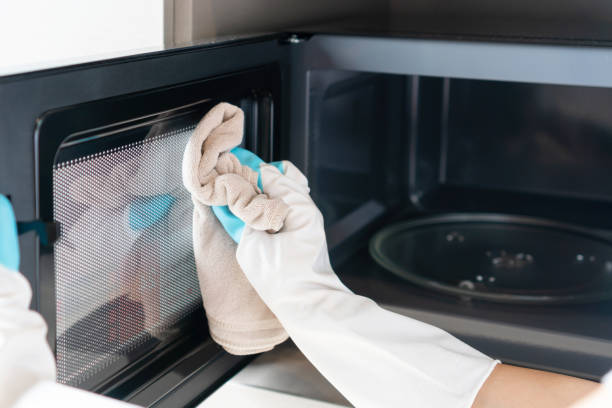
How to Clean a Microwave – Easy and Safe Microwave Cleaning Guide
Knowing how to clean a microwave properly helps remove food splashes, grease, burnt residue and unpleasant smells while keeping the appliance hygienic and easier to maintain. Most routine microwave cleaning can be completed using warm water, washing-up liquid and a soft cloth, without aggressive chemicals or abrasive scrubbing.
The key is to soften dried food before wiping it away and to keep excess liquid away from vents and electrical components. If the microwave is sparking, smoking, badly damaged or producing a burning electrical smell, stop using it and arrange professional inspection rather than treating the problem as a cleaning issue.
Through FraserBond.com, homeowners, landlords and property managers can explore appliance maintenance, kitchen repairs, cleaning and wider property-maintenance services across London and the UK.
What Do You Need to Clean a Microwave?
For ordinary cleaning, you may need:
- Microwave-safe bowl
- Warm water
- Washing-up liquid
- Soft microfibre cloth
- Non-abrasive sponge
- Kitchen towel
- Baking soda for stubborn odours where appropriate
Avoid steel wool, abrasive scourers and aggressive cleaning products that could damage the microwave's internal coating.
How to Clean the Inside of a Microwave
A straightforward method is:
- Switch off and unplug the microwave where practical.
- Remove the turntable and other removable components.
- Wash removable parts separately.
- Soften dried food inside the microwave.
- Wipe the ceiling, walls and floor.
- Clean around the door and seals.
- Dry the interior.
- Refit the clean turntable.
Do not dismantle the microwave casing.
Microwave ovens contain high-voltage components that can remain dangerous even after the appliance has been unplugged.
How to Steam Clean a Microwave
Steam can make dried food considerably easier to remove.
Place some water in a microwave-safe bowl, then heat it until the interior becomes steamy. Leave the door closed briefly afterwards so the steam can soften stubborn residue.
Carefully remove the bowl because the water and container can be extremely hot.
Then wipe the microwave interior with a soft cloth.
Never allow the water to boil excessively or handle a very hot container carelessly.
How to Clean a Microwave With Lemon
Lemon is commonly used to help loosen food residue while leaving a fresher smell.
You can:
- Put water in a microwave-safe bowl.
- Add lemon slices or some lemon juice.
- Heat until steam develops.
- Leave the door closed briefly.
- Carefully remove the hot bowl.
- Wipe the interior.
The steam does most of the work; the lemon primarily helps with odour and cleaning.
How to Clean a Microwave With Vinegar
Diluted white vinegar can also be useful for routine cleaning.
Add a modest amount to water in a microwave-safe container, generate steam and then wipe the softened residue away.
Avoid unnecessarily strong cleaning mixtures.
Also avoid combining household cleaning chemicals unless their manufacturers specifically state that doing so is safe.
How to Clean a Microwave With Baking Soda
Baking soda can be useful for certain stubborn residues and smells.
A small amount mixed with water can form a mild cleaning paste.
Apply it carefully to the affected surface with a soft cloth, then remove the residue thoroughly.
Do not aggressively scrub the microwave's protective internal coating.
How to Clean a Very Dirty Microwave
For a microwave covered in dried food and grease:
Steam → Allow Residue to Soften → Wipe → Repeat Where Necessary
Trying to scrape hardened food immediately can damage the interior.
Pay particular attention to:
- Ceiling
- Side walls
- Area beneath turntable
- Door
- Corners
Several gentle cleaning passes are preferable to aggressive scraping.
How to Clean Microwave Grease
Greasy residue may need warm water with a small quantity of washing-up liquid.
Use a damp rather than soaking cloth.
Wipe the surface several times and remove any remaining detergent before drying.
Frequent cleaning prevents grease from repeatedly heating and becoming increasingly difficult to remove.
How to Clean Burnt Food From a Microwave
First allow the microwave to cool.
Remove loose burnt food and soften remaining deposits using steam.
Avoid knives, metal scrapers and harsh abrasives.
If burning has damaged the interior coating rather than simply leaving residue on its surface, the microwave may require professional assessment.
How to Remove Burnt Smell From a Microwave
After removing the source of the smell:
- Clean the interior thoroughly.
- Clean underneath the turntable.
- Wipe the door.
- Allow the microwave to air with the door open when it is safe to do so.
A bowl containing baking soda can sometimes help absorb lingering food odours when the appliance is switched off.
A persistent electrical burning smell, however, is different from burnt food. Stop using the microwave if you suspect an electrical fault.
How to Get Rid of Microwave Smells
Microwave odours frequently come from food residue hidden in less obvious areas.
Check:
- Under the turntable
- Turntable support
- Corners
- Ceiling
- Door edges
Cleaning the source is more effective than simply masking the smell.
How to Clean the Microwave Turntable
Remove the glass turntable carefully.
It can normally be washed using warm water and washing-up liquid, subject to the manufacturer's instructions.
Clean the support ring and microwave floor at the same time.
Avoid exposing a very hot glass turntable to cold water because sudden temperature changes can potentially damage glass.
How to Clean Under the Microwave Turntable
Food and liquids frequently collect underneath the turntable.
Remove:
- Glass plate
- Roller ring or support
Then wipe the microwave floor with a soft damp cloth.
Dry everything before reassembly and ensure the turntable is correctly seated.
How to Clean the Microwave Door
Wipe the inside and outside of the door using an appropriate soft cloth.
Pay attention to:
- Handle
- Edges
- Food splashes
- Areas around the door opening
Do not flood the door with liquid.
The door is an important safety component and should close correctly.
How to Clean Microwave Door Seals
Keep the contact areas around the door clean so food deposits do not interfere with proper closure.
Use a soft damp cloth rather than sharp tools.
If the door is bent, damaged or does not close securely, stop using the appliance and arrange appropriate inspection or replacement.
How to Clean the Outside of a Microwave
For the exterior:
- Switch the appliance off.
- Use a lightly dampened soft cloth.
- Wipe controls, handle, top and sides.
- Dry the surfaces afterwards.
Do not spray large amounts of cleaner directly onto control panels or ventilation openings.
Apply cleaner to the cloth where appropriate rather than saturating the appliance.
How to Clean a Stainless Steel Microwave
Stainless-steel exteriors can show fingerprints and streaks easily.
Use a soft cloth and a cleaning product suitable for the particular finish.
Where the stainless steel has a visible grain, wiping in the direction of that grain can help produce a more consistent appearance.
Avoid abrasive pads that may scratch the surface.
Cleaning a Built-In Microwave
Built-in microwaves require the same basic interior cleaning principles.
However, avoid attempting to remove the appliance from its housing simply for routine cleaning.
Ventilation openings should remain unobstructed.
If internal electrical inspection is required, use an appliance-repair professional.
Cleaning a Microwave After Food Explodes
Food explosions are much easier to clean immediately after the appliance has cooled sufficiently.
Remove the turntable and use steam to soften deposits on the:
- Ceiling
- Walls
- Door
- Floor
Do not overlook the microwave ceiling, where food can accumulate unnoticed.
Can You Use Oven Cleaner in a Microwave?
Do not assume conventional oven cleaner is suitable for a microwave.
Oven cleaners can be highly aggressive and may not be appropriate for the microwave's interior surfaces.
Use cleaning methods recommended by the appliance manufacturer.
For ordinary food and grease, gentle cleaning is usually sufficient.
Can You Use Bleach in a Microwave?
Strong bleach is generally unnecessary for routine microwave cleaning.
Using unsuitable chemicals can create residues, fumes or damage.
Warm water, washing-up liquid and manufacturer-approved cleaning products are normally more appropriate.
Can You Put Microwave Parts in the Dishwasher?
Some removable components may be dishwasher-safe, but this varies between appliances.
Check the manufacturer's instructions before putting: