How to Clean a Shower Screen – Remove Limescale, Soap Scum and Water Marks
Knowing how to clean a shower screen properly can help remove limescale, soap residue and cloudy water marks while keeping the glass clear and presentable. The safest method depends on the screen manufacturer and its surface treatment, so check the care instructions before using acidic, abrasive or specialist cleaning products.
For routine cleaning, start with a mild non-abrasive bathroom cleaner or warm water with a small amount of washing-up liquid. Rinse thoroughly and dry the glass with a clean microfibre cloth or squeegee. Manufacturers including Merlyn advise against abrasive products and recommend regular drying to reduce deposits on shower glass.
Through FraserBond.com, homeowners, landlords and property managers can explore bathroom cleaning, deep cleaning, housekeeping and property-maintenance services across London and the UK.
Why Does a Shower Screen Become Cloudy?
The cloudy film on shower glass is usually a combination of:
- Hard-water mineral deposits
- Soap residue
- Shampoo and shower-product residue
- Body oils
- General bathroom grime
Hard water contains dissolved calcium and magnesium. When water evaporates from a shower screen, mineral deposits can remain on the glass.
This is why screens in hard-water areas can quickly develop white spots or a hazy appearance.
How to Clean a Shower Screen Step by Step
For ordinary cleaning:
- Rinse the screen with warm water.
- Apply a suitable non-abrasive glass or bathroom cleaner.
- Leave it for the period specified by the product manufacturer.
- Wipe using a soft microfibre cloth or non-scratch sponge.
- Rinse thoroughly with clean water.
- Remove excess water with a squeegee.
- Buff the glass dry with a clean microfibre cloth.
Do not use abrasive scourers, steel wool or harsh powders on shower glass.
How to Remove Limescale From a Shower Screen
Limescale can be more difficult to remove than ordinary soap residue.
For untreated glass, a diluted white-vinegar solution is a commonly used household approach. Apply it to the affected glass, allow a short contact period, wipe gently and rinse thoroughly.
However, check the shower manufacturer's instructions first. Some shower screens have protective or easy-clean coatings that can be damaged by unsuitable chemicals.
Merlyn, for example, advises avoiding harsh chemicals and abrasive cleaners on its treated glass and recommends mild cleaning methods instead.
How to Clean a Shower Screen With Vinegar
If the manufacturer permits acidic cleaning products, white vinegar can help dissolve mineral deposits.
A practical method is:
- Dilute white vinegar with water.
- Apply it to the glass.
- Allow it to work briefly.
- Wipe with a soft cloth or non-scratch sponge.
- Rinse thoroughly.
- Squeegee the glass.
- Dry with a microfibre cloth.
For stubborn deposits, repeat the process rather than immediately using an abrasive pad.
Never mix vinegar with bleach or chlorine-based cleaning products. Mixing acids with hypochlorite bleach can release toxic chlorine gas. UK government chemical-safety guidance warns against mixing hypochlorite products with acids.
How to Clean a Shower Screen Without Vinegar
Vinegar is not essential.
Alternatives include:
- Mild washing-up liquid and warm water
- Manufacturer-approved shower-glass cleaner
- Non-abrasive bathroom cleaner
- Specialist limescale remover approved for the particular glass
This can be preferable when the shower screen has a protective coating.
How to Remove Soap Scum From Shower Glass
Soap scum can create a greasy or cloudy layer rather than distinct white mineral spots.
Start with warm water and a small amount of washing-up liquid because detergent can help loosen oily residues.
Apply with a soft sponge or microfibre cloth, rinse and dry.
If mineral deposits remain afterwards, treat those separately with a compatible limescale-removal method.
How to Clean Very Cloudy Shower Glass
For heavily marked glass, work gradually:
Wash → Rinse → Treat Remaining Limescale → Rinse Again → Dry → Inspect
This separates soap and grease from mineral deposits.
Trying increasingly aggressive products without identifying the deposit can damage seals, frames or protective coatings without necessarily improving the glass.
Can You Use Baking Soda on a Shower Screen?
Baking soda is mildly abrasive.
Although it is frequently recommended as a household cleaner, abrasion may be undesirable on coated shower glass.
If the screen manufacturer advises against abrasive products, avoid baking soda pastes and abrasive cleaning powders.
A chemical cleaner specifically approved for the surface is usually preferable to physically scrubbing the glass aggressively.
How to Clean Shower Screen Tracks
Sliding shower screens can accumulate grime in their lower tracks.
Use:
- Warm soapy water
- A soft brush
- A cloth
- Cotton buds or another non-scratch detailing tool for narrow areas
Remove loose hair and debris before washing.
Avoid flooding tracks unnecessarily because water may reach areas that are difficult to dry.
How to Clean Around Shower Screen Seals
Soap and residue can accumulate around seals.
Clean them gently with a soft cloth and a cleaner compatible with the seal material.
If a seal has become:
- Brittle
- Split
- Loose
- Permanently discoloured
- Unable to contain water
replacement may be more effective than repeated cleaning.
How to Clean a Shower Screen Frame
Framed shower enclosures require additional care because products suitable for glass may not necessarily be suitable for the frame finish.
Chrome, aluminium, painted and coated finishes can react differently to cleaners.
Apply the product to your cloth rather than spraying excessive cleaner into joints, and follow the manufacturer's instructions for the frame.
How to Remove Hard-Water Stains From Shower Glass
Hard-water marks become more difficult to remove when deposits are repeatedly allowed to dry on the glass.
The best long-term approach combines removal with prevention:
- Squeegee after showering.
- Improve bathroom ventilation.
- Dry persistent wet areas.
- Clean regularly.
- Treat limescale before it becomes heavily established.
Frequent light cleaning is usually easier than occasional aggressive descaling.
Use a Shower Squeegee After Every Shower
One of the simplest ways to keep shower glass cleaner is to remove the water before it evaporates.
After showering:
- Rinse away obvious soap residue.
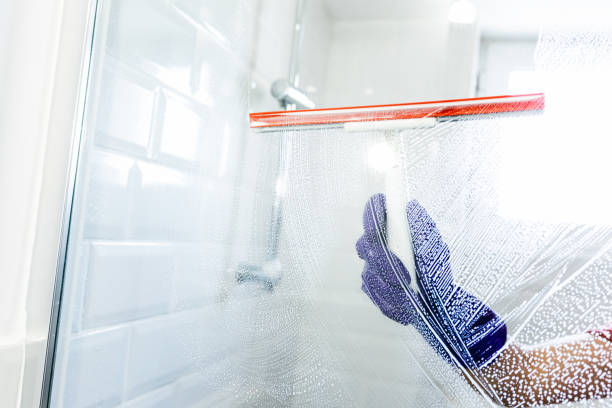
- Run a squeegee from the top of the screen downwards.
- Wipe the bottom edge if necessary.
- Leave the bathroom adequately ventilated.
This can substantially reduce the opportunity for water spots and soap deposits to accumulate.
How Often Should You Clean a Shower Screen?
A practical routine is:
After most showers: squeegee excess water.
Weekly: light clean of glass, seals and fittings.
Periodically: remove any developing limescale or deeper deposits.
The necessary frequency depends on household usage and local water hardness.
Shower Screen Cleaning in Hard-Water Areas
Hard-water households may need more frequent maintenance.
Where mineral deposits are severe throughout the property, you may also notice limescale on:
- Shower heads
- Taps
- Kettles
- Tiles
- Toilets
- Appliances
The Drinking Water Inspectorate explains that hardness is primarily caused by dissolved calcium and magnesium and notes that harder water can result in scale deposits, particularly when heated.
How to Clean a Shower Head at the Same Time
If the screen has substantial limescale, the shower head may also require descaling.
Follow its manufacturer's cleaning instructions, particularly for plated or specialist finishes.
Removable components may sometimes be descaled separately, but avoid assuming that vinegar or strong descalers are suitable for every shower finish.
Cleaning Shower Glass Before an End of Tenancy
Shower screens are particularly noticeable during an end-of-tenancy clean.
Pay attention to:
- Glass
- Lower edges
- Tracks
- Handles
- Hinges
- Seals
- Chrome fittings
- Adjacent tiles
Clean the screen early enough that you can inspect it once completely dry. Mineral deposits are often much easier to see after the water has evaporated.
Shower Screen Cleaning for Airbnb Properties
Short-let properties can benefit from cleaning the shower screen during every turnover.
A practical housekeeping routine is:
Clean → Rinse → Squeegee → Buff → Check From Different Angles
Inspect the screen in good lighting before the next guest arrives because streaks and water marks can be particularly visible on glass.
Common Shower Screen Cleaning Mistakes
Avoid:
- Steel wool
- Rough scourers
- Abrasive powders
- Using incompatible chemicals
- Leaving aggressive descaler on too long
- Mixing cleaning chemicals
- Ignoring manufacturer instructions
- Allowing dirty water to dry naturally on the glass
Also avoid assuming that every cloudy mark can be removed. Glass that has been permanently etched or a surface coating that has deteriorated may not return to its original appearance through cleaning alone.
When Cleaning Does Not Work
If the shower screen remains cloudy after appropriate cleaning, possible reasons include:
- Severe mineral build-up
- Glass etching
- Damaged surface treatment
- Scratches
- Deteriorated coating
At this stage, a professional cleaner may be able to improve the appearance, but badly damaged glass may ultimately require replacement.
How Fraser Bond Can Help
Through FraserBond.com, homeowners, landlords, Airbnb operators and property managers can explore services relating to:
- Bathroom cleaning
- Shower-screen cleaning