Hard Water Areas UK – Water Hardness Map, Limescale & Property Guide
Hard water areas in the UK are concentrated mainly across London, the South East, East Anglia and parts of the Midlands, where water passes through chalk and limestone and collects dissolved calcium and magnesium.
The Drinking Water Inspectorate (DWI) explains that these dissolved minerals cause water hardness. Its consumer guidance classifies water at 200–300 mg/l as CaCO₃ as hard and water above 300 mg/l as very hard.
For homeowners and landlords, hard water is primarily a property-maintenance issue because it can cause limescale in boilers, hot-water systems, kettles, showers and domestic appliances. Through FraserBond.com, property owners and managers can explore plumbing, boiler, water-system and property-maintenance services.
What Is Hard Water?
Hard water contains relatively high concentrations of dissolved minerals, principally:
- Calcium
- Magnesium
Rainwater is naturally relatively soft. As it moves through certain types of rock, it dissolves minerals and becomes harder.
This is why water hardness varies geographically.
The DWI confirms that local geology is an important factor and that water hardness can vary between individual supply areas.
UK Water Hardness Levels
The DWI's consumer classification provides a useful guide:
| Water hardness | Calcium carbonate concentration |
|---|---|
| Soft | Up to 100 mg/l |
| Slightly hard | 100–150 mg/l |
| Moderately hard | 150–200 mg/l |
| Hard | 200–300 mg/l |
| Very hard | More than 300 mg/l |
Because local supplies can vary, these categories are more reliable than simply assuming hardness from a town or county.
Where Are the Hard Water Areas in the UK?
Broadly, the hardest water is found across southern and eastern England.
Common hard-water regions include:
- London
- Greater London
- Kent
- Surrey
- Essex
- Hertfordshire
- Bedfordshire
- Buckinghamshire
- Berkshire
- Oxfordshire
- Cambridgeshire
- Norfolk
- Suffolk
- Lincolnshire
- Hampshire
- Wiltshire
- Dorset
- Parts of Sussex
- Parts of the Midlands
- Parts of Yorkshire and the East Riding
The pattern follows the underlying geology, although hardness can vary considerably within individual counties and even between neighbouring supply zones.
Hard Water in London
London is predominantly a hard-water area.
Much of London's water comes from sources influenced by chalk and limestone geology, resulting in relatively high concentrations of calcium and magnesium.
This is why London households commonly experience:
- Limescale around taps
- Scale inside kettles
- Shower-head deposits
- Scale around toilets
- Boiler and hot-water-system deposits
- Reduced soap lather
Some London postcode areas can exceed 300 mg/l CaCO₃, placing them within the DWI's “very hard” classification. Independent postcode datasets, for example, report readings above 330 mg/l in parts of Lewisham, Greenwich, Southwark and Bexley.
Hard Water in the South East
The South East contains many of Britain's best-known hard-water areas.
This includes significant parts of:
Kent
Much of Kent experiences hard to very hard water.
Surrey
Surrey is also predominantly associated with hard water.
Hertfordshire
Many Hertfordshire supplies are hard or very hard.
Buckinghamshire
Hard water is widespread, although individual supply zones vary.
Berkshire
Many Berkshire properties experience substantial limescale formation.
Hampshire
Hard water is common across much of Hampshire.
The exact hardness should always be checked using the property's water supplier rather than relying solely on a county-level map. The DWI specifically advises consumers to ask their water company for an accurate measurement because local variations aren't always represented on national maps.
Hard Water in East Anglia
East Anglia is another major hard-water region.
Hard-water areas commonly include parts of:
- Cambridgeshire
- Norfolk
- Suffolk
- Essex
Groundwater from chalk aquifers contributes significantly to the mineral content of supplies in this region.
As a result, limescale management can be particularly important for boilers, showers and appliances.
Hard Water in Essex
Essex contains some particularly hard water supplies.
Independent water-company-data compilations identify some Essex supply areas as exceeding 400 mg/l CaCO₃, although this should not be treated as representative of the whole county.
For an individual Essex property, postcode or supply-zone information is much more useful than the county average.
Hard Water in Cambridgeshire
Cambridgeshire is generally associated with hard to very hard water.
Properties may experience visible scale around:
- Taps
- Shower screens
- Kettles
- Toilets
- Heating equipment
Regular descaling and appropriate appliance maintenance can therefore become part of routine property management.
Hard Water in Oxfordshire
Oxfordshire is another area where hard water is widespread because of the local geology.
For landlords managing several properties, water hardness should be considered when planning maintenance for:
- Boilers
- Hot-water cylinders
- Showers
- Dishwashers
- Washing machines
Hard Water in the Midlands
The Midlands has a more mixed water-hardness profile.
Some areas receive harder groundwater supplies, while others can receive softer water from different sources.
This means neighbouring towns can experience substantially different levels of limescale.
Do not assume that every Midlands property has the same water hardness.
Is Birmingham a Hard Water Area?
Birmingham is an interesting example of why geology alone doesn't determine what comes from the tap.
A property's supplied water may originate some distance from the property itself.
Therefore, the best way to determine hardness in Birmingham or elsewhere is to check the water-quality information provided for the specific postcode by the supplying water company.
Is Manchester a Hard Water Area?
Much of Greater Manchester generally receives relatively soft water compared with London and the South East.
The regional pattern reflects the greater reliance on upland water sources.
This means Manchester households generally experience substantially less limescale than properties in many parts of London and eastern England.
Is Liverpool a Hard Water Area?
Liverpool and much of North West England generally experience softer water than London and the South East.
However, water companies can blend supplies or change sources, so postcode-level information remains preferable to broad regional assumptions.
The DWI notes that water companies may use different sources at different times, which can sometimes change the characteristics consumers notice at the tap.
Is Yorkshire a Hard Water Area?
Yorkshire has a mixed water-hardness profile.
Different areas can receive water from:
- Upland reservoirs
- Rivers
- Groundwater sources
Consequently, some locations have relatively soft water while parts further east can experience considerably harder supplies.
Is Scotland a Hard Water Area?
Much of Scotland is associated with relatively soft water compared with southern and eastern England.
This is partly because water flowing over harder igneous and metamorphic geology generally dissolves fewer calcium and magnesium compounds than water moving through chalk or limestone.
Local exceptions can still occur.
Is Wales a Hard Water Area?
Large parts of Wales have relatively soft water, particularly where supplies originate from upland reservoirs.
However, water hardness varies according to the local supply.
Property owners should therefore check the supplier's postcode-specific information rather than assuming that every Welsh property has soft water.
Why Does the UK Have Hard Water Areas?
The broad pattern is largely explained by geology.
Water moving through:
Chalk/Limestone → Dissolves Calcium and Magnesium → Harder Water
Water flowing across less soluble rock generally picks up fewer hardness minerals.
The DWI confirms that hardness is caused by dissolved calcium and magnesium and that local geology influences the hardness of the water supply.
What Is Limescale?
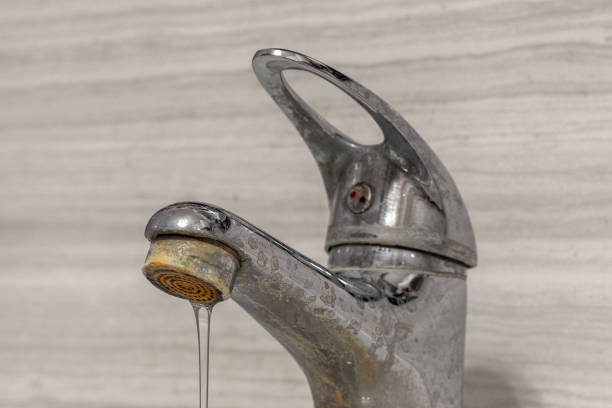
Limescale is the hard mineral deposit associated with heating hard water.
It commonly appears as a white or off-white deposit around: