Limescale - Causes, Removal and Prevention for UK Properties
Limescale is a hard, chalky deposit that commonly appears around taps, showerheads, toilets, boilers and other appliances that regularly come into contact with hard water. It can look like a minor cleaning problem, but significant limescale build-up can restrict water flow, reduce appliance efficiency and contribute to ongoing plumbing maintenance.
For homeowners, landlords and property managers, understanding what causes limescale and how to manage it can help protect bathrooms, kitchens, heating systems and water-using appliances.
What Is Limescale?
Limescale is a mineral deposit associated with hard water. Hard water contains naturally occurring dissolved minerals, particularly calcium and magnesium.
When water is heated or evaporates, mineral deposits can remain behind and gradually form the familiar white or off-white scale found around plumbing fixtures and appliances.
You may notice limescale on taps, inside kettles, around showerheads, on shower screens or around toilet bowls.
Areas supplied with harder water are generally more susceptible to visible scale accumulation.
What Does Limescale Look Like?
Limescale typically appears as a hard, crusty deposit.
It may initially look like a thin white film before developing into thicker deposits that are increasingly difficult to remove.
Around taps and shower fittings, limescale can accumulate wherever water regularly evaporates. Inside appliances and plumbing components, however, deposits may develop without being immediately visible.
This hidden accumulation can be more significant because it may restrict water movement or interfere with equipment.
What Causes Limescale?
The underlying cause is the mineral content of hard water.
Every time hard water passes through a fixture or appliance, there is an opportunity for deposits to develop. Heating the water can accelerate scale formation, which is why hot-water systems and appliances can be particularly susceptible.
The severity of the problem depends on factors including local water hardness, water temperature, usage and how regularly affected surfaces or equipment are maintained.
Limescale on Taps
Limescale on taps is one of the most visible signs of hard water.
Deposits often develop around the base of a tap, aerator and areas where water droplets repeatedly dry.
Over time, scale around an aerator can restrict water flow and make the stream uneven.
Regular cleaning can help prevent deposits becoming heavily established. Where removable components are badly scaled, they may require separate cleaning according to the manufacturer's recommendations.
Avoid using abrasive tools that could damage chrome, specialist coatings or other finished surfaces.
Limescale on Showerheads
A showerhead contains numerous small openings, making it particularly vulnerable to mineral deposits.
As limescale accumulates, individual jets may become restricted. This can result in uneven spray patterns or apparently reduced shower performance.
Cleaning the showerhead before the openings become heavily obstructed can help maintain water flow.
If poor pressure continues after visible scale has been removed, the cause may be elsewhere within the plumbing or shower system and should not automatically be attributed to limescale.
Limescale in Toilets
Toilet limescale commonly develops around the waterline and inside the bowl.
Deposits can become stained over time, sometimes producing brown or discoloured marks that ordinary toilet cleaning does not easily remove.
Persistent deposits may require an appropriate descaling product that is suitable for the toilet surface.
Never mix different cleaning chemicals, particularly products containing bleach with acidic cleaners or descalers. Mixing incompatible chemicals can produce dangerous gases.
Limescale in Pipes
Homeowners sometimes worry about limescale in pipes when water flow begins to decline.
Mineral deposits can develop within plumbing and hot-water components, although the severity depends on the water supply, pipework, temperatures and system design.
A noticeable reduction in water pressure should not automatically be blamed on scale. Other potential causes include valves, filters, local restrictions, plumbing defects and supply issues.
Where several fixtures are affected or the problem is worsening, professional diagnosis may be more useful than attempting aggressive DIY descaling.
Can Limescale Damage a Boiler?
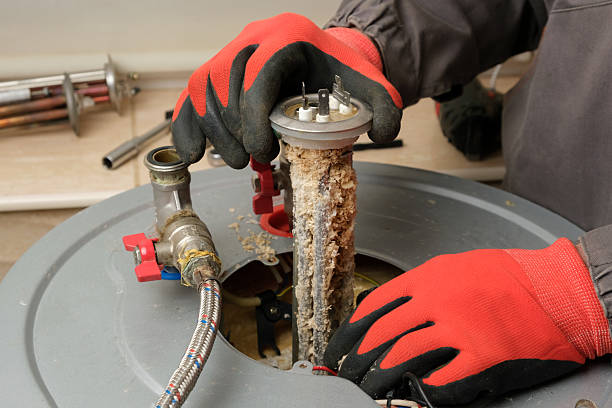
Scale can be relevant to heating and hot-water equipment, particularly where water is heated repeatedly.
Deposits on heat-transfer surfaces can interfere with efficient operation and potentially contribute to equipment problems.
However, boilers and heating systems vary considerably. Homeowners should follow the manufacturer's maintenance requirements and use appropriately qualified heating professionals where boiler servicing or repairs are required.
For landlords, regular maintenance of heating and hot-water systems is particularly important as part of effective property management.
Limescale in Kettles and Appliances
Kettles provide one of the clearest demonstrations of scale formation because water is repeatedly heated in the same container.
Similar deposits can affect other water-using appliances, including washing machines, dishwashers and coffee machines.
Manufacturers may recommend periodic descaling, particularly in hard-water locations.
Following the appliance manufacturer's instructions is important because unsuitable chemicals or cleaning techniques can damage internal components or seals.
How to Remove Limescale
The correct limescale removal method depends on the affected surface or appliance.
Mild deposits on suitable household surfaces may respond to an appropriate acidic cleaner or commercially available limescale remover. Some removable fixtures can also be descaled separately.
Before applying any product, check whether it is suitable for the material being cleaned.
Natural stone, specialist finishes and some metals can be damaged by acidic products. Testing an appropriate cleaner in an inconspicuous area and following manufacturer instructions can help prevent accidental surface damage.
For substantial internal plumbing or appliance problems, professional servicing may be more appropriate than household cleaning products.
How to Prevent Limescale
Completely preventing mineral deposits can be difficult in a hard-water area, but regular maintenance can reduce accumulation.
Useful measures include:
- Wiping taps and shower surfaces after use
- Cleaning showerheads before jets become obstructed
- Descaling suitable appliances according to manufacturer guidance
- Repairing dripping taps that continually leave water deposits
- Cleaning toilet deposits before they become heavily established
- Considering suitable water-treatment options where scale is persistent
- Maintaining boilers and hot-water equipment appropriately
Regular light cleaning is generally easier than removing years of accumulated scale.
Water Softeners and Limescale
Properties with persistent hard-water problems may consider a water softener or another suitable water-treatment system.
Traditional ion-exchange water softeners reduce the minerals responsible for water hardness. This can substantially reduce scale formation in appropriate installations.
However, installation requires consideration of plumbing configuration, drinking-water arrangements, space, drainage, ongoing salt requirements and maintenance.
A professional installer can assess whether a water softener is suitable for the property and how it should be configured.
Limescale in Rental Properties
Limescale can become a recurring maintenance issue in rental accommodation, particularly where bathrooms and kitchens receive heavy use.
Landlords can reduce problems by ensuring taps, showers, toilets and appliances are in good condition before a tenancy begins. Clear cleaning and maintenance guidance can also help tenants manage ordinary scale accumulation.
Where limescale contributes to malfunctioning plumbing or landlord-supplied equipment, the underlying maintenance issue may require investigation rather than cosmetic cleaning alone.
Keeping inventories, inspection records and maintenance documentation can help distinguish routine cleaning from equipment or plumbing defects.
Fraser Bond supports landlords through lettings, compliance guidance and property advisory services, helping owners manage rental assets effectively.
Limescale in Commercial Properties
Scale can also create maintenance challenges in offices, hospitality businesses, apartment buildings and other commercial premises.
Properties with significant hot-water demand may have numerous fixtures and appliances exposed to mineral accumulation.
Preventative maintenance can help reduce unexpected equipment problems and keep customer-facing bathrooms and kitchens presentable.
Commercial landlords and facilities managers may therefore benefit from incorporating scale inspection and appropriate descaling into planned property maintenance.
Limescale When Buying a Property
Visible limescale is not normally a major structural property defect, but substantial accumulation can provide clues about water conditions and maintenance.
Buyers viewing a property may notice heavily scaled taps, showerheads, toilets or appliances.
Rather than focusing solely on cosmetic deposits, consider whether hot-water equipment and plumbing have been properly maintained.
Where there are also problems with poor water flow, leaking fixtures or malfunctioning equipment, further investigation may be appropriate.
Limescale and Property Maintenance Costs
Individually, many limescale problems are inexpensive to resolve. Across a large rental portfolio, however, repeated replacement of taps, showerheads, appliances and plumbing components can contribute to ongoing maintenance expenditure.
Preventative maintenance can therefore be particularly valuable for landlords and professional property managers.
Investors assessing refurbishment requirements should also consider the condition of bathrooms, kitchens, heating systems and supplied appliances when estimating capital expenditure.
When Should You Call a Plumber?
Visible scale around a tap or showerhead will not usually require professional plumbing assistance.
A plumber may be appropriate when the problem extends beyond ordinary surface deposits.
Persistent poor water flow, recurring problems with valves or fixtures, leaking plumbing or suspected internal restrictions can justify further investigation.
If the issue involves a boiler or another specialist heating appliance, use an appropriately qualified professional rather than attempting to dismantle or chemically clean the equipment yourself.
Property Management Support from Fraser Bond
Limescale is a routine property maintenance concern, but managing smaller issues effectively can help protect bathrooms, kitchens, plumbing fixtures and appliances over the longer term.
FraserBond.com supports homeowners, landlords, buyers, sellers and investors with property sales, lettings, compliance support and investment advisory services.
For landlords, Fraser Bond combines property management insight with location-specific market knowledge, helping owners prepare and position rental properties effectively. Investors can also access professional support when assessing acquisitions, refurbishment requirements and opportunities across the London property market.
Visit FraserBond.com to explore properties for sale and rent and access professional property guidance.