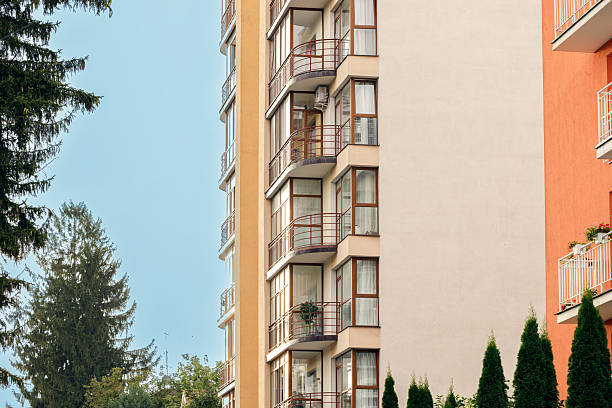
Young Adults Learning Disability Accommodation - Property Requirements and Opportunities
Finding suitable accommodation for young adults with learning disabilities
Young adults with learning disabilities may need accommodation that provides a balance between independence, safety and appropriate support. The right property can allow a young person to develop everyday living skills while receiving assistance that reflects their individual needs.
For landlords, investors, developers and care providers, finding suitable young adults learning disability accommodation requires more than simply identifying a property with enough bedrooms. Layout, accessibility, location, privacy, communal space and the proposed support model all need to work together.
Fraser Bond can help property owners and specialist providers identify, assess and prepare suitable accommodation for young adults with learning disabilities across London and the wider UK.
What is young adults learning disability accommodation?
Young adults learning disability accommodation refers to housing designed, adapted or selected to support young people with learning disabilities as they move towards greater independence.
Accommodation can take several forms, including:
-
Self-contained supported living flats
-
Small shared houses
-
Specialist apartments
-
Purpose-designed supported housing
-
Transitional accommodation
-
Larger properties divided into individual living units
The appropriate model depends on the needs of the residents and the level of support they require.
CQC guidance on services for people with learning disabilities and autistic people places emphasis on choice, inclusion, control and independence. It also recognises that some people may prefer to live alone with appropriate support, while others may benefit from small-scale shared housing.
Property requirements for young adults with learning disabilities
There is no universal property specification because residents can have very different needs.
However, suitable accommodation may need:
-
Accessible entrances and circulation areas
-
Appropriately sized bedrooms
-
Private bathrooms where appropriate
-
Practical kitchens
-
Safe communal areas
-
Good lighting and ventilation
-
Secure doors and windows
-
Suitable fire safety arrangements
-
Reliable heating and hot water
-
Space for support staff where required
-
Low-maintenance outdoor space
-
Good access to public transport and local amenities
The property should be comfortable and residential rather than unnecessarily institutional.
Self-contained flats for young adults
Self-contained accommodation can give young adults greater privacy and control over their daily lives while allowing support to be provided according to individual requirements.
A development might contain several flats within the same building, with residents having their own living space and access to shared facilities or support arrangements where appropriate.
CQC examples show supported living services operating from self-contained flats where housing and care are provided under separate arrangements.
This type of arrangement can be particularly useful for young adults who are learning to manage cooking, cleaning, budgeting, appointments and other everyday responsibilities.
Shared accommodation for learning disabilities
Shared housing can also be appropriate where residents benefit from living alongside a small number of other people.
The property should provide enough private space while making shared areas practical and comfortable. Bedrooms should offer privacy, while kitchens, lounges and outdoor areas can provide opportunities for social interaction.
CQC guidance notes that where people do not want to live alone, or living alone is unsuitable, small shared housing with a domestic feel may be appropriate.
The number of residents should therefore be determined by individual needs and the service model rather than simply trying to maximise occupancy.
Location is important
The location of learning disability accommodation can directly affect independence.
A property close to shops, public transport, colleges, employment opportunities, healthcare services and community facilities may allow residents to participate more fully in everyday life.
For London properties, access to buses, Underground services and other transport connections can be particularly valuable. A well-connected location may reduce dependence on staff for routine journeys.
Local demand should also be investigated before acquiring or converting a property. A building may be physically suitable but poorly positioned for the needs of the intended residents.
Supporting the transition into adulthood
Moving from family accommodation, residential care, education or children's services into adult accommodation can be a major transition.
The property should therefore support gradual development of independence rather than simply providing somewhere to live.
Depending on the resident's needs, support may include:
-
Cooking and meal preparation
-
Managing household tasks
-
Shopping
-
Budgeting
-
Medication routines
-
Using public transport
-
Maintaining a tenancy
-
Accessing education or employment
-
Building social relationships
-
Participating in community activities
The accommodation should allow these skills to develop in a realistic home environment.
Adapting property for young adults with learning disabilities
An ordinary residential property may sometimes be adapted to meet the needs of a supported living provider.
Potential works can include:
-
Improving accessibility
-
Modifying bathrooms
-
Installing safer kitchen arrangements
-
Reconfiguring rooms
-
Improving lighting
-
Upgrading electrical systems
-
Improving fire safety
-
Installing appropriate security systems
-
Repairing damp or structural problems
-
Creating suitable communal areas
-
Improving entrances and circulation routes
The scope of work should be established before agreeing a lease or purchase, particularly where substantial alterations are required.
CQC considerations
The regulatory position depends on the service being delivered.
CQC describes supported living as arrangements where a person lives in their own home and receives care or support intended to promote independence. The care provided may be regulated by CQC, while the accommodation itself is generally not regulated by CQC as a care home.
This distinction is important when landlords and providers are planning learning disability accommodation.
Where regulated personal care is being provided, the provider needs to establish the applicable CQC registration and compliance requirements. The proposed service should be considered alongside the property rather than treating the building as a standalone investment.
Leasing property to a learning disability provider
Landlords considering leasing accommodation to a specialist provider should understand how the property will actually operate.
Important questions include:
-
How many residents will live there?
-
Will accommodation be shared or self-contained?
-
What support will residents receive?
-
Will staff be present overnight?
-
Who will manage repairs?
-
What alterations are required?
-
Who is responsible for compliance works?
-
What tenancy or occupancy arrangements are proposed?
-
Are planning or licensing considerations relevant?
A clear agreement can help prevent disputes over maintenance, alterations and operational responsibilities.
Investing in learning disability accommodation
Specialist accommodation can form part of a property investment strategy, but investors should assess the underlying property as carefully as the proposed operating arrangement.
Location, condition, configuration, refurbishment costs, lease terms, provider experience and local demand can all affect the viability of a project.
The long-term suitability of the property should also be considered. A building that can only work for one very specific arrangement may have different investment characteristics from a flexible residential property that could accommodate several future uses.
Finding learning disability accommodation in London
London contains a wide range of residential properties that may potentially be suitable for young adults with learning disabilities, from terraced houses and converted buildings to purpose-designed apartments.
However, suitability should be assessed against the intended residents and service model before a property is acquired or leased.
Fraser Bond can assist landlords, investors, developers and supported living providers with property searches, property assessment, refurbishment coordination and ongoing property requirements.
Creating a suitable home, not an institution
Young adults with learning disabilities need accommodation that supports ordinary daily life while providing the right level of assistance.
A successful property should provide privacy, dignity, safety and opportunities for independence. It should also connect residents with the surrounding community rather than unnecessarily isolating them.
For property owners and care providers, this means considering the resident experience from the earliest stage of a project.
Fraser Bond can support property owners and specialist providers looking for young adults learning disability accommodation, helping assess potential properties and coordinate the property requirements needed for a practical supported living environment.