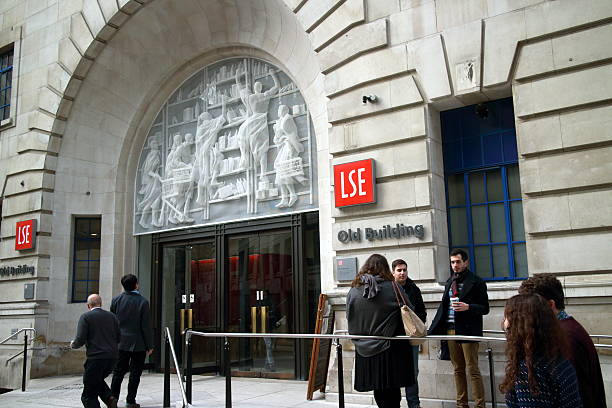
How to Apply to LSE from Overseas - International Student Admissions Guide
A practical guide to applying to the London School of Economics from abroad, covering UCAS, international qualifications, academic requirements, personal statements, admissions tests, English requirements, visas and London accommodation
Applying to the London School of Economics and Political Science (LSE) from overseas is highly competitive. International students follow the same central UCAS application route as other undergraduate applicants, but they must also carefully check LSE's country-specific qualification requirements and any course-specific admissions tests.
For 2027 entry, LSE's deadline for full and equal consideration is 13 January 2027 at 18:00 GMT. Although international applicants can technically submit UCAS applications later in the cycle, LSE strongly advises all applicants to apply by the January deadline because places remaining after that date are rare.
Apply Through UCAS
LSE does not accept direct undergraduate applications. Students applying from overseas must submit their application through UCAS.
LSE's UCAS institution code is L72. Applicants can make up to five UCAS choices, although LSE advises students applying to more than one LSE programme to choose closely related courses because the same personal statement needs to demonstrate a clear academic interest.
For 2027 entry, the key dates include:
-
September 2026 - UCAS applications open
-
13 January 2027 at 18:00 GMT - LSE equal-consideration deadline
-
5 May 2027 - final date by which LSE aims to make decisions
-
12 May 2027 - UCAS deadline for final decisions on applications
LSE does not normally participate in UCAS Extra or Clearing, making early application particularly important.
Check Your International Qualification
Before applying, overseas students should confirm that their qualification is accepted by LSE and meets the requirements for their chosen degree.
LSE accepts a wide range of international qualifications, but requirements vary by country and programme. Applicants should check:
-
Required grades
-
Required subjects
-
Mathematics requirements
-
English-language requirements
-
Qualification equivalency
-
Foundation or pathway options
-
Any additional admissions assessment
A qualification that allows direct entry to another UK university may not necessarily meet LSE's requirements.
For students applying from countries such as Nigeria, checking the country-specific requirements before selecting an LSE course is especially important.
Choose the Right LSE Programme
LSE is particularly competitive in subjects such as:
-
Economics
-
Finance
-
Accounting
-
Management
-
Politics
-
International relations
-
Law
-
Mathematics
-
Data science
-
Social policy
-
Sociology
-
Geography
Entry requirements differ between programmes, so students should select their course before building their application strategy.
For example, some programmes have specific mathematics requirements, while others may require an admissions test such as the LNAT or TMUA.
Build a Strong Academic Profile
LSE places considerable emphasis on academic achievement, academic potential and motivation.
The university states that applications are assessed individually using information including predicted and achieved grades, subject combinations, personal statements, contextual information and the UCAS reference.
Students should therefore focus on:
-
Strong academic results
-
Relevant subject combinations
-
Independent academic reading
-
Subject-related projects
-
Relevant competitions
-
Academic essays or research
-
Genuine engagement with their chosen field
Meeting the published entry grades does not guarantee an offer. LSE received approximately 34,000 applications for around 1,900 places in 2026, demonstrating the level of competition.
Write a Focused Personal Statement
The personal statement is particularly important because LSE does not normally interview undergraduate applicants.
Students should use it to demonstrate genuine academic interest in their chosen subject rather than simply listing extracurricular achievements.
Useful material could include:
-
Books and academic articles
-
Independent research
-
Relevant projects
-
Subject-related competitions
-
Academic lectures
-
Relevant work experience
-
Volunteering connected to the subject
-
Ideas or debates that influenced their academic interests
The strongest applications explain what the student learned and how their thinking developed.
LSE does not accept supplementary personal statements, so applicants applying to multiple LSE programmes should ensure that their choices are sufficiently related for one statement to remain relevant to all of them.
Check Whether You Need an Admissions Test
Some LSE programmes require or recommend additional assessments.
For 2027 entry, the TMUA is mandatory for:
-
BSc Economics
-
BSc Econometrics and Mathematical Economics
The TMUA is recommended but not mandatory for several other quantitative programmes, including Mathematics and Economics, Mathematics with Economics, Data Science and Financial Mathematics and Statistics.
The LNAT is required for the LLB Law programme. For September 2027 entry, applicants can take the LNAT between 1 September and 31 December 2026, and must sit the test by 31 December for equal consideration.
Some applicants with particular international qualifications may also be asked to take LSE's Undergraduate Admissions Assessment (UGAA).
Students should identify any required test before submitting their application and allow enough time for registration and preparation.
Meet the English-Language Requirement
International students may need to provide evidence of English-language proficiency.
LSE states that applicants do not necessarily need to provide English-language evidence when they initially apply. Where it is required, the university can make the offer conditional on achieving the required English level before registration.
Students should therefore check:
-
Accepted English tests
-
Required overall scores
-
Minimum component scores
-
Test validity periods
-
Whether previous education satisfies the requirement
This should be planned early, particularly if the applicant needs to take an English test after submitting UCAS.
Prepare Your UCAS Reference and Education History
LSE requires a complete and accurate UCAS application.
International applicants should provide their full education history and declare previous and current qualifications accurately.
The academic reference should come from the applicant's school or college rather than an education agent or consultant. For international students, LSE also recommends that the reference comment on English-language ability where relevant.
Students currently completing their qualifications can apply using predicted grades. Final examination results do not necessarily need to be available when the UCAS application is submitted.
What Happens After an LSE Offer?
Most LSE undergraduate offers are conditional, particularly where students are still completing their qualifications.
An offer may require the student to achieve particular grades, provide qualification evidence or satisfy an English-language condition.
Overseas students should then prepare for:
-
Final examination results
-
Student visa requirements
-
Financial planning
-
Accommodation
-
Travel to London
-
University registration
LSE does not issue a CAS immediately after an offer. Overseas offer holders must first firmly accept the offer and complete the required verification and financial forms before the CAS process can begin.
Apply for a UK Student Visa
Students who need immigration permission to study in the UK will normally need a Student visa.
The visa process should be started only after the necessary university documentation is available. International students should prepare their passport, financial evidence and other required documents well in advance.
Because immigration requirements can change, applicants should always check the current rules applicable to their circumstances before submitting a visa application.
Arrange Accommodation in London
LSE is located in central London, where accommodation costs can be significant. International students should therefore consider housing as part of their overall study budget.
Possible options include:
-
LSE or university-related accommodation
-
Purpose-built student accommodation
-
Private rented rooms
-
Shared flats
-
Private studios or apartments
When comparing accommodation, consider rent alongside deposits, bills, transport, tenancy length and furnishing costs.
Students arranging accommodation from overseas should also carefully review tenancy terms and payment requirements before committing to a property.
How Fraser Bond Can Help International LSE Students
Applying to LSE and relocating to London are separate processes, but international students often need to organise both at the same time.
Fraser Bond can provide practical property and relocation support for international students and families, including accommodation searches, rental arrangements and wider property requirements in London and across the UK.
Fraser Bond does not make LSE admissions decisions or guarantee university offers. Students should follow LSE's official admissions requirements while using professional property support to make their transition to London more organised.
Start Your LSE Application Early
Applying to LSE from overseas requires more than completing a UCAS form. Students should first choose the right programme, check their international qualification, prepare a strong academic application and identify any admissions test.
For 2027 entry, the most important deadline is 13 January 2027 at 18:00 GMT. International applicants are strongly advised to meet this deadline because LSE says it is rare for places to remain after January.
Early preparation also gives students time to organise English-language evidence, funding, Student visa arrangements and London accommodation.