Old Pubs for Redevelopment UK - How to Find and Assess Opportunities
Explore old pubs for redevelopment UK investors can consider, including vacant public houses, pub-to-residential conversions, mixed-use schemes, refurbishment projects and planning considerations with Fraser Bond.
What Are Old Pubs for Redevelopment?
Old pubs can present unusual property development opportunities because they often occupy prominent sites with established buildings, generous floor areas, outdoor space and locations within existing communities.
Some pubs become available because of declining trade, changing local demand, retirement, redevelopment of the surrounding area or the closure of a larger pub business.
For an investor or developer, an old pub may offer several possible strategies:
-
Refurbishing and reopening the pub
-
Converting upper floors into accommodation
-
Converting the building to another commercial use
-
Creating residential accommodation
-
Developing a mixed-use scheme
-
Redeveloping the wider site
-
Retaining the historic frontage while adapting the interior
-
Demolishing and replacing the building where planning policy allows
However, pubs require particularly careful planning due diligence. A property being closed or run-down does not automatically mean that it can be converted into flats or demolished.
England's current National Planning Policy Framework, published in August 2026, specifically recognises public houses among local community facilities and strengthens the policy context around their retention.
Why Old Pubs Can Be Interesting Development Sites
Many traditional pubs were built before modern development standards and can occupy larger plots than their current use requires.
A typical old pub might include:
-
Main trading area
-
Bar and kitchen
-
Function room
-
Cellar
-
Storage
-
Staff accommodation
-
Upper-floor bedrooms or living space
-
Rear yard
-
Garden
-
Car park
-
Ancillary buildings
This can create several potential value-creation routes.
For example, a pub with a large rear car park could potentially provide additional development land, subject to planning. A pub with unused upper floors could have accommodation potential. A building in a town centre could potentially form part of a wider mixed-use redevelopment.
The opportunity needs to be assessed against the site's planning history, local policies, physical constraints and market demand rather than simply the size of the plot.
Finding Old Pubs for Redevelopment UK
There are several ways investors can identify old pubs with redevelopment potential.
Commercial Property Agents
Commercial property agents can market:
-
Closed pubs
-
Freehold pubs
-
Former public houses
-
Pub investment properties
-
Development sites
-
Pubs requiring refurbishment
-
Mixed-use pub properties
Some opportunities may be marketed specifically as development opportunities, while others may initially be offered as going-concern or investment properties.
Property Auctions
Auctions can include vacant pubs, former licensed premises and buildings requiring substantial refurbishment.
Before bidding, investigate the legal pack, title, planning history, existing use, surveys and potential redevelopment strategy.
A low guide price does not necessarily indicate a low total project cost.
Local Authority Planning Portals
Planning portals can be useful for identifying pubs where previous owners have already explored:
-
Change of use
-
Residential conversion
-
Demolition
-
Extensions
-
New-build housing
-
Mixed-use development
-
Refurbishment
Previous applications can reveal both opportunities and planning objections.
Off-Market Opportunities
Owners of struggling or closed pubs may consider selling privately before placing the property on the wider market.
Building relationships with commercial agents, property professionals and local operators can help investors identify these opportunities.
Pub-to-Residential Conversion
One of the most obvious strategies for an old pub is residential conversion.
However, pub-to-residential development needs careful planning assessment.
Unlike certain qualifying commercial uses, pubs have specific planning treatment. Government guidance on flexible high-street use explains that pubs are among the uses for which full planning permission can be required when the building is repurposed.
This means an investor should not assume that an old pub can simply be converted into flats under general permitted development rights.
A planning application may need to address:
-
Loss of a community facility
-
Local planning policy
-
Viability of the pub use
-
Marketing evidence
-
Residential amenity
-
Design
-
Parking
-
Access
-
Noise
-
Daylight
-
Outdoor space
-
Refuse storage
-
Fire safety
-
Building Regulations
Proving That the Pub Is No Longer Viable
This can be one of the most important issues when seeking permission to change an old pub into another use.
The current NPPF states that proposals should not result in the loss of key community facilities, including public houses, unless there is no reasonable prospect of retaining the facility because it is insufficiently supported or no longer viable, with evidence of reasonable marketing for existing use where viability is the issue.
This means an investor should investigate the pub's operating history and local market rather than relying solely on the fact that it is currently closed.
Useful evidence may include:
-
Previous trading performance
-
Closure history
-
Previous asking prices
-
Marketing periods
-
Offers received
-
Comparable pub transactions
-
Local demand
-
Operating costs
-
Business rates
-
Condition of the premises
-
Evidence of unsuccessful attempts to sell or let the pub for continued use
The precise evidence required can depend on the local authority's planning policies.
Asset of Community Value Considerations
Investors should always check whether the pub has been nominated or listed as an Asset of Community Value.
An ACV designation can affect the development process and the ability to change or demolish the property.
Government policy has historically recognised the community significance of pubs, while 2026 reforms have continued to strengthen protections for valued local assets. A £61 million Community Right to Buy Fund was announced in June 2026 to help communities acquire pubs, shops and other local assets at risk of closure.
The current planning position therefore needs to be checked before assuming that an old pub is freely available for redevelopment.
Old Pub With Residential Development Potential
Some pub sites can have potential beyond conversion of the existing building.
For example, a large site could potentially support:
-
New houses
-
Apartments
-
Townhouses
-
A smaller replacement pub with housing
-
Mixed-use development
-
Commercial space with residential above
-
New community facilities
The amount of development that may be possible will depend on:
-
Site area
-
Local housing policies
-
Density
-
Building height
-
Surrounding development
-
Access
-
Parking
-
Design
-
Heritage
-
Neighbouring properties
-
Affordable housing requirements where applicable
-
Infrastructure
A developer should therefore assess the entire site rather than only the pub building.
Retaining the Pub and Developing Around It
Redevelopment does not always mean losing the pub.
A potentially more suitable strategy can sometimes involve retaining the pub while developing unused or underused parts of the site.
Examples include:
-
New flats above a refurbished pub
-
Housing on a large rear garden
-
Development on surplus car parking
-
New residential units alongside an existing pub
-
Refurbished pub with new commercial accommodation
-
Mixed-use redevelopment
This can sometimes provide a different planning proposition from complete loss of the public house.
However, new residential development next to an operating pub also needs careful consideration of noise, servicing, opening hours and residential amenity.
Old Pubs With Large Gardens or Car Parks
The external land can be particularly important.
A traditional pub may have a large:
-
Rear garden
-
Side garden
-
Car park
-
Beer garden
-
Service yard
-
Storage area
These areas can sometimes appear underused compared with the value of surrounding residential land.
Potential uses could include additional parking, extensions, ancillary accommodation or new development.
However, outdoor areas can also contribute to the viability and character of the pub. A proposal that removes too much parking or garden space could undermine the existing use and create planning objections.
Listed and Historic Pubs
Some old pubs have architectural or historic significance.
Before planning redevelopment, check whether the building is:
-
Listed
-
In a conservation area
-
A locally listed building
-
Identified as a heritage asset
-
Within a historic townscape
-
Subject to specific design policies
A listed building can require listed building consent in addition to planning permission for certain works.
Historic features may include:
-
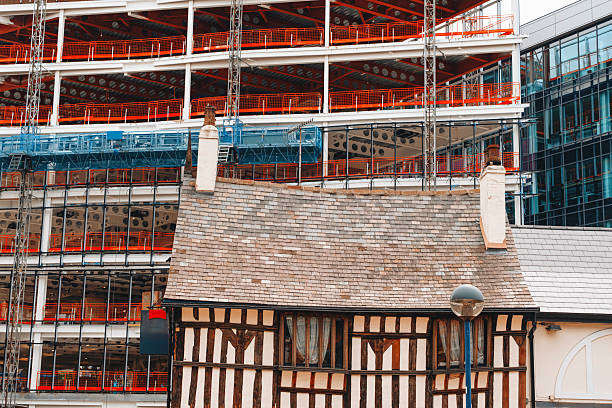
Timber frontage
-
Traditional signage
-
Original windows
-
Decorative interiors
-
Cellars
-
Historic fireplaces
-
Traditional bar fittings
-
Architectural detailing
Where these features contribute to the building's significance, redevelopment may need to retain or incorporate them.
Pub Refurbishment as an Alternative to Redevelopment
Sometimes the strongest opportunity is not conversion at all.
An old pub may become commercially viable through refurbishment and repositioning.
Works could include:
-
New kitchen
-
Bar refurbishment
-
Toilets
-
Electrical upgrades
-
Heating
-
Insulation
-
Roof repairs
-
External decoration
-
New furniture
-
Garden improvements
-
Accessibility upgrades
-
Energy-efficiency improvements
-
New accommodation
For an investor looking for an operational property rather than a planning-led development, this can produce a very different investment proposition.
Fraser Bond can assist with refurbishment, building works, contractor coordination, property management and wider property services where appropriate.
How to Assess Planning Potential
Before purchasing an old pub for redevelopment, review the planning position carefully.
Check the Local Plan
Look for policies covering:
-
Public houses
-
Community facilities
-
Town centres
-
Housing
-
Mixed-use development
-
Heritage
-
Conservation
-
Employment
-
Regeneration
-
Design
-
Parking
-
Transport
Local policies can impose requirements beyond the national planning framework.
For example, some London boroughs have specific policies protecting pubs with heritage, social, cultural or economic value. The London Plan's Policy HC7 requires boroughs to protect qualifying public houses and says proposals for their loss should generally be supported by authoritative evidence that there is no realistic prospect of continued pub use.
Review Planning History
Look at every relevant application associated with the property.
Check for:
-
Change-of-use applications
-
Residential proposals
-
Demolition applications
-
Extensions
-
Previous refusals
-
Appeals
-
Approved schemes
-
Enforcement notices
Previous decisions can reveal what the planning authority considers important.
Check the Lawful Use
A pub that has been closed for some time may raise questions about its lawful use and planning history.
Obtain appropriate evidence where necessary before basing an acquisition on a particular change-of-use strategy.
Development Appraisal for an Old Pub
The purchase price is only one component of the project.
A proper appraisal should consider:
-
Purchase price
-
SDLT where applicable
-
Legal fees
-
Survey costs
-
Planning consultant
-
Architect
-
Structural engineer
-
Building control
-
Construction
-
Demolition
-
Asbestos removal
-
Contamination
-
Finance
-
Holding costs
-
Utilities
-
Insurance
-
Professional fees
-
Section 106 obligations where applicable
-
Community Infrastructure Levy where applicable
-
Marketing
-
Contingency
The expected end value should then be compared with the total cost of delivering the project.
Illustrative Old Pub Development Example
Consider a hypothetical old pub purchased for £550,000.
Suppose the proposed project involves:
-
Acquisition costs: £35,000
-
Planning and professional fees: £75,000
-
Refurbishment and conversion: £350,000
-
External works: £70,000
-
Finance and holding costs: £65,000
-
Contingency: £55,000
The estimated total project cost would be approximately £1.2 million.
If the completed development could realistically achieve a GDV of £1.5 million, the headline difference would be £300,000 before selling costs, tax and the developer's required return.
This is purely illustrative. Actual viability should be based on professional valuation evidence, planning advice, surveys and contractor quotations.
Old Pubs in London and Major UK Cities
London
London's older pubs can occupy valuable town-centre, high-street and residential locations.
However, London has particularly strong policy protections for pubs with heritage, social, cultural or economic value. Investors should therefore investigate the relevant borough policy before assuming residential redevelopment is achievable.
Manchester
Manchester and surrounding areas contain traditional pubs within established residential neighbourhoods, town centres and regeneration areas.
Potential strategies can include refurbishment, mixed-use schemes and redevelopment of larger pub sites where planning policy supports the proposal.
Birmingham
Birmingham has a wide range of traditional pubs and former licensed premises, including properties within established residential and regeneration areas.
Site size, transport access and surrounding development can influence redevelopment potential.
Bristol, Leeds and Liverpool
These cities contain established town centres and residential neighbourhoods where older pubs can sometimes become redevelopment or refurbishment opportunities.
Local planning policies protecting community facilities should be checked before acquisition.
Glasgow and Edinburgh
Scotland has a separate planning system and property taxation framework. Investors should assess the relevant local development plan and planning policies before pursuing a pub redevelopment project.
Land and Buildings Transaction Tax applies in Scotland rather than Stamp Duty Land Tax.
Common Mistakes When Buying Old Pubs for Redevelopment
Assuming a Closed Pub Can Automatically Become Housing
Closure does not remove planning considerations or community-facility policies.
Ignoring Asset of Community Value Status
An ACV designation can materially affect the development process.
Focusing Only on the Building
The garden, car park, access and surrounding land can have major implications for the site's value.
Underestimating Refurbishment Costs
Old pubs can contain complex electrical, plumbing, structural, fire-safety and asbestos issues.
Ignoring Heritage
A historic pub may require specialist planning and conservation advice.
Overestimating Residential Value
GDV should be based on realistic local comparables rather than optimistic asking prices.
Buying Before Planning Due Diligence
The most important question is not simply whether the pub is cheap. It is whether the proposed development can realistically be delivered at a commercially viable cost.
How Fraser Bond Can Help With Old Pub Redevelopment
Fraser Bond works with property owners, investors, landlords and developers across London and the wider UK.
For old pub redevelopment projects, Fraser Bond can