


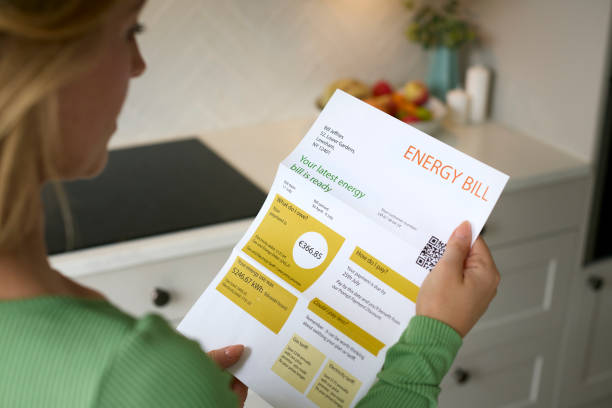
Energy Bills Support Scheme - UK Government Help with Gas and Electricity Costs in 2026
The Energy Bills Support Scheme is a widely searched term among UK households looking for government assistance with rising gas and electricity costs. Although the original Energy Bills Support Scheme was a temporary programme introduced during the energy crisis, several other forms of financial assistance remain available in 2026.
These include the Warm Home Discount, Winter Fuel Payment, Cold Weather Payments, local authority support and assistance offered by energy suppliers.
For homeowners, tenants, landlords and property investors, understanding which schemes are currently available can help with household budgeting, financial planning and managing energy costs.
Fraser Bond supports property owners, landlords and investors with residential lettings, property management, sales and real estate advisory services through FraserBond.com.
What Is the Energy Bills Support Scheme?
The Energy Bills Support Scheme, commonly abbreviated to EBSS, was introduced by the UK government to help households manage exceptionally high electricity and gas prices.
The original programme provided eligible domestic electricity customers in Great Britain with a total discount of £400 during the 2022–2023 winter period.
Payments were distributed through electricity suppliers, generally as automatic bill reductions or support for prepayment customers.
The original scheme has now ended.
Households searching for an Energy Bills Support Scheme application in 2026 should understand that the previous £400 payment is not an ongoing annual benefit.
Instead, assistance is available through other government programmes and supplier support arrangements.
Is the Energy Bills Support Scheme Still Available in 2026?
The original £400 Energy Bills Support Scheme is no longer operating.
However, the government continues to provide targeted assistance to eligible households.
The most relevant schemes include:
-
Warm Home Discount, providing £150 towards eligible energy bills.
-
Winter Fuel Payment for qualifying older people.
-
Cold Weather Payments for certain benefit recipients during qualifying cold weather.
-
Local council assistance with essential household costs.
-
Energy supplier hardship funds and affordable repayment arrangements.
-
Energy efficiency grants and improvement schemes, where available.
Eligibility varies, and not every household will qualify for every form of assistance.
Warm Home Discount Scheme 2026–2027
The Warm Home Discount provides a £150 reduction in eligible household energy bills.
The scheme is continuing for winter 2026–2027 and has been extended through to winter 2030–2031.
In England and Wales, qualifying households generally receive the discount automatically when the eligibility conditions are satisfied.
The discount is usually applied to the electricity account rather than paid directly into a bank account.
For households using prepayment meters, support may be provided through an appropriate credit or voucher arrangement.
The eligibility rules differ between England, Wales and Scotland.
Who Qualifies for the Warm Home Discount?
For winter 2026–2027, eligibility in England and Wales is generally assessed using circumstances on 23 August 2026.
The household must meet the relevant requirements concerning its electricity supplier, the account holder and qualifying means-tested benefits.
These include Universal Credit, Housing Benefit, Pension Credit and income-related Employment and Support Allowance.
The account normally needs to be held in the name of the eligible person or their partner.
Receiving a qualifying benefit does not necessarily establish eligibility if the other conditions are not met.
Households should check the applicable rules and contact their supplier if they believe they have been overlooked.
Do You Need to Apply for the Warm Home Discount?
Most eligible households in England and Wales do not need to submit a separate application.
The discount is generally arranged automatically.
However, some customers may be asked to provide additional information.
In Scotland, certain eligible households may need to apply directly through their participating electricity supplier.
Customers should be cautious of messages requesting bank details to release a Warm Home Discount payment.
The discount is ordinarily applied to the energy account, not transferred as a cash payment.
Winter Fuel Payment 2026–2027
The Winter Fuel Payment helps qualifying older people with winter heating costs.
For winter 2026–2027, eligible people in England and Wales may receive between £100 and £300, depending on their circumstances.
The relevant age threshold is based on being born on or before 27 June 1960.
Most eligible people receive the payment automatically.
For this winter, the government has also introduced income-based recovery arrangements for individuals whose total income exceeds £35,000.
The payment is generally recovered through HMRC rather than withheld from all higher-income recipients at the outset.
Different arrangements apply in Scotland, where the Pension Age Winter Heating Payment operates.
Cold Weather Payments
Cold Weather Payments provide support to certain people receiving qualifying benefits when temperatures become particularly low.
A payment can be triggered when the average temperature in an eligible area is recorded or forecast to be zero degrees Celsius or below for seven consecutive days.
The scheme operates during the winter season.
Eligible households generally receive payments automatically.
Cold Weather Payments are separate from the Warm Home Discount and Winter Fuel Payment.
Eligibility depends on the relevant benefits and household circumstances.
Local Council Energy Bills Support
Local authorities may provide assistance to households experiencing financial hardship.
In England, the Crisis and Resilience Fund has replaced the previous Household Support Fund framework.
Support can vary according to local council policies, available funding and household circumstances.
Some councils may assist with energy costs, essential household expenses or emergency financial needs.
Applicants may need to provide evidence of income, benefits, household expenditure or financial hardship.
Residents should contact their local council to understand the assistance available in their area.
Energy Supplier Hardship Funds
Some energy suppliers operate hardship funds for customers who cannot afford their gas or electricity bills.
Support may include grants, debt assistance or affordable repayment arrangements.
Eligibility depends on the supplier's policies and the customer's financial circumstances.
Households struggling with payments should contact their energy provider promptly.
Suppliers are expected to consider customers' ability to pay when arranging debt repayment plans.
Ignoring overdue energy bills can make the situation more difficult to resolve.
Energy Bills Support for Prepayment Meter Customers
Households using prepayment meters can face particular challenges when energy costs rise.
Some government support programmes are available to eligible prepayment customers.
For example, the Warm Home Discount may be provided through a voucher or another suitable method of adding credit.
Customers who cannot afford to top up should contact their energy supplier and explain their circumstances.
Depending on eligibility and supplier arrangements, emergency or additional support may be available.
Energy Bills Support for Universal Credit Claimants
Universal Credit recipients may qualify for certain energy assistance programmes.
For example, Universal Credit is among the qualifying benefits for the Warm Home Discount in England and Wales, subject to the other eligibility conditions.
Some Universal Credit households may also qualify for Cold Weather Payments, depending on their circumstances.
Local authority support may provide additional assistance where financial hardship is established.
Receiving Universal Credit does not automatically entitle every claimant to every energy support scheme.
Energy Bills Support for Pensioners
Pensioners may be eligible for several forms of energy assistance.
Depending on their age, income and benefits, support may include Winter Fuel Payment, Warm Home Discount and Cold Weather Payments.
Pension Credit can be particularly relevant when assessing entitlement to additional assistance.
Older households experiencing financial difficulty should consider whether they are receiving all benefits for which they qualify.
Eligibility and payment arrangements vary between the nations of the UK.
Energy Bills Support for Disabled People
Disabled people may face higher energy costs because of medical equipment, heating requirements or spending more time at home.
Depending on individual circumstances, they may qualify for certain means-tested energy support programmes.
Some energy suppliers also provide additional assistance to customers with medical or accessibility needs.
The Priority Services Register can help eligible customers access practical support, including assistance with communication and certain supply-related needs.
Registration does not itself guarantee a discount on energy bills.
Energy Bills Support for Tenants
Private renters may be eligible for energy support in the same way as homeowners.
However, entitlement can depend on whose name appears on the electricity account.
Tenants who pay their energy supplier directly may qualify for schemes such as the Warm Home Discount when the relevant conditions are satisfied.
Where energy costs are included in rent or collected through a landlord's sub-metering arrangement, eligibility can be more complicated.
Tenants should check their tenancy agreement and establish who holds the domestic electricity account.
Energy Bills Included in Rent
Some rental agreements include gas and electricity within the rent.
This is common in certain house shares, serviced accommodation and properties with inclusive rental arrangements.
Where the landlord holds the energy account, tenants may not qualify directly for support requiring the recipient's name to appear on the bill.
The contractual arrangements and relevant scheme rules determine whether assistance is available.
Landlords should communicate clearly about how energy charges are calculated and how any applicable discounts are handled.
Energy Bills Support for Landlords
Landlords do not automatically qualify for domestic energy assistance simply because they own rental property.
Eligibility generally depends on the person responsible for the relevant household energy account and the scheme's specific requirements.
Where tenants pay their own bills, support will usually be assessed according to the tenants' circumstances.
Where energy is included in rent, landlords should understand the relevant billing arrangements and applicable rules.
Improving energy efficiency can also help reduce running costs and make rental properties more attractive to prospective tenants.
Energy Bills Support for Houses in Multiple Occupation
Houses in Multiple Occupation, or HMOs, may have different energy billing arrangements.
Some occupants hold individual supply contracts, while others pay inclusive rent or contribute towards bills managed by the landlord.
This can affect access to particular support schemes.
HMO landlords should ensure energy charging arrangements are transparent and consistent with applicable requirements.
Property managers should also consider the effect of energy efficiency and heating system performance on overall household costs.
Energy Price Cap October 2026
The energy price cap is different from a government grant or discount.
Ofgem sets limits on the unit rates and standing charges that suppliers can charge customers on relevant default tariffs.
For the period from 1 October to 31 December 2026, the headline annualised price cap is £1,723 for a typical dual-fuel household paying by Direct Debit.
This represents a 4% increase compared with the previous quarter.
The £1,723 figure is not a maximum annual bill. Actual costs depend on how much energy a household uses.
Customers on fixed tariffs may have different prices.
Does the Energy Price Cap Reduce Your Bill?
The price cap limits certain energy charges rather than providing a fixed cash payment.
Households using more electricity or gas will generally pay more than those using less.
The cap is reviewed every three months and can rise or fall.
Customers should compare their actual tariff rates, standing charges and expected consumption when assessing energy costs.
A fixed tariff may offer greater price certainty, although it is important to review the terms before switching.
Energy Bills Support and Electricity VAT Changes
From October 2026, the government has temporarily removed VAT from domestic electricity bills for the period running to March 2027.
This reduction is reflected in household electricity charges and does not require a separate application.
It is different from the Warm Home Discount because it applies through electricity pricing rather than through a means-tested rebate.
Households should remember that gas and electricity costs are affected by different components, including wholesale prices, standing charges and government policy.
Energy Efficiency Grants and Home Improvements
Government-supported energy efficiency programmes can help eligible households improve the performance of their homes.
Depending on the scheme and property circumstances, improvements may include insulation, heating upgrades and other measures designed to reduce energy consumption.
Eligibility can depend on household income, property condition, existing heating arrangements and the Energy Performance Certificate rating.
Not every homeowner or landlord qualifies for grant funding.
Before commissioning work, property owners should confirm that the programme is currently open and that the proposed installer meets any relevant accreditation requirements.
Energy Bills Support and EPC Ratings
An Energy Performance Certificate, or EPC, provides information about a property's assessed energy efficiency.
Properties with poor insulation, inefficient heating or significant heat loss may have higher running costs.
Although an EPC rating does not determine eligibility for every financial support programme, it can help identify opportunities to improve energy performance.
For landlords and investors, EPC assessments are relevant to refurbishment planning and compliance with applicable minimum energy efficiency requirements.
Improving a property's efficiency may reduce tenants' energy expenditure and support its long-term marketability.
Energy Bills Support in London
London households face varying energy costs depending on property type, heating arrangements and insulation.
Older Victorian and Edwardian homes may have solid walls, traditional windows and other features that make energy efficiency improvements more complicated.
Converted flats and mansion blocks may also contain communal heating or shared energy systems.
Residents in Chelsea, Kensington, Fulham, Islington, Hampstead and other London areas should check the national schemes for which they qualify, alongside any assistance available from their local authority.
Property owners should also consider whether practical energy efficiency improvements could reduce future expenditure.
Energy Bills Support in Manchester and Across the UK
Households in Manchester, Birmingham, Leeds, Liverpool, Bristol and other UK cities may qualify for national assistance according to the applicable rules.
Local support can differ between councils.
The availability of particular schemes also varies between England, Scotland, Wales and Northern Ireland.
Residents should therefore check the arrangements relevant to their home rather than assuming that every UK energy support programme operates identically.
How to Apply for Energy Bills Support
The application process depends on the type of assistance required.
For the Warm Home Discount, many eligible households receive the reduction automatically.
Winter Fuel Payments are also generally made automatically to eligible recipients.
Local council assistance and energy supplier hardship funds may require a separate application or financial assessment.
Before applying, households should identify the scheme, confirm the eligibility requirements and use the appropriate official application process.
What Documents Might You Need?
Some applications require evidence of household circumstances.
This may include proof of identity, energy account details, benefit entitlement, income information or recent bills.
Local councils and supplier hardship funds may also request evidence of financial difficulty.
Applicants should provide information only through verified channels and retain copies of relevant correspondence.
What If You Cannot Afford Your Energy Bills?
Households struggling to pay for gas or electricity should contact their supplier as early as possible.
Energy providers can discuss repayment arrangements and may offer assistance for customers experiencing financial difficulty.
Independent debt advice may also help households understand their options.
Where there is an immediate risk of being unable to maintain essential heating or electricity, customers should explain the urgency and any vulnerability to their supplier.
Avoiding Energy Bills Support Scams
Fraudulent messages may imitate government departments or energy suppliers.
Some scams promise automatic grants or rebates in exchange for bank details, passwords or an application fee.
Consumers should be suspicious of unsolicited messages that create pressure to act immediately.
Most eligible Warm Home Discount recipients do not need to provide banking details to receive their discount.
Households should verify communications through official government or supplier channels before sharing personal information.
Energy Bills Support and Property Management
Energy affordabi
There is probably a Fraser Bond team for it.
Lettings & management
Finding tenants, running tenancies, and holding the compliance paperwork so you never have to look for it.
Investment & portfolio
Buying well, holding sensibly, and knowing when a property has stopped earning its place.
Commercial property
Offices, retail and mixed use — acquisition, lettings, lease advice and building management.
Professional services
Valuation, lease consultancy, building consultancy and expert advice when a decision needs evidence behind it.
You are one message away from an answer.
Send it to us and get a straight answer.
Describe the property and the problem. We will tell you what we would do, what it should cost, and if we are not the right people, who is.
- Replies the same working day
- The person who answers is the person who handles it
- No fee, and no obligation to instruct us
See everything we are instructed on.
Sales and lettings across Prime Central London and the wider UK, with the same team behind every listing.
- Residential and commercial in one search
- Filter by borough, budget and size
- Register once and we will send matches first
Other insights you may find useful.
 Property & Real Estate Services
Virtual Office Mayfair London - Secure and Professional Solution
Read → Property & Real Estate Services
Garden Clearance Near You – Fast, Reliable, and Affordable
Read → Property & Real Estate Services
Structured Finance Advisory Services for UK Property Developers – Fraser Bond
Read → Property & Real Estate Services
Sell Empty Probate Property Quickly UK - London Experts
Read → Property & Real Estate Services
Luxury London Homes for Sale - Premier Properties & Exclusive Listings
Read → Facilities Management & Building Services