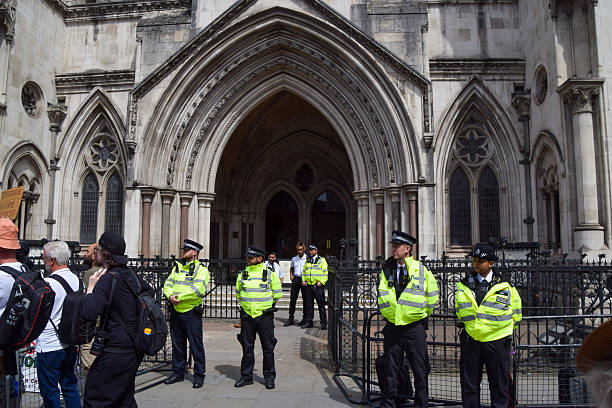
Court Enforcement Officers London (What They Do & When They’re Used)
Understanding Court Enforcement Officers in London’s Legal Property System
Court enforcement officers in London are official enforcement personnel responsible for executing court orders issued by the County Court or High Court. Their role is to ensure legal judgments are enforced when individuals or businesses fail to comply voluntarily.
They are commonly involved in evictions, debt recovery, property repossession, and enforcement of court judgments across London’s residential and commercial property market.
In practice, “court enforcement officers” is a broad term that includes:
- County Court bailiffs
- High Court Enforcement Officers (HCEOs)
- Certificated enforcement agents working under court authority
Fraser Bond works with landlords, investors, and commercial property owners in London to manage enforcement processes, coordinate possession actions, and support property recovery after court decisions.
What Court Enforcement Officers Do in London
Court enforcement officers handle legally authorised enforcement actions such as:
1. Property Evictions and Possession Orders
- Residential tenant evictions after court ruling
- Commercial lease repossession
- Removal of squatters or unlawful occupiers
Common in London areas like:
- Southwark and Lambeth (residential rentals)
- Canary Wharf (office leases)
- Shoreditch and Hackney (mixed-use buildings)
2. Debt Enforcement and Recovery
- Enforcing County Court Judgments (CCJs)
- Recovering unpaid rent or business debts
- Seizing goods or assets where permitted
3. Commercial Rent Arrears Recovery (CRAR)
Used by landlords to recover unpaid rent from business tenants without immediate eviction.
Typical London examples:
- Retail units in Camden or Oxford Street
- Offices in the City of London
- Hospitality venues in Soho
4. High Court Enforcement Actions
When cases are escalated to the High Court:
- Faster enforcement process
- Larger debt recovery cases
- Stronger execution powers
Types of Court Enforcement Officers in London
County Court Bailiffs
- Employed by HM Courts & Tribunals Service
- Handle lower-value debts and possession orders
- Slower enforcement process compared to High Court route
High Court Enforcement Officers (HCEOs)
- Enforce High Court writs
- Used for high-value debts and commercial enforcement
- Faster and more commercially focused
Certificated Enforcement Agents
- Privately employed but court-authorised
- Handle rent arrears, CCJs, and local authority enforcement
- Common in residential and commercial disputes
When Court Enforcement Officers Are Used in London
Residential Property Cases
- Tenant eviction after possession order
- Non-payment of rent
- Illegal occupation or breach of tenancy
Commercial Property Cases
- Lease forfeiture enforcement
- Retail or office rent arrears
- Recovery of business premises
Business Debt Recovery
- Unpaid invoices
- Supplier disputes
- Commercial judgment enforcement
Why Court Enforcement Activity Is High in London
London has a high volume of enforcement activity due to:
- Large private rental market
- High commercial lease values
- Dense office and retail property stock
- Frequent tenant turnover
- Active regeneration and redevelopment zones
Key enforcement hotspots include:
- City of London and Canary Wharf (commercial disputes)
- Westminster and Mayfair (high-value leases)
- Southwark and Hackney (residential enforcement cases)
- Croydon and outer boroughs (higher arrears volume)
Legal Process Court Enforcement Officers Follow
- Court issues judgment or possession order
- Enforcement instruction is made (bailiff or HCEO)
- Notice of enforcement is served
- Enforcement visit or action is carried out
- Property is repossessed or debt recovered
All actions must comply with UK enforcement law and court procedures.
Risks in Court Enforcement Cases
Property owners and landlords should consider:
- Legal validity of court order
- Tenant disputes or appeals
- Property condition after repossession
- Enforcement delays due to court backlog
- Costs of enforcement action
- Compliance with strict procedural rules
How Fraser Bond Supports Court Enforcement in London
Fraser Bond works with landlords, investors, and commercial property owners to:
- Coordinate court enforcement strategy
- Support eviction and possession planning
- Assist with commercial rent arrears recovery
- Manage post-enforcement property handover
- Arrange refurbishment and re-letting after repossession
- Work with solicitors and enforcement professionals
This ensures properties are recovered efficiently and repositioned for rental or sale as quickly as possible.