


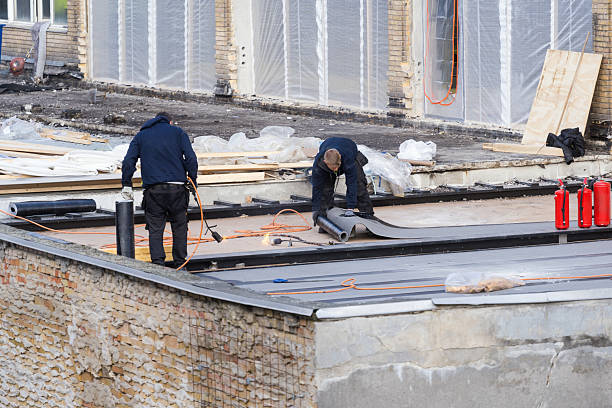
Flat roofing membranes in Chelsea provide waterproof protection for extensions, terraces, apartment buildings, commercial premises and contemporary additions to period properties. Modern membrane systems can provide durable flat-roof solutions, but their performance depends on correct specification, installation, drainage, insulation and detailing.
Chelsea's property stock creates particular considerations. Alongside modern developments are period terraces, mansion blocks and historically significant buildings where roof works may need to respect established architectural character. The Royal Borough of Kensington and Chelsea's planning policies require roof-level alterations to be carefully considered in relation to the host building and surrounding townscape.
For landlords, investors, developers and property owners, Fraser Bond supports property management, sales, lettings and wider real estate requirements in Chelsea and across prime London through FraserBond.com.
What Are Flat Roofing Membranes?
A flat roofing membrane is the waterproof layer protecting a flat or low-slope roof from rainwater.
Unlike pitched roofs, which primarily use overlapping tiles or slates to shed water, flat roofs generally rely on a continuous waterproofing system.
Several membrane technologies are available, and each has different installation methods, detailing requirements and potential applications.
Selecting the appropriate membrane should therefore be based on the complete roof design rather than simply choosing the cheapest material.
Types of Flat Roofing Membranes
Chelsea property owners can encounter several types of flat roofing systems.
Single ply membranes use flexible sheets installed as the primary waterproof layer. Systems may be mechanically fixed, adhered or otherwise secured according to their design.
Bituminous membranes typically use reinforced bitumen-based sheets to create a durable waterproof roof covering.
EPDM roofing uses a synthetic rubber membrane and is commonly associated with flat and low-slope roofs.
Liquid-applied membranes are installed in liquid form and cure to create a seamless waterproof layer, which can be useful around complicated roof details.
The appropriate choice depends on the substrate, roof configuration, intended use, insulation, drainage and manufacturer's system requirements.
Single Ply Roofing Membranes Chelsea
Single ply roofing is widely associated with contemporary flat-roof construction.
A single ply system can be suitable for residential extensions, apartment developments and commercial properties where correctly designed.
The membrane itself is only one part of the roof.
A complete warm-roof system can also incorporate the structural deck, air and vapour control layer, insulation and associated components.
Particular attention should be given to rooflights, drainage outlets, penetrations, parapets and perimeter details because these locations require carefully executed waterproofing.
EPDM Flat Roofing
EPDM is a synthetic rubber roofing membrane frequently used on residential flat roofs.
It can provide a relatively simple continuous waterproof covering for suitable roof designs.
Extensions, garages and smaller flat roofs are common applications.
However, installation quality remains critical. Junctions around outlets, rooflights, walls and other penetrations need to be properly detailed.
Property owners should also establish what warranty applies to the proposed membrane and installation.
Bituminous Roofing Membranes
Bituminous membranes remain another established option for flat roofing.
Modern systems typically incorporate reinforced sheets installed in multiple layers or as part of a specified membrane build-up.
They can be used on residential, commercial and communal roofs.
When refurbishing an existing Chelsea property, contractors should investigate the existing roof before recommending an overlay or complete removal.
Trapped moisture or deteriorated underlying materials can undermine a new waterproofing system if the existing condition is not properly assessed.
Liquid Roofing Membranes
Liquid-applied roofing can provide an alternative to sheet membranes.
Once installed and cured, the material creates a continuous waterproof coating.
This approach can be particularly useful on roofs containing numerous penetrations or complicated details.
As with other systems, preparation is important.
The substrate needs to be suitable for the selected product, and compatibility with existing materials should be confirmed.
Liquid roofing should therefore be viewed as a technical waterproofing system rather than simply roof paint.
Flat Roofing Membranes for Chelsea Extensions
Flat roofs are common on rear and side extensions throughout London.
For Chelsea properties, a membrane system may provide a discreet waterproof solution where the roof is largely concealed from street level.
The design should consider insulation, drainage, rooflights, parapets and connections with the original building.
Planning considerations can become more important where an extension affects the appearance of a period or protected property. RBKC's current Local Plan notes that roof-level alterations can affect streetscape, skyline, neighbouring properties and architectural character.
Warm Flat Roof Membrane Systems
A warm roof places thermal insulation above the structural roof deck.
The waterproof membrane is then positioned towards the external side of the roof construction.
This approach is widely used because it can help maintain the structural deck at a relatively warmer temperature and manage condensation risk when correctly designed.
Insulation thickness, vapour control and waterproofing should be considered together rather than specified independently.
Flat Roof Insulation
Roof refurbishment can provide an opportunity to improve thermal performance.
Simply replacing an old waterproof covering without considering the underlying roof build-up can miss an opportunity to address inadequate insulation.
However, adding insulation changes the roof construction.
Upstands, thresholds, parapets, drainage outlets and rooflights may all be affected by an increased build-up.
A competent designer or roofing specialist should therefore assess the entire system.
Flat Roof Drainage
Even high-quality membranes can perform poorly where drainage has not been properly designed.
Flat roofs require adequate falls to move water towards outlets and gutters.
Blocked outlets can cause water to accumulate, while poorly formed falls can create persistent ponding.
Property owners experiencing recurring standing water should therefore investigate drainage rather than repeatedly repairing the waterproof membrane alone.
Membranes Around Rooflights
Rooflights are popular additions to Chelsea extensions and contemporary refurbishment projects because they introduce natural light into internal spaces.
They also create additional roof junctions.
The membrane needs to integrate correctly with the rooflight kerb or upstand to maintain waterproofing.
Poorly executed detailing can allow water penetration even where the main roof membrane remains in good condition.
Flat Roofing Membranes for Roof Terraces
Some Chelsea properties incorporate roof terraces or accessible flat roofs.
These roofs require additional consideration because the waterproof membrane may sit underneath paving, decking or another finish.
Drainage must remain effective, while the waterproofing needs protection against damage.
Where a roof terrace is being created rather than merely repaired, owners should also establish whether planning permission or other approvals are required.
RBKC policy recognises that roof-level changes can affect architectural character, townscape and neighbouring properties, so proposed alterations should be assessed in their specific context.
Chelsea Conservation Areas and Flat Roofs
Chelsea contains substantial areas of historic and architecturally important property.
This does not mean modern roofing membranes cannot be used.
A concealed membrane replacing an existing flat-roof covering can present different planning considerations from creating a new roof extension, terrace, plant enclosure or additional storey.
RBKC's Local Plan states that conservation-area management plans can contain specific guidance on acceptable roof changes and that roof alterations should be assessed for their impact on the host building and context.
Owners should therefore check the planning status of the property before undertaking alterations that materially affect roof form or appearance.
Flat Roofing Membranes for Listed Buildings
Listed buildings require particular care.
A technically effective membrane may still be inappropriate if the work adversely affects historically significant fabric or appearance.
Existing materials, visibility, heritage significance and previous alterations should therefore be investigated before selecting a replacement system.
Historic RBKC planning records demonstrate that the acceptability of alternative flat-roof materials can depend heavily on visibility, the nature of the existing structure and the heritage context of the individual property.
Chelsea Mansion Blocks and Apartment Buildings
Flat roofing membranes are also relevant to mansion blocks and apartment developments.
These roofs can cover substantial communal areas and may incorporate plant, rooflights, drainage equipment and access routes.
Responsibility for maintenance usually depends on the lease and ownership structure.
A freeholder, Residents Management Company or Right to Manage company may coordinate roofing works through its managing agent.
Major refurbishment should ideally begin with an appropriate roof-condition survey and technical specification.
Flat Roofing Membranes for Landlords
Landlords should investigate membrane defects quickly when tenants report water penetration.
An apparently minor roof leak can eventually damage ceilings, decorations, insulation and other building materials.
For landlords with managed properties, the property manager can coordinate contractor access, inspections, quotations and repairs.
This can be particularly valuable for overseas owners of Chelsea rental properties.
Flat Roofing Membranes for Commercial Property
Commercial buildings can incorporate considerably larger flat-roof areas than typical houses.
Roof-mounted plant, ventilation equipment and maintenance access can also increase the number of penetrations and vulnerable details.
Commercial owners should therefore consider planned inspections rather than waiting for visible internal leakage.
Preventative maintenance can identify membrane damage, deteriorated detailing and blocked drainage before they develop into more substantial defects.
Repairing Flat Roofing Membranes
A damaged membrane does not necessarily require complete roof replacement.
Localised repairs may be possible where the overall system remains serviceable.
The existing membrane should first be identified.
Using an incompatible repair material can create additional problems, particularly where different waterproofing technologies are combined without appropriate preparation.
Repeated repairs across several locations can indicate that the roof requires a broader condition assessment.
Overlaying an Existing Flat Roof
Some existing flat roofs can potentially be overlaid rather than stripped completely.
Whether this is appropriate depends on the condition of the existing waterproofing, insulation, substrate and roof structure.
Moisture trapped beneath the existing covering is particularly important.
An overlay should not simply conceal unresolved defects.
For substantial Chelsea refurbishment projects, appropriate investigation can help determine whether removal or overlay represents the more suitable approach.
Replacing a Flat Roofing Membrane
Complete replacement may be appropriate where waterproofing has deteriorated extensively or the existing roof build-up no longer performs a
There is probably a Fraser Bond team for it.
Lettings & management
Finding tenants, running tenancies, and holding the compliance paperwork so you never have to look for it.
Investment & portfolio
Buying well, holding sensibly, and knowing when a property has stopped earning its place.
Commercial property
Offices, retail and mixed use — acquisition, lettings, lease advice and building management.
Professional services
Valuation, lease consultancy, building consultancy and expert advice when a decision needs evidence behind it.
You are one message away from an answer.
Send it to us and get a straight answer.
Describe the property and the problem. We will tell you what we would do, what it should cost, and if we are not the right people, who is.
- Replies the same working day
- The person who answers is the person who handles it
- No fee, and no obligation to instruct us
See everything we are instructed on.
Sales and lettings across Prime Central London and the wider UK, with the same team behind every listing.
- Residential and commercial in one search
- Filter by borough, budget and size
- Register once and we will send matches first
Other insights you may find useful.
 Supported Living & Specialist Housing
Supported Living Property Sourcing UK - Fraser Bond
Read → Property & Real Estate Services
HMO Fire Safety Compliance - Protection and Investment Advice
Read → Property & Real Estate Services
New post
Read → Commercial Property & Office Space
Commercial Property to Rent in Ipswich: Offices, Shops and Industrial Space
Read → Property Investment & Wealth Building
Notting Hill Carnival 2024 – Dates, Location, History & Property Guide
Read → Property & Real Estate Services