


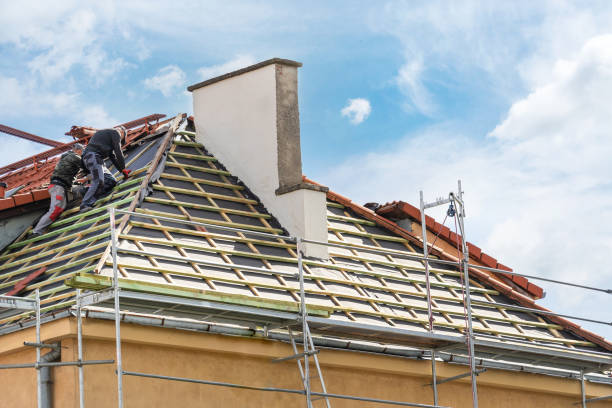
Roof replacement in Hampstead requires particular care because the area contains a significant concentration of period houses, traditional slate and tiled roofs, listed buildings and properties within conservation areas. A replacement roof needs to provide reliable weather protection while respecting the construction, architectural character and planning status of the property.
For homeowners, landlords and investors, roof replacement can represent significant capital expenditure. The project may involve much more than installing new tiles or slates, with scaffolding, insulation, battens, underlay, leadwork, chimney repairs, gutters and structural timber work potentially forming part of the overall specification.
Fraser Bond supports Hampstead and North London property owners with property management, sales, lettings, investment and wider real estate services through FraserBond.com.
When Does a Hampstead Property Need a New Roof?
A leaking roof does not automatically require complete replacement. Individual slipped slates, damaged tiles or defective flashing can often be repaired where the remaining roof is in satisfactory condition.
Replacement becomes more likely when deterioration is widespread, leaks repeatedly occur in different areas or previous repairs are no longer providing a durable solution.
Age alone should not determine the decision. A professional assessment should consider the condition of the covering, battens, underlay, structural timbers, flashing, chimneys and drainage before recommending complete re-roofing.
Roof Replacement for Hampstead Period Properties
Hampstead contains substantial numbers of Georgian, Victorian and Edwardian properties alongside later residential development.
Older roofs can incorporate natural slate, clay tiles, leadwork, traditional chimney stacks and timber structures that require different treatment from contemporary construction.
Where original materials remain serviceable, repair may sometimes be preferable to unnecessary wholesale replacement. Where replacement is justified, materials should be selected with the building's character and technical requirements in mind.
This becomes particularly important within Hampstead's protected historic environment.
Hampstead Conservation Area Roof Replacement
A significant part of Hampstead is protected as a conservation area. Camden Council explains that conservation areas are intended to preserve special architectural and historic character and that alterations to properties within them will often require planning consideration.
The Hampstead Conservation Area guidance gives particular attention to roofs. It states that roof proposals should be considered according to the design of the individual building, its roof type, neighbouring properties and the wider streetscape. It also emphasises retaining important architectural details and using materials that closely match the original building where roof alterations are acceptable.
A straightforward like-for-like repair can therefore present very different planning issues from changing the roof profile, introducing dormers or replacing prominent traditional materials with visibly different alternatives.
Article 4 Directions in Hampstead
Property owners should not assume that ordinary permitted development rights necessarily apply throughout Hampstead.
Camden Council currently identifies Article 4 Directions affecting properties within the Hampstead Conservation Area. These directions remove specified permitted development rights so that certain works require planning permission.
This makes it particularly important to check the status of the individual property before making visible alterations to its roof.
Roof Replacement for Listed Buildings
Listed properties require an additional level of care.
Camden Council states that regular maintenance and genuinely like-for-like repairs matching the original work do not require listed building consent. However, where different materials or methods are proposed, consent is required.
Owners should therefore establish whether the proposed work constitutes repair or alteration before starting.
Specialist heritage roofing expertise may be appropriate where historic slate, leadwork, clay tiles, decorative details or traditional construction methods are involved.
Slate Roof Replacement Hampstead
Natural slate is an important feature of many Hampstead properties.
A slate roof can sometimes be repaired by replacing individual damaged or missing slates rather than renewing the complete covering.
Where widespread deterioration makes replacement necessary, the specification should consider the appearance, dimensions and characteristics of the existing material, particularly on historically sensitive buildings.
Existing sound slate may sometimes be capable of reuse depending on its condition and the proposed roofing specification.
The objective should be to combine weather performance with appropriate treatment of the building's architectural character.
Tiled Roof Replacement
Clay and concrete tiled roofs are also found across Hampstead and surrounding North London neighbourhoods.
Complete replacement can involve removing existing tiles, assessing battens and underlay and inspecting the structural roof beneath.
Where traditional clay tiles contribute to the appearance of a conservation-area property, changing their colour, profile or material can have architectural implications.
Owners should therefore establish both the technical and planning requirements before selecting a replacement covering.
Flat Roof Replacement Hampstead
Flat roofs are common on extensions, garages, apartment buildings and contemporary additions.
Replacement systems can include single ply membranes, EPDM, reinforced bituminous membranes and liquid-applied waterproofing.
The project should address more than the visible membrane.
Drainage, insulation, vapour control, roof falls, outlets, parapets and rooflights can all affect long-term performance.
Where an existing flat roof repeatedly develops standing water, the drainage design should be investigated during replacement rather than simply installing a new membrane over the same underlying problem.
Roof Replacement and Insulation
Re-roofing can provide an opportunity to improve thermal performance.
However, insulation should be considered as part of the complete roof design.
Roof ventilation, moisture movement and condensation control can all be affected when an existing construction is changed.
For period properties, particular care may be required to improve energy efficiency without introducing moisture problems or unnecessarily damaging historic fabric.
Camden states that it supports sensitive retrofit within its conservation areas while recognising that work to historic buildings can require additional care.
Chimneys and Leadwork During Re-Roofing
Roof replacement provides an opportunity to inspect chimney stacks and flashing that may otherwise be difficult to access.
Defective flashing around chimneys is a frequent source of water penetration.
Where scaffolding is already installed, it can be practical to assess chimney masonry, leadwork and other roof-level components at the same time.
On period Hampstead properties, original chimney stacks can also make an important architectural contribution and should not be removed or substantially altered without considering planning and heritage implications.
Hampstead conservation guidance specifically encourages retention or reinstatement of characteristic features including parapets, cornices, chimney stacks and pots.
Roof Replacement and Loft Conversions
Some owners consider replacing a roof while simultaneously undertaking a loft conversion.
Combining the projects can potentially coordinate scaffolding and construction work, but it also changes the scope considerably.
Dormers, rooflights, structural alterations and changes to roof form may introduce additional planning and Building Regulations considerations.
Camden's roof-design guidance states that roof alterations should be assessed for their scale, visual prominence, effect on architectural style and impact on neighbouring properties.
Hampstead's conservation status can make these considerations especially important.
Roof Replacement for Hampstead Landlords
Landlords should investigate roofing problems before water penetration causes wider damage to rental accommodation.
A deteriorated roof can affect ceilings, insulation, plaster, electrical installations and decorations.
Where replacement is required, landlords should plan around tenant access, scaffolding, contractor working hours and temporary disruption.
Professional property management can help coordinate contractors, tenants and associated maintenance requirements.
For overseas landlords with Hampstead investment properties, having local management arrangements can be particularly useful when substantial works require ongoing supervision.
Roof Replacement for Hampstead Apartment Buildings
Replacing the roof of an apartment block or converted building can be more complicated than re-roofing an individual house.
The roof may form part of the communal structure, with responsibility resting with a freeholder, Residents Management Company or Right to Manage company according to the leases.
A substantial project may require a building survey, roofing specification, contractor tendering, scaffolding and professional contract administration.
Service-charge provisions, reserve funds and applicable consultation requirements should also be investigated before substantial expenditure is committed.
Roof Replacement for Property Investors
Roof condition should form part of investment-property due diligence.
An apparently attractive Hampstead acquisition can require considerable additional capital if complete re-roofing becomes necessary shortly after purchase.
Buyers should therefore review building-survey observations carefully.
Evidence of repeated patching, internal water staining, deteriorated coverings or poorly executed previous alterations can justify further investigation before exchange.
Leasehold buyers should also investigate communal roof condition and planned major works because future costs may ultimately affect service charges.
Roof Replacement for Hampstead Developers
Developers undertaking refurbishment should include roofing within the initial project appraisal.
The budget may need to cover scaffolding, coverings, insulation, structural repairs, chimneys, leadwork, gutters, professional fees and contingency.
Heritage requirements can also influence material selection and construction methods.
Where a proposal changes the roof rather than simply repairing it, early planning investigation is particularly important in Hampstead. Camden's conservation guidance makes clear that roof alterations can be unacceptable where they damage the character of an individual building, terrace or prominent roofscape.
Repair or Replace the Existing Roof?
The decision should be based on condition rather than assumption.
Local repairs may represent the sensible option where the roof remains fundamentally sound.
Complete replacement becomes easier to justify where deterioration is widespread, leaks are recurring and substantial areas of the roofing system are approaching failure.
Property owners should compare the expected cost and durability of continued repairs against the long-term cost of replacement.
An independent building surveyor can be particularly useful where the proposed expenditure is substantial or where there is disagreement about whether replacement is necessary.
Choosing a Roof Replacement Contractor in Hampstead
Hampstead properties can require roofing contractors with experience extending beyond ordinary modern re-roofing.
For a period or conservation-area building, experience with natural slate, clay tiles, leadwork, traditional detailing and heritage construction can be particularly valuable.
Owners should obtain detailed written quotations that identify the proposed materials and scope.
A comprehensive quotation should make clear whether scaffolding, removal of existing materials, underlay, battens, insulation, leadwork, gutters, waste disposal and associated repairs are included.
Guarantees, insurance and responsibility for Building Regulations compliance should also be clarified before work begins.
- Planning Roof Replacement Costs
The headline price for new tiles or slate does not represent the complete cost of many roof replacements.
- Scaffolding can represent a significant expense, particularly on larger or difficult-to-access Hampstead properties.
Structural timber repairs may only become apparent after the original covering is removed.
Owners should there
There is probably a Fraser Bond team for it.
Lettings & management
Finding tenants, running tenancies, and holding the compliance paperwork so you never have to look for it.
Investment & portfolio
Buying well, holding sensibly, and knowing when a property has stopped earning its place.
Commercial property
Offices, retail and mixed use — acquisition, lettings, lease advice and building management.
Professional services
Valuation, lease consultancy, building consultancy and expert advice when a decision needs evidence behind it.
You are one message away from an answer.
Send it to us and get a straight answer.
Describe the property and the problem. We will tell you what we would do, what it should cost, and if we are not the right people, who is.
- Replies the same working day
- The person who answers is the person who handles it
- No fee, and no obligation to instruct us
See everything we are instructed on.
Sales and lettings across Prime Central London and the wider UK, with the same team behind every listing.
- Residential and commercial in one search
- Filter by borough, budget and size
- Register once and we will send matches first
Other insights you may find useful.
 Property & Real Estate Services
Emergency Plumber London – Fraser Bond’s 24/7 Plumbing Support for Residential Properties
Read → Student Housing
University Admissions Experts for Overseas Parents UK
Read → Property & Real Estate Services
London Off-Market Deal Sourcing - Discreet HNW Property Opportunities
Read → Property & Real Estate Services
Commercial Real Estate Agency in London – Fraser Bond Expertise
Read → Student Housing
Apply to UK Boarding Schools from Saudi Arabia - Fraser Bond
Read → Lease Consultancy & Tenant Representation