Toilet Repair - Common Toilet Problems, Repairs and Maintenance Guide
A faulty toilet can quickly become one of the most disruptive plumbing problems in a home, rental property or commercial building. Problems can range from a toilet that constantly runs or flushes weakly to leaking cisterns, broken flush mechanisms and complete blockages.
Professional toilet repair can often restore the fixture without requiring complete replacement. The important first step is identifying whether the problem originates in the toilet itself, its cistern or the drainage system beneath it.
For homeowners, landlords and property managers, dealing with toilet problems early can help prevent unnecessary water waste, leaks and more serious drainage issues.
What Does Toilet Repair Include?
A toilet contains several components that work together every time it is flushed. Failure of one component can affect the entire system.
Common toilet repairs include:
- Replacing faulty flush valves
- Repairing or replacing fill valves
- Fixing broken flush buttons and handles
- Adjusting cistern water levels
- Repairing leaking toilet connections
- Replacing damaged seals
- Fixing constantly running toilets
- Clearing local toilet blockages
- Repairing slow-filling cisterns
- Replacing damaged toilet seats and fittings
- Investigating weak or incomplete flushing
- Repairing leaks around the toilet base
The correct repair depends on the symptoms and the design of the toilet.
Toilet Not Flushing Properly
A toilet that won't flush properly can have either a mechanical or drainage-related problem.
If pressing the handle or button does not release enough water, the flush mechanism may require adjustment or replacement. Low water levels inside the cistern can also produce a weak flush.
If the flush appears powerful but water rises in the bowl before draining slowly, a partial blockage becomes more likely.
Repeated flushing should be avoided if the water level is already unusually high because another flush could cause the toilet to overflow.
Toilet Keeps Running
A constantly running toilet is one of the most common faults requiring repair.
WaterSafe identifies the flush valve, fill valve and overflow arrangement as common causes. If a flush valve does not seal correctly, water can continually escape from the cistern into the toilet bowl. A faulty fill valve can similarly allow the cistern to keep refilling when it should stop. WaterSafe
The result can be a continuous trickle that is easy to overlook.
WaterSafe says a leaking toilet can lose substantial quantities of clean water, making early repair worthwhile even when the toilet otherwise appears to work normally. WaterSafe
How to Tell If a Toilet Is Leaking
Some toilet leaks are obvious.
You may hear water continuously running or see a visible stream entering the back of the toilet bowl.
Others are surprisingly difficult to detect.
One simple test recommended by WaterSafe is to wait after flushing, dry the back of the toilet pan and place dry toilet tissue against it. If the tissue becomes wet without the toilet being used, water may be leaking from the cistern into the pan. WaterSafe
A plumber can then determine whether a seal, flush valve, fill valve or another component needs attention.
Toilet Cistern Repair
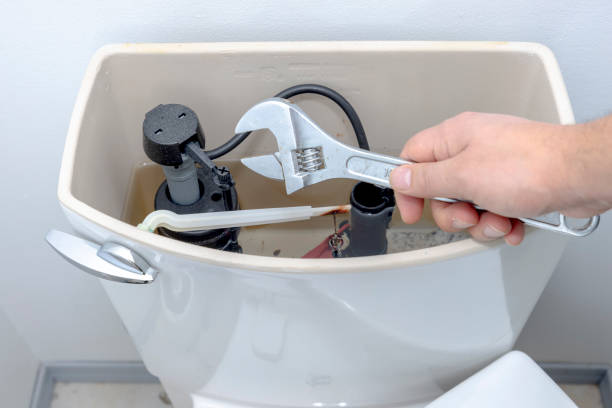
Many toilet problems originate inside the cistern rather than the toilet pan itself.
The cistern stores the water required for flushing and contains the mechanisms controlling filling and discharge.
Modern cisterns can contain fill valves, flush valves, floats, seals, overflow components and push-button mechanisms.
If the cistern fills too slowly, continually runs or fails to release enough water, one or more of these components may require adjustment or replacement.
Repairing an individual component can often be considerably simpler than replacing the entire toilet.
Toilet Fill Valve Repair
The fill valve controls water entering the cistern after a flush.
Once the correct water level has been reached, the valve should stop the incoming supply.
If the valve fails, the toilet may fill continuously, refill extremely slowly or fail to reach the appropriate water level.
WaterSafe identifies malfunctioning fill valves as a common cause of running toilets. WaterSafe
Depending on the condition and design, adjustment may solve the problem. Otherwise, replacement of the valve may be necessary.
Toilet Flush Valve Repair
The flush valve releases water from the cistern into the toilet bowl.
When its seal becomes damaged, worn or contaminated, water may continue escaping after the flush has finished.
This can cause the toilet to refill repeatedly.
WaterSafe notes that flush-valve problems are among the common causes of continuous water loss from a toilet cistern. WaterSafe
Replacing the defective valve or seal can often restore normal operation without replacing the toilet itself.
Toilet Flush Button Not Working
Push-button toilets can develop faults in the button or the mechanism connecting it to the flush valve.
Typical symptoms include a button that becomes loose, sticks, needs to be pressed repeatedly or no longer activates the flush.
Dual-flush toilets can also develop problems where one flushing option works but the other does not.
The required repair depends on the cistern design.
Some mechanisms are readily accessible, while concealed cisterns can require more complicated access.
Toilet Handle Not Flushing
Traditional lever-operated toilets can experience similar problems.
The external handle may operate normally while an internal connection has become detached or broken.
In other situations, the handle itself can become loose.
The internal components should be inspected before assuming that the entire flushing mechanism needs replacement.
A straightforward mechanical repair may be enough to restore normal operation.
Toilet Filling Slowly
A toilet that takes an unusually long time to refill can become inconvenient, particularly in a busy household or commercial property.
A problem with the fill valve or water supply can restrict the rate at which water enters the cistern.
If water pressure elsewhere in the property remains normal, the problem may be confined to the toilet.
Where several fixtures simultaneously experience reduced flow, a wider water-supply issue should also be considered.
Toilet Water Level Too Low
Insufficient water inside the cistern can produce a weak or incomplete flush.
The float or fill mechanism may be incorrectly adjusted, preventing the cistern from reaching the intended level.
WaterSafe recommends checking the cistern water level when diagnosing toilet problems and adjusting relevant components where appropriate. WaterSafe
Care should be taken when working with unfamiliar mechanisms. If adjustment is not straightforward, a plumber can diagnose the fault without risking damage to the components.
Toilet Is Blocked
A blocked toilet is different from a faulty flushing mechanism.
If water rises significantly in the bowl when the toilet is flushed, there may be an obstruction preventing wastewater from leaving normally.
A suitable toilet plunger can sometimes clear a straightforward local blockage.
Do not continue flushing a toilet that is close to overflowing.
If the blockage repeatedly returns or other fixtures are also affected, the problem may be located deeper within the drainage system.
Toilet Gurgling After Flushing
Gurgling or bubbling can indicate a drainage rather than cistern problem.
WaterSafe identifies partial drain blockages as a common cause of toilet gurgling. Blocked ventilation and more substantial sewer-line restrictions can produce similar symptoms. WaterSafe
Pay attention to other fixtures.
If sinks, baths or showers are also draining slowly, the problem may extend beyond the individual toilet.
Professional drain cleaning or investigation may then be more appropriate than replacing toilet components.
Toilet Leaking at the Base
Water appearing around the bottom of a toilet should be investigated promptly.
First determine whether the water is actually coming from the base.
Leaks from cistern connections, inlet pipes or condensation can sometimes travel down the toilet and collect on the floor, creating the impression that the pan itself is leaking.
If the leak occurs specifically when the toilet is flushed, a defective waste connection or seal may require attention.
Continuing to use a leaking toilet can damage flooring and surrounding building materials.
Toilet Overflowing
An overflowing toilet requires immediate action.
Stop flushing and, where necessary, isolate the toilet's water supply if this can be done safely.
If the bowl is overflowing because wastewater cannot drain away, additional flushing will only make the situation worse.
Where sewage is involved, avoid unnecessary contact with contaminated water.
Once the immediate problem has been controlled, the blockage or toilet fault can be investigated.
Toilet Repair or Drain Cleaning?
Knowing which professional to contact can save time.
A plumber will typically deal with cistern mechanisms, valves, water connections, toilet installation and leaks involving the fixture itself.
A drainage contractor may be more appropriate when the toilet is backing up because of a deeper drain obstruction.
Several toilets or drains failing simultaneously can be an important clue that the problem is further along the drainage system.
Recurring blockages may justify a CCTV drain survey to investigate the condition of underground pipework.
Repairing a Concealed Cistern Toilet
Concealed cisterns are increasingly common in modern bathrooms.
The cistern and plumbing components are hidden behind a wall, panel or fitted unit, creating a cleaner appearance but potentially making repairs more complicated.
Many systems are designed so important components can be accessed through the flush plate or a maintenance panel.
However, access varies according to the installation.
A specialist should identify the correct access method before tiles, panels or other finishes are unnecessarily disturbed.
Should You Repair or Replace a Toilet?
Not every faulty toilet needs replacing.
A relatively modern toilet with a defective fill valve or flush mechanism can often be repaired economically.
Replacement becomes more attractive when the toilet itself is cracked, repeatedly failing or difficult to repair because compatible components are no longer readily available.
Bathroom refurbishment can also provide an opportunity to replace an ageing toilet.
The underlying cause should still be identified first. Installing a new toilet will not solve a blockage or structural problem elsewhere in the drainage system.
Emergency Toilet Repair
Some toilet faults can wait for a scheduled plumbing appointment.
Others require faster attention.
An overflowing toilet, substantial leak or toilet releasing wastewater onto the floor should be treated more urgently.
A non-flushing toilet can also become an important issue when it is the only toilet available in the property.
Where water is actively leaking from a plumbing connection, isolating the supply can help limit damage. WaterSafe recommends turning off the relevant water supply when dealing with significant plumbing leaks and obtaining professional assistance where necessary. WaterSafe
Toilet Repair for Landlords
Reliable toilets are essential in rental accommodation.
Tenants should report faults promptly, particularly where the toilet is leaking, continually running or at risk of overflowing.
Landlords should investigate recurring faults rather than repeatedly applying temporary repairs.
Maintenance records can also help identify toilets or components that are repeatedly failing and may now justify replacement.
Fraser Bond supports landlords through lettings, compliance guidance and property advisory services, helping owners manage property condition as part of wider rental and asset-management strategies.
Toilet Repairs in Flats
Toilet problems in flats can sometimes affect neighbouring properties.
A leaking connection can damage the floor and potentially the ceiling of the apartment below.
Drainage faults can also involve communal pipework rather than the individual toilet.
If several apartments experience similar drainage problems, the landlord, freeholder or managing agent may need to investigate shared infrastructure.
Understanding whether the fault is private or communal can help determine who should arrange the appropriate repair.
Commercial Toilet Repairs
Toilet faults can cause significant disruption in commercial buildings.
Offices, shops, restaurants, hotels and other premises may have toilets experiencing intensive daily use.
A failed toilet can reduce available facilities and, where leakage occurs, potentially damage surrounding finishes.
Commercial property managers may therefore benefit from addressing minor problems before complete failure.
Buildings with multiple toilets can also benefit from preventative maintenance where the same components repeatedly cause problems.
Toilet Repair When Buying a Property
Toilets are easy to overlook during a property viewing, but their operation can provide useful information about the plumbing and drainage system.
A toilet that continually runs, flushes weakly or takes an unusually long time to refill may require repair.
Gurgling or wastewater rising in the bowl can justify closer attention to the drainage system.
For older houses and investment properties with recurring drainage concerns, additional investigation may be appropriate before acquisition.
Identifying these issues early can help buyers create a more realistic maintenance or refurbishment budget.
Choosing a Toilet Repair Plumber
Straightforward toilet repairs may appear suitable for DIY work, but incorrect components or installation can create additional leaks.
WaterSafe recommends using appropriately qualified and experienced plumbers where householders are not confident they can safely complete plumbing work themselves. WaterSafe
A plumber should diagnose the cause before replacing components.
If a contractor recommends replacing the entire toilet, it can be useful to understand why repair is not considered practical.
For recurring drainage symptoms, a drainage specialist may also be required.
Preventing Toilet Problems
Many toilet problems develop gradually.
Pay attention to changes in the flush, unexplained refilling noises, water continuously entering the pan and increasingly slow drainage.
Only appropriate toilet waste and toilet paper should be flushed. Wipes, sanitary products and foreign objects can contribute to drainage restrictions. WaterSafe identifies excessive paper, wipes and foreign objects among common causes of partial drain blockages and toilet gurgling. WaterSafe
Early attention can often prevent a minor fault from becoming a complete failure.
Toilet Repair and Property Maintenance with Fraser Bond
Professional toilet repair can resolve many common faults without replacing the entire fixture. The key is establishing whether the problem lies with the cistern, flushing mechanism, water connection or drainage system.
For landlords and property investors, reliable plumbing maintenance also contributes to tenant satisfaction and protects the wider condition of the property.
FraserBond.com supports buyers, sellers, landlords, investors and developers through property sales, lettings, compliance support and investment advisory services.
Fraser Bond combines London property expertise with practical guidance for property owners, helping clients consider maintenance, refurbishment requirements, rental potential and longer-term investment strategy.
Whether you are preparing a property for letting, managing an existing portfolio or assessing a potential acquisition, FraserBond.com provides professional property support throughout the ownership lifecycle.