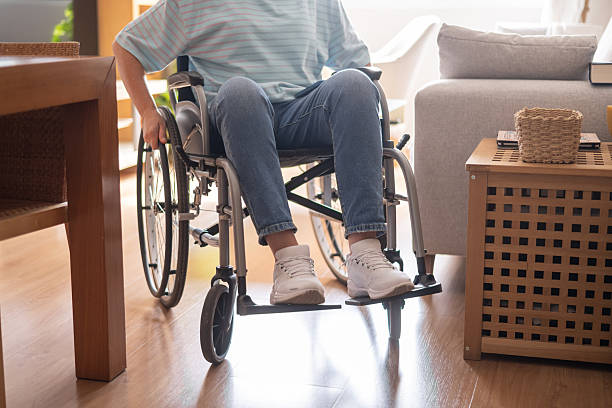
Wheelchair Accessible Bungalow for Care Provider: Finding Suitable Care Property
A practical guide for care providers, landlords, investors and developers looking for wheelchair accessible bungalow property for residential care and specialist accommodation across the UK
A wheelchair accessible bungalow can be a practical option for a care provider because a single-storey layout can make it easier for residents using wheelchairs or mobility equipment to move between bedrooms, bathrooms and communal areas.
However, simply finding a bungalow without stairs does not make it suitable for a care service. The property needs to be assessed against the needs of the intended residents, the proposed care model, accessibility requirements, fire safety, building condition, planning considerations and potential refurbishment costs.
There are already CQC-registered care services operating from bungalow-style properties. Recent CQC assessments include residential care bungalows supporting people with physical disabilities, learning disabilities and other care needs.
Fraser Bond works with care providers, landlords, investors and property owners across London and the UK on property sourcing, acquisition, refurbishment, building works and property management.
Why a bungalow can suit a care provider
The main advantage of a bungalow is that essential areas can be located on one floor.
This can reduce the need for residents to use stairs and may simplify movement for people with mobility difficulties.
A suitable bungalow can potentially provide:
-
Step-free access
-
Single-level bedrooms
-
Accessible bathrooms
-
Communal living areas
-
Accessible kitchen facilities
-
Easier garden access
-
Parking close to the property
-
Space for mobility equipment
-
Simpler internal circulation
-
Easier access for support and care staff
The government's guidance on accessible and adaptable housing recognises the importance of convenient approach routes, suitable circulation space and appropriate bathrooms and kitchens. Wheelchair-user housing can include additional features or allow for future adaptations.
What should a wheelchair accessible care bungalow include?
The exact specification depends on the residents who will use the property.
Potential requirements include:
-
Step-free entrance
-
Suitable door widths
-
Low or flush thresholds
-
Adequate corridor space
-
Wheelchair-accessible bedrooms
-
Accessible bathrooms
-
Level-access showers
-
Wet rooms
-
Accessible kitchen facilities
-
Suitable communal areas
-
Accessible garden
-
Appropriate parking
-
Storage for mobility equipment
-
Suitable lighting
-
Fire safety systems
-
Emergency access arrangements
Approved Document M provides building-regulation guidance on access and use of buildings in England, including provisions for accessible and adaptable and wheelchair-user dwellings where applicable.
Assess the entrance and external access
A wheelchair accessible bungalow should provide a practical route from the street or parking area to the entrance.
Check for:
-
Front steps
-
Steep ramps
-
High thresholds
-
Narrow pathways
-
Uneven surfaces
-
Restricted turning space
-
Difficult gates
-
Poor external lighting
If the bungalow already has level access, this can reduce the amount of refurbishment required.
Where a ramp or other access alteration is needed, the feasibility and cost should be assessed before the property is acquired.
Bedrooms need more than standard residential space
A conventional bedroom may be large enough for a bed and furniture but still be unsuitable for a wheelchair user.
The room should be assessed for:
-
Wheelchair circulation
-
Bed access
-
Transfer space
-
Mobility equipment
-
Hoists where required
-
Carer assistance
-
Storage
-
Access to the bedroom door
-
Access to the bathroom
For residents with substantial physical disabilities, the ability to move around the bedroom safely can be just as important as the overall floor area.
Bathrooms are a major property consideration
Bathrooms often require significant adaptation in specialist care accommodation.
Depending on residents' needs, a wheelchair accessible care bungalow may require:
-
Level-access showers
-
Wet rooms
-
Accessible toilets
-
Grab rails
-
Shower seating
-
Appropriate basin positioning
-
Sufficient transfer space
-
Easy-to-operate taps
-
Emergency call systems where appropriate
-
Non-slip flooring
The existing drainage and plumbing arrangement should be inspected before refurbishment. Creating several wet rooms or relocating bathrooms can become expensive where extensive structural work is required.
Accessible kitchens can support independence
The kitchen should be considered according to how residents will use it.
Potential adaptations include:
-
Lowered or adaptable work surfaces
-
Clear floor space
-
Accessible storage
-
Suitable appliance positioning
-
Easy-to-operate controls
-
Accessible sinks and taps
-
Appropriate lighting
A CQC inspection of a bungalow-based service has previously highlighted that kitchens can be designed to be wheelchair accessible, while poorly positioned equipment can subsequently prevent wheelchair users from using the accessible space effectively.
This demonstrates why accessibility needs to be assessed in practical use, rather than simply by checking whether adaptations have been installed.
Communal areas should work for wheelchair users
Residents should be able to participate in everyday activities throughout the property.
Depending on the service, a bungalow may need:
-
Accessible lounge
-
Dining area
-
Communal kitchen
-
Activity space
-
Accessible WC
-
Storage
-
Staff facilities
-
Outdoor seating
Furniture should also be arranged so that wheelchair users can move through communal areas without unnecessary obstacles.
Garden and outdoor access
A bungalow can provide an advantage where bedrooms and living areas open directly onto a garden.
But the external space still needs to be assessed.
Consider:
-
Step-free garden access
-
Level pathways
-
Suitable surfaces
-
Gate widths
-
Accessible seating
-
External lighting
-
Safe boundaries
-
Space for residents using mobility equipment
A garden that can only be reached through steps may require additional work before it becomes genuinely accessible.
Parking and drop-off arrangements
Care providers should also consider how residents and staff will arrive at the property.
Potential requirements include:
-
Off-street parking
-
Accessible parking space
-
Level route from vehicle to entrance
-
Space for adapted vehicles
-
Drop-off area
-
Adequate external lighting
This can be particularly important for residents who use wheelchair-accessible vehicles or require assistance when transferring from a vehicle.
A bungalow may still require substantial refurbishment
Single-storey accommodation can reduce accessibility problems, but an older bungalow may still require significant work.
Common issues include:
-
Narrow doorways
-
Small bathrooms
-
High thresholds
-
Poor internal layouts
-
Inaccessible kitchens
-
Limited storage
-
Outdated electrics
-
Inadequate heating
-
Poor external access
-
Insufficient parking
A property survey should therefore be completed before committing to the purchase or lease.
The cost of accessibility adaptations should be considered alongside the purchase price.
Buying a bungalow for a care provider
A care provider looking to purchase a bungalow should assess the entire property rather than simply counting bedrooms.
Key considerations include:
-
Resident profile
-
Number of residents
-
Bedroom sizes
-
Bathroom provision
-
Wheelchair accessibility
-
Communal space
-
Staff requirements
-
Parking
-
Garden access
-
Fire safety
-
Building condition
-
Planning considerations
-
Adaptation costs
-
Ongoing maintenance
A smaller bungalow with an efficient accessible layout can sometimes be more practical than a larger property requiring major structural alterations.
Leasing a bungalow to a care provider
Landlords with suitable bungalows may consider leasing them to established care providers.
Before agreeing a lease, both parties should establish:
-
Proposed number of residents
-
Type of care
-
Resident needs
-
Required adaptations
-
Who pays for adaptations
-
Responsibility for repairs
-
Maintenance arrangements
-
Insurance
-
Lease duration
-
Reinstatement obligations
-
Planning and regulatory considerations
The lease should clearly define responsibility for accessibility installations and other specialist works.
Understand whether the property will be a care home or supported living
This distinction is particularly important for property owners.
CQC describes a care home as a place where accommodation and personal care are provided together. Both the care and the premises are regulated.
Supported living is different. CQC describes supported living as arrangements where a person lives in their own home and receives care or support to promote independence; the care is regulated by CQC while the accommodation itself is generally not.
CQC's location guidance also explains that where accommodation and care are contractually bound together, a care home can fall within the relevant CQC location rules.
The intended operating model should therefore be established before a care provider commits to a bungalow.
CQC and property suitability
Where a bungalow is intended to operate as a regulated care home, property suitability forms part of the wider regulatory picture.
CQC Regulation 12 requires providers to assess risks to people's health and safety and ensure that premises and equipment used in care are safe.
This means the property should not be assessed only from an investment or residential perspective. Its suitability for the proposed care service also needs to be considered.
A care provider should obtain appropriate professional advice on CQC registration, planning, building regulations, fire safety and other applicable requirements.
Refurbishing a bungalow for a care provider
An existing bungalow can sometimes be converted into suitable specialist accommodation through a structured refurbishment programme.
Potential works include:
-
Entrance ramps
-
Door widening
-
Bathroom conversions
-
Wet-room installation
-
Bedroom reconfiguration
-
Kitchen adaptations
-
Improved circulation space
-
Handrails
-
Accessible flooring
-
Garden access improvements
-
Parking alterations
-
Lighting upgrades
-
Fire safety improvements
Where building work requires approval, the relevant building control requirements should be established before construction begins. GOV.UK advises checking with a building control body where it is unclear whether proposed work requires approval.
Finding a wheelchair accessible bungalow in London
Bungalows are less common in many central London areas than houses and flats, so a care provider may need to consider a wider geographic search.
Outer London areas can sometimes provide more bungalow stock, larger plots and better parking opportunities.
A property search can consider:
-
London borough
-
Number of bedrooms
-
Plot size
-
Accessibility
-
Parking
-
Garden
-
Healthcare access
-
Public transport
-
Local amenities
-
Refurbishment potential
-
Planning position
-
Property condition
The location should ultimately be assessed according to the needs of the intended residents and the proposed care service.
How Fraser Bond can help care providers
Fraser Bond provides property consultancy and related services for care providers, landlords, investors and property owners across London and the UK.
Depending on the project, services can include:
-
Wheelchair accessible bungalow sourcing
-
Care home property searches
-
Property acquisition
-
Property leasing
-
Property inspections
-
Accessibility assessment coordination
-
Refurbishment planning
-
Building works
-
Contractor coordination
-
Property repairs
-
Maintenance
-
Property management
-
Development consultancy
-
Investment advice
For a care provider searching for a bungalow, the process can begin with a detailed property specification covering resident needs, number of occupants, accessibility requirements, location, parking and refurbishment requirements.
For landlords and investors, Fraser Bond can help assess whether an existing bungalow has realistic potential for specialist care use.
Choose the property around the residents' needs
A wheelchair accessible bungalow can provide a strong foundation for specialist care accommodation because a single-storey layout can simplify movement and reduce reliance on stairs.
But the absence of stairs is only the starting point.
The property should provide suitable access, circulation space, bedrooms, bathrooms, communal areas, outdoor facilities and practical working conditions for care staff.
Whether you are a care provider looking for a wheelchair accessible bungalow, a landlord considering leasing one to a care organisation or an investor assessing a specialist property opportunity, Fraser Bond can assist with sourcing, refurbishment and ongoing property services.
Contact Fraser Bond to discuss your wheelchair accessible bungalow requirements, preferred location, resident profile and care property specification.