Specialist Disability Accommodation UK: Finding Suitable Property for Supported Living
A practical guide for landlords, investors, developers and care providers sourcing specialist disability accommodation for adults across the UK
Specialist disability accommodation in the UK is designed, adapted or designated to meet the needs of people who require accessible housing and additional support to live as independently as possible.
The sector includes accessible and adapted homes, supported living properties, extra care housing, purpose-designed accommodation and other specialist residential settings. Current government housing guidance specifically recognises specialist and supported housing for working-age disabled people with substantial or long-term support or care needs, including accessible or adapted homes and purpose-designed supported living.
For landlords and investors, the challenge is not simply finding a large residential property. The accommodation needs to match the residents' requirements, support model, accessibility needs, location and regulatory position.
What Is Specialist Disability Accommodation?
Specialist disability accommodation is housing specifically designed, adapted or designated for people with disabilities and related support needs.
It can include:
-
Wheelchair accessible houses
-
Adapted flats
-
Accessible bungalows
-
Supported living houses
-
Purpose-designed supported living schemes
-
Specialist supported housing
-
Extra care accommodation
-
Accessible self-contained apartments
-
Properties adapted for people with physical disabilities
-
Accommodation for people with learning disabilities or autism
-
Specialist homes requiring enhanced accessibility
The appropriate property depends on the intended residents.
Someone who can live independently with visiting support may require a very different property from a resident who needs assistance with transfers, personal care or specialist equipment.
Government guidance describes specialist and supported housing as accommodation provided alongside care, support or supervision, or access to those services, to help people live as independently as possible.
What Makes a Property Suitable for Disabled Residents?
A specialist disability property should be assessed around the resident's complete daily routine.
This can include:
-
Step-free access
-
Accessible entrances
-
Adequate door widths
-
Suitable circulation space
-
Accessible bedrooms
-
Adapted bathrooms
-
Practical kitchen layouts
-
Space for mobility equipment
-
Accessible communal areas
-
Suitable outdoor space
-
Parking or drop-off facilities
-
Appropriate emergency arrangements
-
Space for support staff where required
The UK government's National Statement of Expectations recommends that supported housing is accessible, appropriate, safe and suitable for residents' individual health, care and support needs.
Wheelchair Accessible Specialist Accommodation
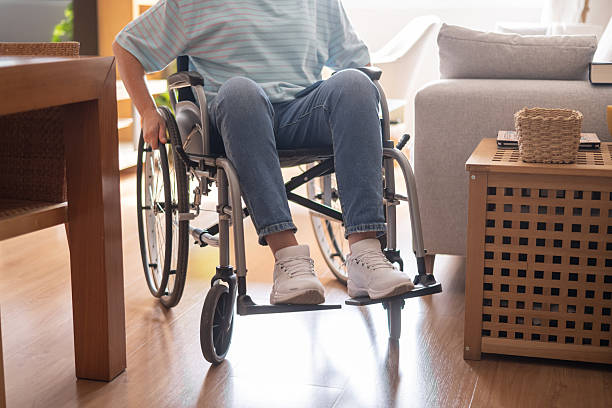
Wheelchair accessibility is a major consideration when sourcing specialist disability accommodation.
Depending on residents' needs, a property may require:
-
Level access
-
Ramps
-
Wide doorways
-
Accessible corridors
-
Turning areas
-
Level-access showers
-
Wet rooms
-
Accessible toilets
-
Adapted kitchens
-
Lower worktops
-
Accessible appliance controls
-
Hoist-compatible bedrooms
-
Mobility equipment storage
Accessibility should be considered as a complete route through the property.
A building with a ramp at the entrance may still be unsuitable if a wheelchair user cannot reach the bathroom or bedroom comfortably.
For investors, this is one reason why a property survey should be completed before committing to substantial refurbishment.
Bedrooms for Specialist Disability Housing
Bedrooms should provide sufficient space for residents to use their rooms safely and comfortably.
Depending on individual requirements, the room may need to accommodate:
-
Wheelchairs
-
Specialist beds
-
Hoists
-
Transfer equipment
-
Medical equipment
-
Personal storage
-
Carer assistance
-
Mobility aids
The position of the bedroom within the property also matters.
A resident who requires significant assistance may need direct and convenient access to an accessible bathroom and communal areas.
Accessible Bathrooms
Bathrooms are often among the most important parts of specialist disability accommodation.
Possible adaptations include:
-
Level-access showers
-
Wet rooms
-
Accessible toilets
-
Grab rails
-
Reinforced walls
-
Accessible sinks
-
Transfer space
-
Anti-slip flooring
-
Easy-to-operate shower controls
-
Hoist provision
The specification should be based on the intended resident rather than a generic accessibility checklist.
A bathroom that works for one wheelchair user may not work for another resident who requires two-person assistance or specialist equipment.
Accessible Kitchens
The kitchen should also reflect the needs and independence of residents.
Depending on the accommodation model, features can include:
-
Lower work surfaces
-
Accessible sinks
-
Accessible appliance controls
-
Pull-out storage
-
Clear wheelchair circulation
-
Adjustable worktops
-
Accessible appliance positioning
For supported living, an accessible kitchen can help residents participate in everyday activities rather than relying entirely on staff.
Communal Areas and Shared Accommodation
Some specialist disability accommodation involves several residents living within the same property or development.
Communal areas should therefore be assessed for accessibility.
These can include:
-
Shared lounges
-
Dining areas
-
Kitchens
-
Laundry facilities
-
Gardens
-
Corridors
-
Entrances
-
Meeting areas
-
Equipment storage
The National Statement of Expectations also highlights privacy, dignity, accessible space and accommodation that feels like a home rather than an institution.
This is particularly important when adapting ordinary residential property for supported living.
Space for Care and Support Staff
Some specialist disability properties require staff to be available throughout the day or night.
Depending on the service model, the property may require:
-
Staff office space
-
Sleep-in accommodation
-
Staff bathroom facilities
-
Equipment storage
-
Secure storage
-
Handover space
-
Parking
These requirements should be agreed with the provider before refurbishment.
Adding staff accommodation after a project has started can create planning, layout and budget problems.
Specialist Disability Accommodation and Supported Living
Specialist disability accommodation can be used for supported living, but the terms should not be treated as interchangeable.
Supported housing generally involves accommodation provided alongside support, supervision or care to help residents live as independently as possible. Government guidance specifically includes people with physical disabilities, learning disabilities and autism among potential supported housing residents.
Current government housing policy also identifies purpose-designed supported living and accessible or adapted homes as distinct forms of specialist and supported housing for working-age disabled people.
The distinction is important for property owners because the accommodation requirements can vary considerably according to the support model.
Specialist Disability Accommodation and Regulation
The regulatory position depends on the service being delivered.
For example, supported living and care home arrangements are not automatically treated in the same way. Where accommodation and personal care are provided together as a care home service, different regulatory requirements apply than where an individual lives in their own home and receives care separately.
Landlords should therefore establish:
-
Who will operate the service?
-
Who will occupy the property?
-
What support will be provided?
-
Will personal care be provided?
-
Is the care provider CQC registered where required?
-
Is planning permission required?
-
Are building regulations relevant to the proposed alterations?
-
Who is responsible for adaptations and compliance?
The property should not be marketed or treated as a specialist care facility simply because it has accessibility features.
Buying Specialist Disability Accommodation
Investors looking to purchase property for specialist disability accommodation should assess the building before exchanging contracts.
Important questions include:
-
Is the entrance accessible?
-
Can the property be adapted?
-
Are bedrooms sufficiently spacious?
-
Can bathrooms be converted?
-
Is there adequate communal space?
-
Can mobility equipment be stored?
-
Is parking available?
-
Can staff facilities be incorporated?
-
Is the property appropriately located?
-
Are planning restrictions likely?
-
What will the refurbishment cost?
-
Does the building meet the provider's specification?
A property that appears inexpensive may become expensive after accessibility works.
Conversely, an appropriately designed property may require considerably less structural alteration.
Refurbishing Existing Property
Existing residential properties can sometimes be adapted for specialist disability accommodation.
Typical works may include:
-
Entrance modifications
-
Ramp installation
-
Door widening
-
Bathroom conversion
-
Wet-room installation
-
Kitchen adaptation
-
Flooring upgrades
-
Lighting improvements
-
Electrical alterations
-
Grab rails
-
Handrails
-
Accessible landscaping
-
Equipment storage
-
Staff facilities
The National Statement of Expectations recommends that supported housing should be assessed for suitability and that buildings meet relevant accessibility, fire, health and safety requirements.
A professional refurbishment plan can help establish which works are essential and which improvements are desirable.
Planning and Accessibility
Planning considerations should be addressed before major alterations begin.
Depending on the property and proposed works, planning permission or building regulation approval may be relevant.
Accessibility requirements can also influence the property's internal layout, entrances, bathrooms and circulation spaces.
For larger schemes, early engagement with the relevant local authority and care or adult social care commissioners can help clarify the accommodation requirements. Current government guidance encourages early engagement with local health and adult social care commissioners for schemes that include care or support.
Specialist Disability Accommodation in London
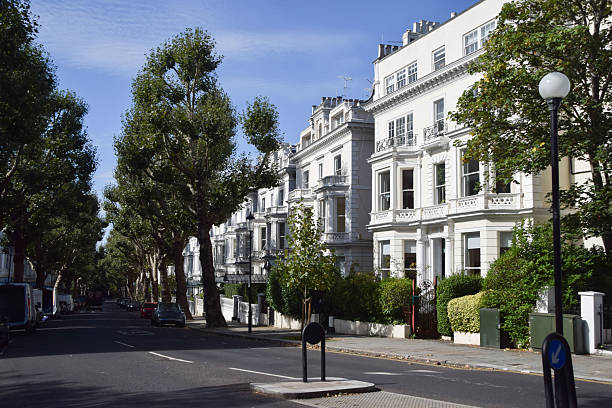
London has a mixture of modern accessible developments and older housing stock that may require significant adaptation.
Potential opportunities include:
-
Ground-floor flats
-
Modern apartments
-
Accessible new-build homes
-
Larger houses
-
Bungalows
-
Purpose-built supported living schemes
-
Properties suitable for conversion or adaptation
Older London properties can present challenges such as:
-
Narrow hallways
-
Entrance steps
-
Split-level layouts
-
Small bathrooms
-
Basement areas
-
Limited parking
-
Restricted gardens
-
Difficult access from the pavement
Location should also be assessed.
Residents may need reasonable access to:
-
Hospitals
-
GP surgeries
-
Pharmacies
-
Shops
-
Public transport
-
Parks
-
Community centres
-
Employment
-
Education
-
Social care services
Leasing Specialist Disability Property to a Provider
A landlord who does not want to operate the support service may lease the property to an established provider.
Before agreeing to a lease, due diligence should cover:
-
Provider experience
-
Relevant registrations
-
Financial position
-
Intended resident group
-
Support model
-
Proposed adaptations
-
Lease length
-
Rent structure
-
Repair obligations
-
Insurance
-
Planning position
-
Adaptation responsibilities
-
Property management
The lease should clearly identify who is responsible for installing, maintaining and eventually removing specialist adaptations.
Specialist Disability Accommodation Investment
Specialist disability accommodation can form part of a long-term property investment strategy, but investors should assess more than rental income.
Important considerations include:
-
Location
-
Accessibility
-
Property condition
-
Adaptation costs
-
Planning requirements
-
Provider strength
-
Lease structure
-
Maintenance obligations
-
Local demand
-
Future property use
-
Exit options
Specialist adaptations can make a property more suitable for its intended residents but may also affect how easily the building can be used for other purposes later.
Investors should therefore consider both the specialist use and the underlying residential property.
Working With a Specialist Property Consultancy
Specialist disability accommodation often requires coordination between property owners, supported living providers, contractors, planning professionals and care-sector organisations.
Fraser Bond can support landlords, investors, developers and specialist housing operators with:
-
Property sourcing
-
Acquisition advice
-
Property assessment
-
Refurbishment planning
-
Contractor coordination
-
Building works
-
Property improvements
-
Maintenance
-
Property management
-
Specialist accommodation projects
The objective is to identify property that works for the intended residents while remaining practical from a property and operational perspective.
Finding Specialist Disability Accommodation in the UK
The right specialist disability accommodation should provide more than physical accessibility. It should offer a safe, practical and dignified home that reflects the needs of its residents and the support model operating from the property.
Current government housing policy explicitly includes accessible or adapted homes and purpose-designed supported living within specialist and supported housing for working-age disabled people.
For landlords and investors, the key is to assess the property before committing to a purchase, lease or refurbishment programme.
Fraser Bond works with UK property owners, investors, developers and specialist housing providers to source, assess, refurbish and manage property suitable for specialist disability accommodation.