


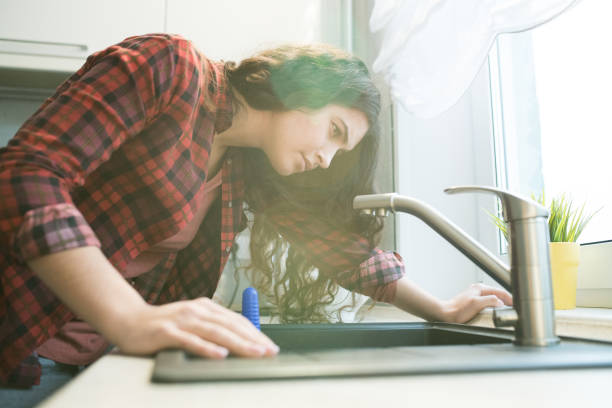
Tap Leaking – Causes, Repairs and How to Fix a Dripping Tap
A leaking tap may start as an occasional drip but can waste a significant amount of water and eventually contribute to staining, limescale or water damage around the sink. WaterSafe says a dripping tap can waste up to 5,500 litres of water per year, making prompt repair worthwhile.
Common causes include a worn washer, faulty cartridge, damaged seal or limescale build-up. The correct repair depends on whether you have a traditional compression tap, ceramic-disc tap or modern mixer.
Through FraserBond.com, homeowners, landlords and property managers can explore tap repair, plumbing and leak-repair services across London and the UK.
Why Is My Tap Leaking?
WaterSafe identifies several common reasons for a dripping tap:
- Worn or broken washer
- Washer obstructed by dirt or limescale
- Worn cartridge
- Limescale or debris inside the tap
- Defective internal components
Where the water appears is also important.
A tap dripping from its spout has a different likely fault from water leaking around the base or underneath the sink.
Tap Dripping From the Spout
If water continues dripping from the spout after you completely close the tap, the internal valve is probably not sealing correctly.
For a traditional tap, the problem may be a worn or damaged washer.
For a modern mixer or single-lever tap, the problem is more likely to involve a cartridge or ceramic-disc mechanism.
Limescale can also interfere with these components and prevent the tap from closing properly.
Tap Leaking From the Base
Water appearing around the bottom of the tap can indicate a different problem.
Possible causes include:
- Damaged O-ring or seal
- Loose fitting
- Deteriorated internal seal
- Water escaping from the tap body
- Loose tap mounting
Dry the entire area before testing. This makes it easier to determine exactly where fresh water first appears.
Tap Leaking Under the Sink
If water appears beneath the sink when the tap is used, inspect the connections underneath rather than assuming the tap cartridge is responsible.
Possible sources include:
- Flexible tap connectors
- Compression fittings
- Isolation valves
- Tap tails
- Loose connections
- Sink waste
- Tap mounting area
Water can travel along a pipe or fitting before dripping, so the wettest point is not necessarily the source.
Mixer Tap Leaking
Modern mixer taps frequently use replaceable cartridges.
Signs of cartridge trouble can include:
- Dripping spout
- Difficulty shutting the water off
- Stiff operation
- Irregular flow
- Water leaking around the handle
WaterSafe advises inspecting single-lever tap cartridges for dirt, limescale and wear. A dirty cartridge may sometimes be cleaned, while a worn or damaged cartridge should be replaced with the correct component for that particular tap.
Kitchen Tap Leaking
Kitchen taps receive heavy daily use, so seals and cartridges eventually wear.
Common kitchen tap problems include:
- Dripping mixer tap
- Loose tap
- Leaking flexible hose
- Faulty cartridge
- Damaged O-ring
- Limescale
- Leak beneath the sink
Before ordering replacement components, identify the tap manufacturer and model if possible. Cartridges are not universally interchangeable.
Bathroom Tap Leaking
Bathroom basin and bath taps can suffer from the same washer, cartridge and seal problems.
Limescale can be particularly noticeable around:
- Tap spouts
- Handles
- Aerators
- Valve components
If water is escaping behind a bath or vanity unit rather than simply dripping into the basin, arrange repair promptly because concealed water can damage flooring, cabinetry and ceilings below.
How to Fix a Leaking Tap
For a straightforward dripping tap, the general process is:
Identify Tap → Isolate Water → Open Tap → Inspect Valve/Cartridge → Replace Defective Part → Reassemble → Restore Water → Test
WaterSafe recommends shutting off the water before beginning a repair, either at the isolation valve beneath the sink or at the main supply where necessary. After isolation, check that water has stopped before dismantling the tap.
Step 1: Turn Off the Water
Look for isolation valves on the pipes supplying the tap.
If individual isolation is unavailable, you may need to use the property's internal stop tap.
WaterSafe notes that the main internal stop tap is commonly located beneath the kitchen sink, although it can also be found elsewhere depending on the property.
Do not force a seized stop tap. A defective or immovable stop valve should be assessed by a plumber.
Step 2: Protect the Sink
Before dismantling the tap:
- Put the plug in.
- Cover the sink with a towel.
- Keep screws and small components organised.
- Photograph components as you remove them.
This reduces the risk of losing a screw or component down the waste.
Step 3: Identify the Tap Mechanism
The repair depends on the tap.
Traditional Tap
Traditional taps commonly use washers and valves.
A damaged washer may prevent the valve from sealing completely.
Ceramic-Disc Tap
Quarter-turn taps commonly use ceramic mechanisms.
These generally require replacement of the appropriate valve or cartridge rather than simply fitting an ordinary rubber washer.
Single-Lever Mixer
A single handle controlling both temperature and flow usually contains a mixer cartridge.
The replacement needs to match the existing tap.
Step 4: Inspect the Washer or Cartridge
Look for:
- Cracks
- Distortion
- Limescale
- Debris
- Worn seals
- Damaged components
WaterSafe advises checking twin-lever tap washers and valves for wear and scale, while single-lever taps should have their cartridges checked for contamination or damage.
Step 5: Replace the Defective Part
Use a correctly sized replacement component.
A washer that looks approximately right is not necessarily suitable. Similarly, cartridges can differ in:
- Diameter
- Height
- Splines
- Connections
- Hot/cold orientation
Taking the old component to a plumbing supplier can make identification easier.
Step 6: Reassemble and Test
Reassemble the tap carefully and restore the water supply slowly.
Then check:
- Spout
- Handle
- Tap base
- Connections underneath
- Isolation valves
WaterSafe recommends testing the repaired tap after restoring the supply to ensure the leak has stopped.
Leaking Tap Due to Limescale
Limescale can accumulate around internal components and interfere with sealing.
WaterSafe specifically identifies limescale as a potential cause of dripping taps because deposits can obstruct valves and washers.
This can be particularly relevant in hard-water areas.
Cleaning an otherwise serviceable component may resolve the problem, but damaged washers or cartridges should be replaced.
Loose Tap and Water Leak
Sometimes the problem is not the internal valve but the tap itself moving on the sink or worktop.
WaterSafe says loose mounting nuts, bolts and worn washers can cause movement and potentially contribute to leakage.
A loose tap should be secured before repeated movement damages connections underneath.
How Much Does It Cost to Fix a Leaking Tap?
Current 2026 UK estimates put leaking-tap repair at approximately £95–£170, averaging around £132.50.
Another current tap-repair dataset gives a broader typical range of approximately £83–£140, averaging £107.
Actual cost depends on:
- Tap type
- Replacement parts
- Accessibility
- Location
- Whether the tap needs replacing
- Plumber's minimum call-out
- Emergency or out-of-hours attendance
London and South East labour costs can be higher than other parts of the UK.
Repair or Replace a Leaking Tap?
Repair often makes sense when:
- Only the washer has failed.
- A replacement cartridge is readily available.
- The tap body remains sound.
- The finish remains in good condition.
Replacement may be preferable when:
- The tap body itself leaks.
- Components are badly corroded.
- Replacement cartridges are unavailable.
- Several parts are failing.
- The tap is already loose or badly worn.
- Repair costs approach replacement costs.
A plumber can compare both options before work
There is probably a Fraser Bond team for it.
Lettings & management
Finding tenants, running tenancies, and holding the compliance paperwork so you never have to look for it.
Investment & portfolio
Buying well, holding sensibly, and knowing when a property has stopped earning its place.
Commercial property
Offices, retail and mixed use — acquisition, lettings, lease advice and building management.
Professional services
Valuation, lease consultancy, building consultancy and expert advice when a decision needs evidence behind it.
You are one message away from an answer.
Send it to us and get a straight answer.
Describe the property and the problem. We will tell you what we would do, what it should cost, and if we are not the right people, who is.
- Replies the same working day
- The person who answers is the person who handles it
- No fee, and no obligation to instruct us
See everything we are instructed on.
Sales and lettings across Prime Central London and the wider UK, with the same team behind every listing.
- Residential and commercial in one search
- Filter by borough, budget and size
- Register once and we will send matches first
Other insights you may find useful.
 Property & Real Estate Services
How to Get an Instant Secured Loan in the UK Property Market
Read → Property & Real Estate Services
Run-Down Properties for Sale: A Guide for Buyers & Investors
Read → Property Maintenance & Repairs
Specialist Care Provider Looking for Property - Fraser Bond
Read → Property & Real Estate Services
Properties to Rent in 116-118 Chrisp Street - London E14
Read → Property Legal, Risk & Compliance
UK New Build Assignment Sales - Investor Guide
Read → Property & Real Estate Services