Turn Off Water to House - How to Shut Off Your Home Water Supply
Knowing how to turn off water to a house is one of the most important pieces of practical information for any homeowner, tenant or landlord. If a pipe bursts, a tap connection fails or another serious plumbing leak develops, quickly shutting off the mains water can substantially limit the amount of water entering the property.
In most UK homes, the water supply is controlled by an internal stop tap, also commonly called a stopcock or stop valve. Turning this valve off isolates the incoming mains water supply to most of the property's plumbing.
WaterSafe recommends knowing where the internal stop tap is located before an emergency occurs and checking periodically that it can still be operated. WaterSafe
How to Turn Off Water to Your House
For most UK properties, the process is straightforward.
First, locate the internal stop tap. It is commonly found beneath the kitchen sink because this is often close to where the incoming water supply enters the property. Other possible locations include a kitchen cupboard, downstairs toilet, utility room, garage, cellar or underneath the stairs. WaterSafe
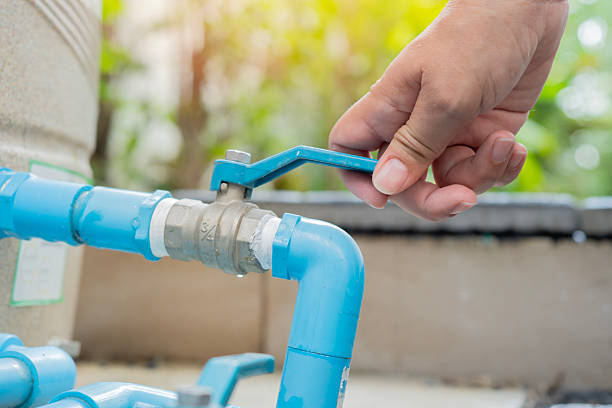
For a traditional screw-type stop tap, turn it clockwise to shut off the water. Turn the valve slowly rather than forcing it.
WaterSafe advises that it can take a few minutes for the water to stop completely after the stop tap has been closed. WaterSafe
Open a cold tap afterwards to confirm that the incoming supply has been isolated.
Where Is the Main Water Shut-Off Valve?
In UK properties, the main internal shut-off valve is generally referred to as the internal stop tap.
Its exact position depends on where the supply pipe enters the building.
Common locations include beneath the kitchen sink, inside a kitchen cupboard, beneath the stairs, in a downstairs bathroom or toilet, or in a garage, utility room or cellar. WaterSafe
In older properties, unusual conversions and extensions can make the stop tap harder to locate.
If you have recently bought or rented a property, finding the stop tap before you actually need it is worthwhile.
Which Way Turns the Water Off?
For a conventional screw-down stop tap:
Clockwise turns the water off. Anti-clockwise turns it back on.
A useful memory aid is "right to close, left to open."
Do not apply excessive force.
WaterSafe specifically advises operating stop taps slowly and never forcing them, as overtightening or excessive force can damage the valve. WaterSafe
Some properties have lever-style isolation valves instead. These operate differently, so establish what type of valve you have before attempting to operate it.
How Do I Know the Water Is Completely Off?
After closing the internal stop tap, open a cold-water tap.
There may initially be some remaining water because water is still present within the property's pipework.
The flow should reduce and eventually stop if the stop tap is working correctly.
If water continues flowing normally, either the valve has not been completely closed, the stop tap is defective or you may have isolated the wrong valve.
Do not force a valve that refuses to move.
Turning Off Water During a Leak
If a pipe has burst or a substantial plumbing leak is occurring, isolating the water quickly can help reduce damage.
WaterSafe recommends turning off the water at the stop tap when a significant plumbing leak occurs. It also advises opening cold-water taps to drain the pipework after isolation in relevant leak emergencies. WaterSafe
If water is approaching electrical fittings, sockets or equipment, do not touch affected electrical installations.
Once the incoming water has been controlled, arrange appropriate plumbing assistance to locate and repair the fault.
What If the Stop Tap Will Not Turn?
Stop taps can become difficult to operate when they have remained untouched for many years.
Do not simply apply greater force.
Excessive pressure can damage an old or corroded valve and potentially create another leak.
WaterSafe recommends contacting a plumber if an internal stop tap will not turn or does not successfully shut off the water. WaterSafe
A plumber may be able to service or replace the valve so the property can be isolated reliably in future.
What If the Stop Tap Turns but the Water Stays On?
A stop tap can sometimes move without completely shutting off the supply.
Internal washers or other components may have deteriorated.
WaterSafe notes that when a stop tap turns but does not stop the flow, the internal mechanism or washer may require repair or replacement. WaterSafe
This is worth addressing even when there is no current emergency.
A stop tap that cannot isolate the water becomes a serious inconvenience when a future plumbing leak occurs.
Where Is the External Stop Tap?
Many properties also have an external stop tap near the property boundary.
It may be underneath a small cover in the pavement, driveway or another external area. Where a water meter is installed, the external stop tap may be located in the same chamber. WaterSafe
However, homeowners should not automatically operate an external stop tap.
WaterSafe advises that external stop taps generally belong to the local water supplier and may require the supplier's permission to operate. A plumber or water company should normally deal with the external valve where possible. WaterSafe
Be Careful With Shared Water Supplies
Some older houses, terraces and converted properties share incoming water supplies.
In these situations, an external stop tap can potentially isolate several properties simultaneously.
WaterSafe warns that turning off an external stop tap on a shared supply can stop water to all properties connected to it. WaterSafe
This is another reason to establish the arrangement before operating an unfamiliar external valve.
Turning Off Water in a Flat
Flats can have more complicated plumbing arrangements.
An individual apartment may have its own internal isolation valve, while other parts of the water system can be communal.
The valve might be inside a kitchen cupboard, utility cupboard, bathroom access panel or service area.
If you cannot identify the correct valve, contact the landlord, managing agent, freeholder or building maintenance team.
Avoid operating communal valves unless you know exactly what they control, as doing so could interrupt the supply to neighbouring apartments.
Turning Off Water in a Rental Property
Tenants should ideally know where the property's internal stop tap is located.
Landlords and managing agents can make emergency response easier by ensuring that tenants know where important isolation controls are situated.
If a substantial leak occurs, isolating the water can help prevent damage while the appropriate repair is arranged.
A tenant who cannot find the stop tap during an active leak should contact the landlord or emergency maintenance contact promptly.
Turning Off Water Before Plumbing Work
Water may also need to be isolated for planned plumbing work.
Replacing taps, valves, toilets and other components can require either local isolation or shutting down the property's incoming supply.
Some modern plumbing systems contain individual isolation valves, meaning only one fixture needs to be disconnected.
Where suitable local isolation is unavailable, the internal stop tap may need to be closed.
Always establish what a valve controls before opening plumbing connections.
Should You Turn Off Water When Going Away?
Property owners sometimes choose to isolate their water supply before leaving a property vacant for an extended period.
Whether this is appropriate depends on the property's plumbing and heating arrangements.
Turning off the incoming water does not automatically drain the entire plumbing system, and some heating or other equipment may require particular procedures.
If a property will be vacant during cold weather, appropriate frost protection should also be considered.
Landlords and owners of vacant investment properties should ensure their approach is compatible with their insurance conditions and heating system.
Test Your Stop Tap Before an Emergency
The worst time to discover a seized stop tap is when water is already pouring through the property.
WaterSafe recommends checking that the internal stop tap operates correctly on a regular basis and has specifically advised householders to test it approximately every six months. WaterSafe
Keep the area around the valve accessible.
Avoid permanently boxing it behind finishes without appropriate access, and make sure other household members know where it is located.
For landlords, recording the stop-tap location in property-management information can make emergency maintenance considerably easier.
What to Do After Turning the Water Back On
Once plumbing work has been completed, reopen the water supply slowly.
For a traditional stop tap, this normally means turning it anti-clockwise.
WaterSafe recommends operating the valve gradually rather than opening or closing it aggressively. WaterSafe
Check repaired areas and accessible connections for leakage once the system has repressurised.
If unusual noises, leaks or other problems appear, shut the supply off again and obtain professional assistance.
When Should You Call a Plumber?
Professional assistance is sensible when you cannot locate the internal stop tap, the valve is seized, the valve leaks when operated or it turns without shutting off the water.
A plumber can also replace an inaccessible or unreliable stop tap and potentially install more convenient isolation where appropriate.
For an active burst pipe, priority should be given to controlling the water and preventing further property damage.
Stop Taps for Landlords and Property Investors
Water isolation is a small but important part of effective property management.
Landlords should know where stop taps are located across their properties and ensure they remain accessible.
During refurbishment, it can also be worthwhile checking the condition of old isolation valves rather than discovering problems after tenants have moved in.
For investors acquiring older properties, inaccessible, seized or heavily corroded plumbing controls can be included within the wider maintenance assessment.
Water Shut-Off and Property Maintenance with Fraser Bond
Knowing how to turn off water to a house can make a substantial difference during a plumbing emergency. Find the internal stop tap, understand how it operates and make sure it remains accessible and functional.
For landlords and property investors, plumbing maintenance should form part of the wider management of property condition and operational risk.
FraserBond.com supports buyers, sellers, landlords, investors and developers through property sales, lettings, compliance support and investment advisory services.
Fraser Bond combines London property expertise with practical guidance for owners and investors, helping clients consider maintenance requirements, refurbishment costs, rental potential and longer-term property strategy.
Whether you are purchasing an investment, preparing a property for letting or managing an established portfolio, FraserBond.com provides professional property support throughout the ownership lifecycle.